Serving Norman, OK & nearby
(405) 337-9835
Norman, OK

What That Sound From Your Garage Door Is Actually Telling You

Norman's housing mostly dates to 1964-2004, so most garage doors run original torsion springs. Noise tells you which ones need attention before they quit.

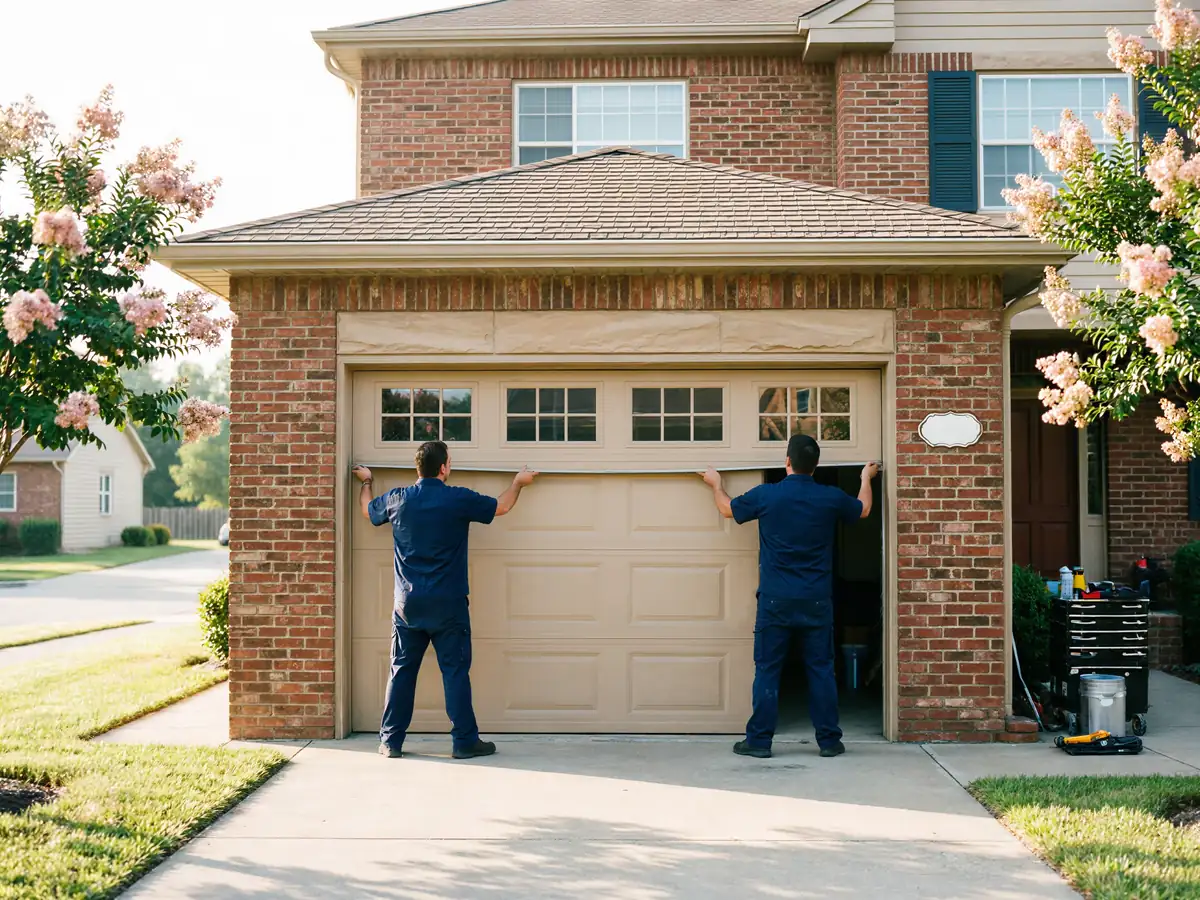
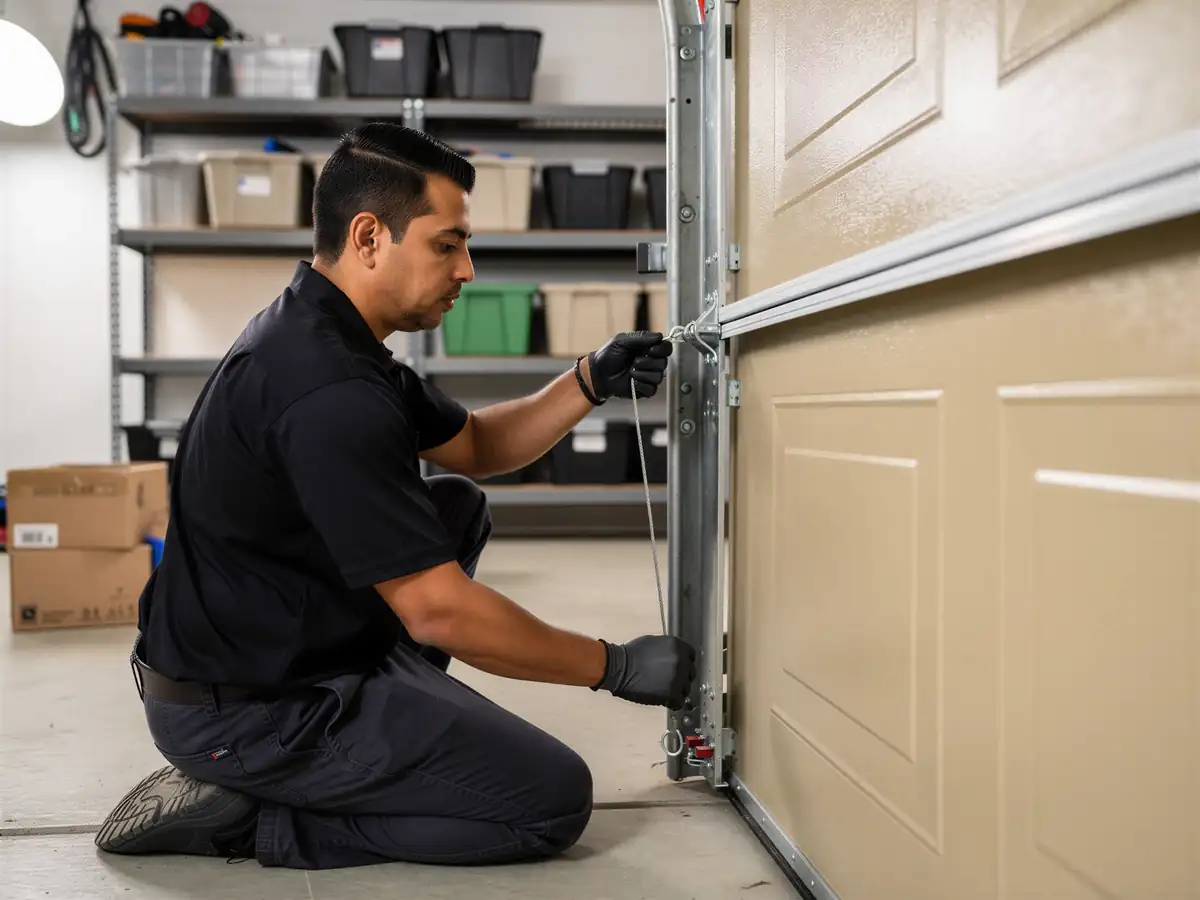
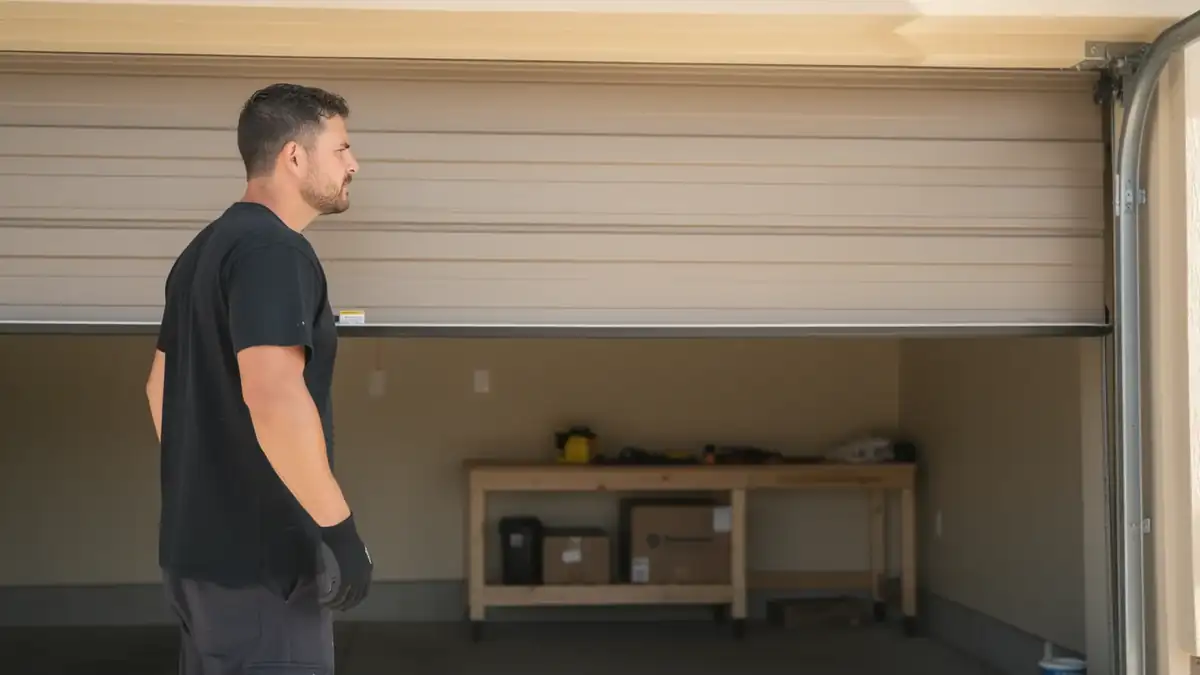
A technician stands in front of a partially open beige garage door.

The Situation

Walk through a neighborhood in Norman built any time between 1964 and 2004 - median year 1987, per Census data - and you'll find the same torsion-spring and rail setup, give or take a model year. That's most of the housing stock here, and most of it is 1980s and 90s vintage. A door that was quiet for twenty years doesn't stay quiet forever. The spring cycles down, the rollers wear, and the noise starts before the failure does. If you can hear a difference in how your door sounds this month compared to last winter, that's data, not imagination. Across the wider area - out past Noble, seven miles south, Slaughterville and Goldsby at eleven nine miles northeast - the same build era shows up again and again, which means a lot of doors are aging in the same window. The sound isn't random. It's a door built in the 80s or 90s telling you where it is in its life.

Where People Go Wrong

The mistake is treating every sound the same way - either ignoring all of it because the door still opens, or calling about every tick because one noise sounded off. Neither serves the door. With housing stock this uniform in age, a grinding or popping sound usually means the torsion spring is losing tension, not that the opener motor is dying. People replace the opener first because it's the part they can see working, and the spring - the part actually failing - gets missed for another six months. On a door built in that 1964-2004 window, the spring is almost always the older, more worn part relative to anything added later, like a newer opener unit. A scraping sound from the track usually means a bent section or a seized roller, not something that fixes itself with a spray at the hinge. If a noise gets louder week over week, or changes pitch under load - going up versus coming down - that's the spring talking, and it's worth a look before it lets go, usually without warning.

When Waiting Is Fine

Not every noise means call today. A door that creaks only on the coldest mornings and quiets down by afternoon is usually just steel contracting - normal here given our cold-moderate winters - and a shot of lubricant on the rollers and hinges solves it. The same goes for a single light rattle that doesn't repeat and doesn't get worse. We don't tell people to replace a spring because it ticked once. Springs on doors from this housing stock's build era are often still within their rated life, and plenty of them are just dry, not damaged. The honest limit here: we can't always tell over the phone whether a noise is lubrication or failure, and we'd rather have you watch it for a week - does it happen every time, does it get louder, does the door hesitate - than roll a truck for a sound that stops once you oil the track. If it's consistent, worsening, or paired with the door feeling heavier to lift by hand, that's past the waiting stage.
What Local Conditions Do

Norman sits in a cold-moderate climate band, which means the metal in a garage door system - torsion spring, track, hinges - goes through a real temperature swing across the year, not an extreme one, but a real one. That cycle is what puts the pop and tick into a door's voice as the seasons turn, and it's harder on hardware installed decades ago than on anything newer. With most of the area's roughly 63,000 households and 36,000-plus owner-occupied houses sitting on stock built between 1964 and 2004, a lot of garage doors are going through their fortieth-or-so winter-to-summer cycle right now. That's not a defect, it's just mileage. The practical effect: expect more noise in the shoulder seasons, spring and fall, when the day-to-day temperature swing is biggest, and less in the dead of summer or the coldest stretch of winter when things settle into one state. A door that's noisy only during those transition weeks is reacting to weather. A door that's noisy all the time, in any weather, is reacting to a part.

How it works

From “it’s stuck” to “it’s fixed”

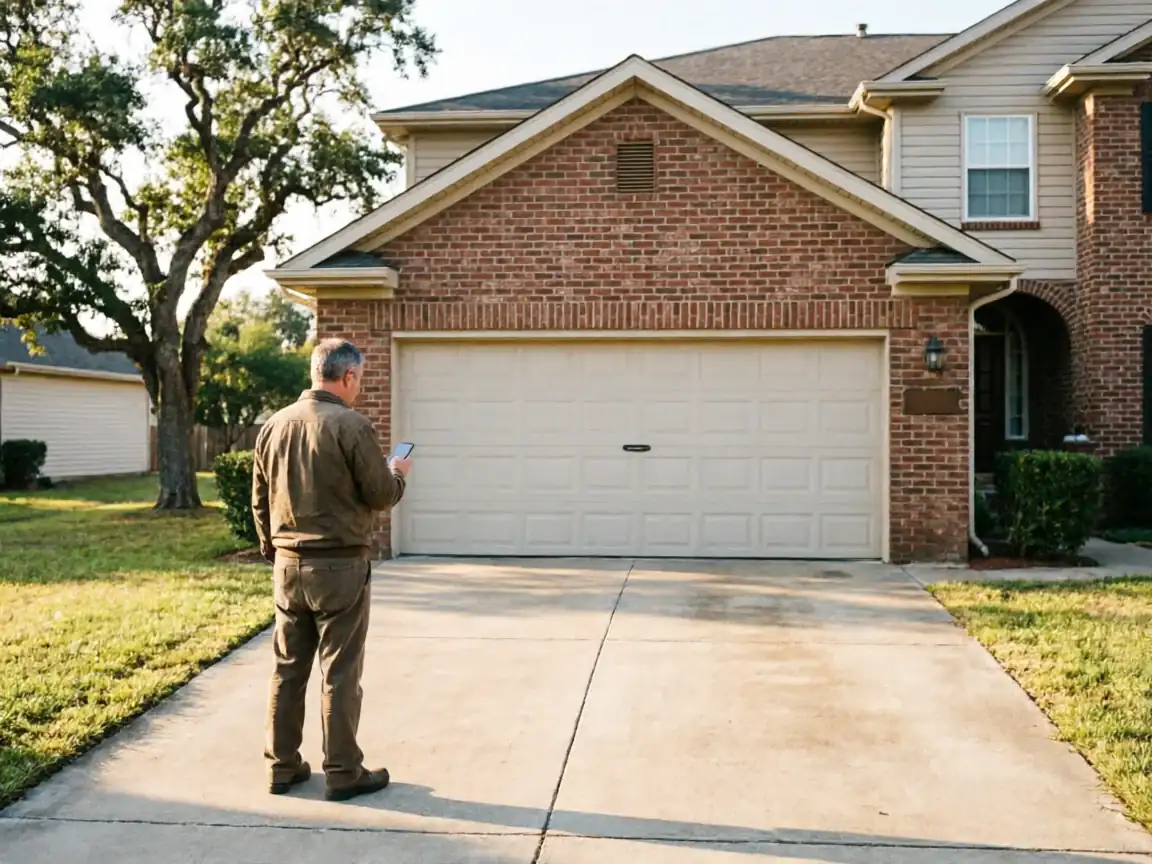
A man stands in a driveway looking at his phone in front of a garage door.
1

Tell us what’s wrong

Describe the symptom - won’t open, loud bang, opener runs but the door won’t move.

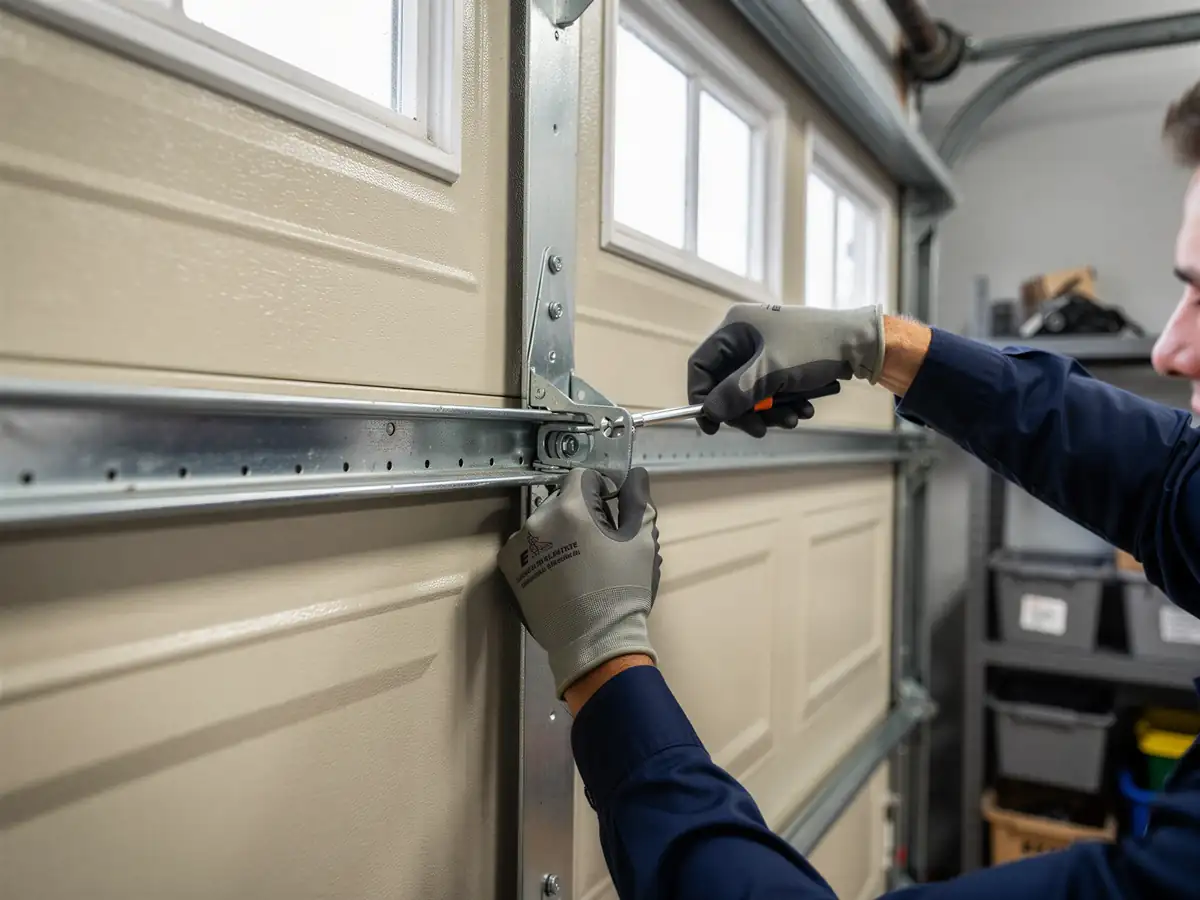
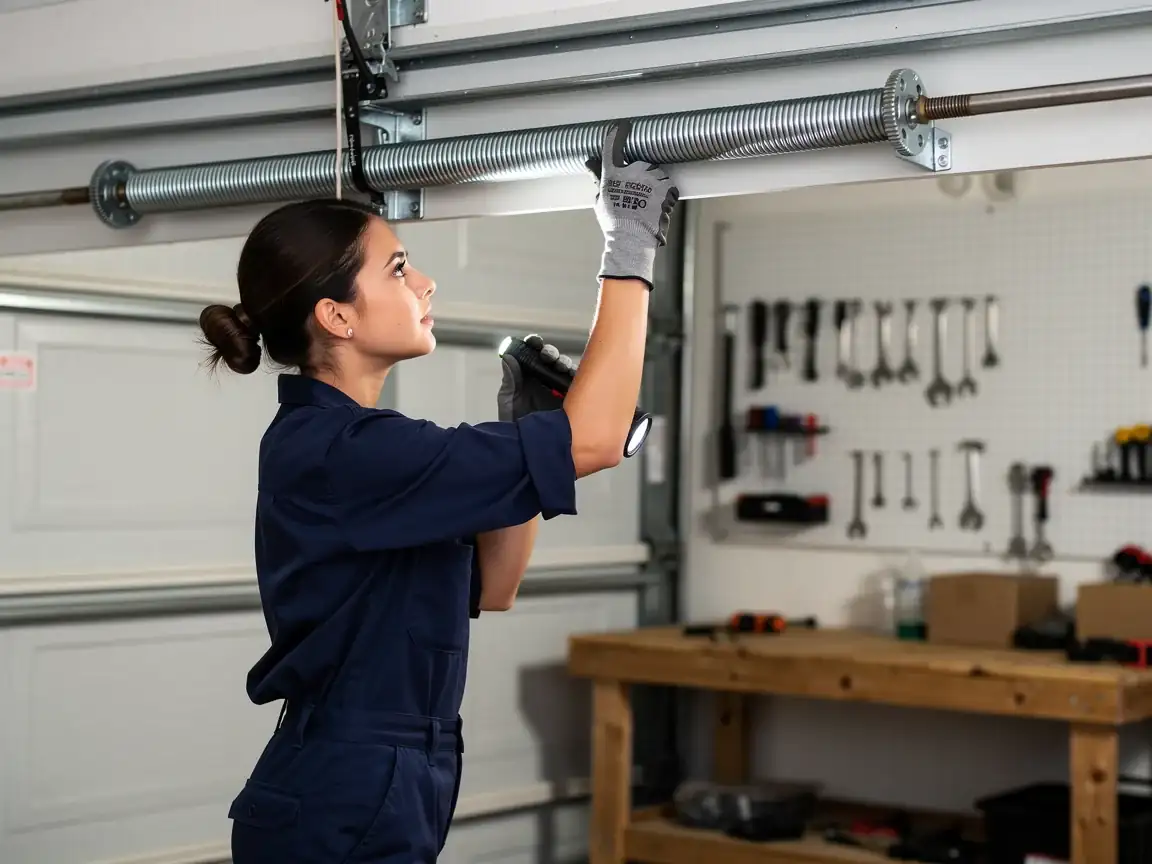
A technician in a blue jumpsuit inspects a garage door torsion spring with a flashlight.
2

On-site diagnosis

A technician tests the door under power and by hand and finds what actually failed.

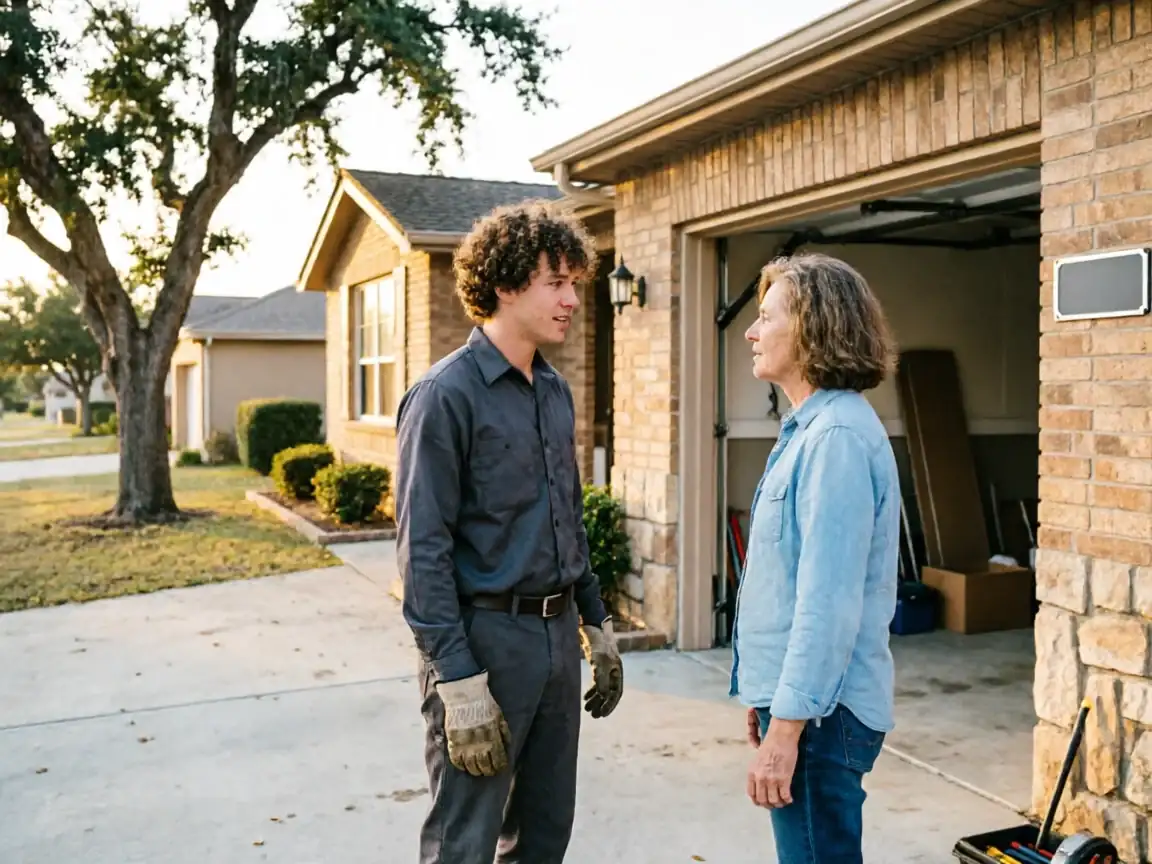
A technician wearing work gloves talks to a woman in front of a brick house.
3

Clear, up-front plan

You get the fix that’s needed and what drives the cost - before any work starts.

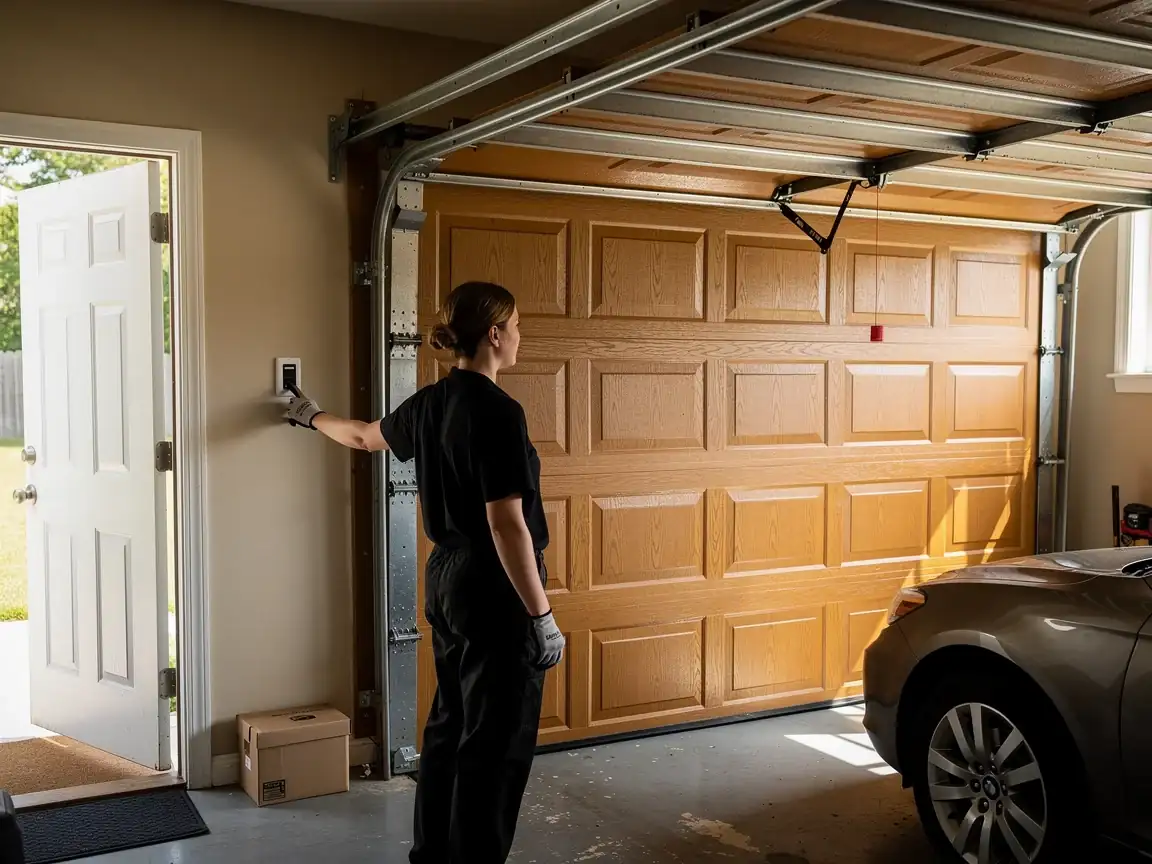
A technician presses a button on the wall next to a closed wooden garage door.
4

Repaired & tested

The repair is done, the door is set true and tested, and the work area left clean.

Not sure which repair your door needs in Norman, OK? Describe what it’s doing - every job starts with a diagnosis.

7areas covered
How we work

What to expect

Diagnosis firstEvery visit starts by finding what actually failed - not a pre-written parts list.
The right part for the doorSprings and openers matched to the door’s weight and age, so the fix holds up.
Straight answersWhen a repair makes more sense than a replacement - or the reverse - you hear it plainly.
Clean, careful workTension released safely, hardware set true, the door tested under power before we leave.
What we do

Garage Door Services

Repair and installation work for Norman homes and businesses.

Questions

Frequently asked

Straight answers about garage door repair in Norman. Still unsure? Ask us directly.

Why does my garage door only make noise in cold weather?

Norman's winters fall in a cold-moderate band, and the steel in your spring and track contracts as temperatures drop, then expands again as it warms. That movement shows up as ticking or popping, especially on older hardware. If the noise disappears once the day warms up, it's usually the metal reacting to temperature, not a part failing.

Is a noisy spring dangerous?

A torsion spring under tension can fail suddenly, and a door that's getting louder or changing pitch under load is one that's working harder to compensate for lost tension. It's not an emergency the moment you hear it, but it's not something to leave for months either, especially if the noise is getting worse.

My house was built in the 80s or 90s - is that why the door is loud now?

Likely, yes. Most houses in this area went up between 1964 and 2004, with a lot of that stock dating to the 1980s and 90s. Original torsion springs and rollers from that era are reaching the end of their practical life around the same time, which is why a lot of owners are hearing the same kind of noise now.

How do I tell if it's the opener or the spring making the noise?

Pull the release cord and move the door by hand. If it's heavy, uneven, or grinds without the opener running, the spring or track is the problem, not the motor. If the door moves smoothly by hand but the opener grinds or strains, the motor or gear is more likely the cause.

Ready to get your garage door sorted?

Tell us what it’s doing and where you are in Norman - we’ll take it from there.

Request a QuoteCall