How It Shows Up
A door off track rarely jumps the rail all at once
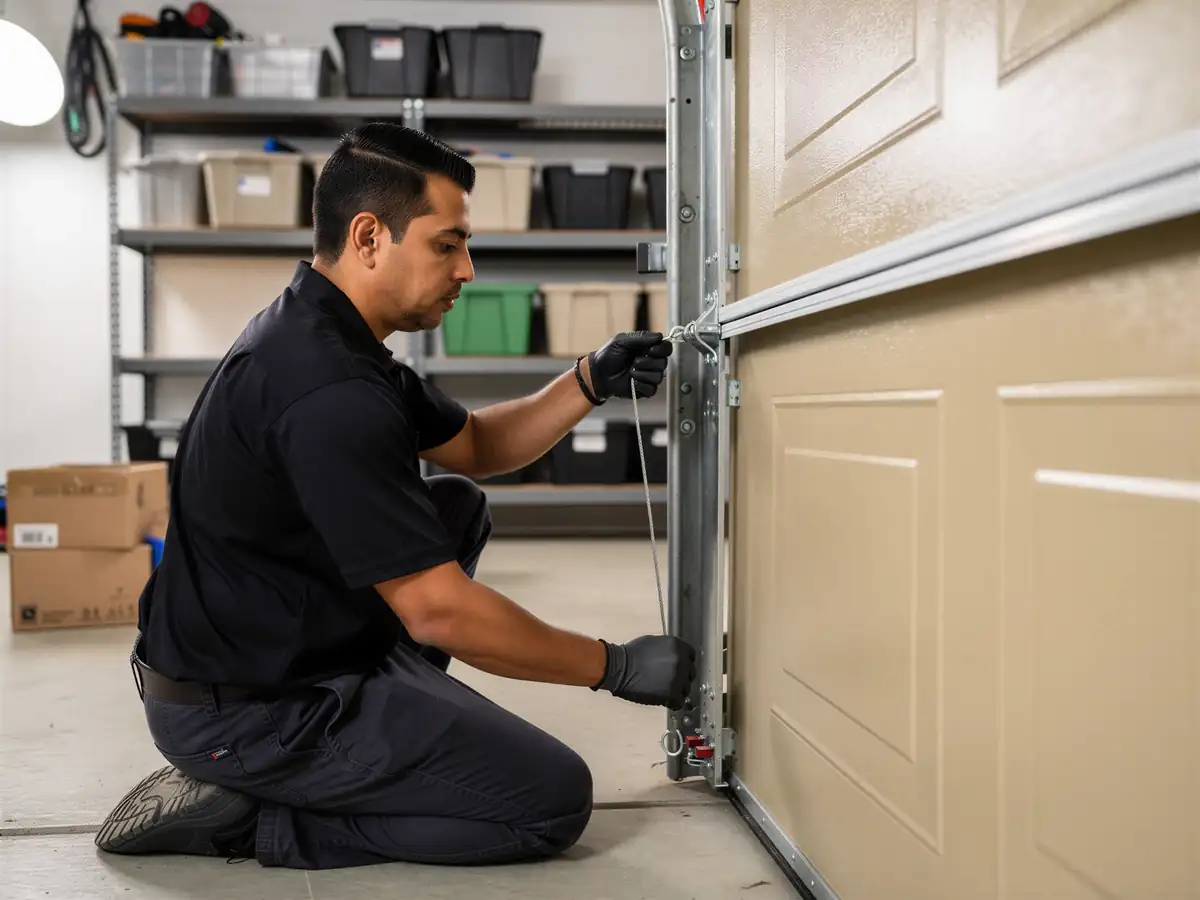
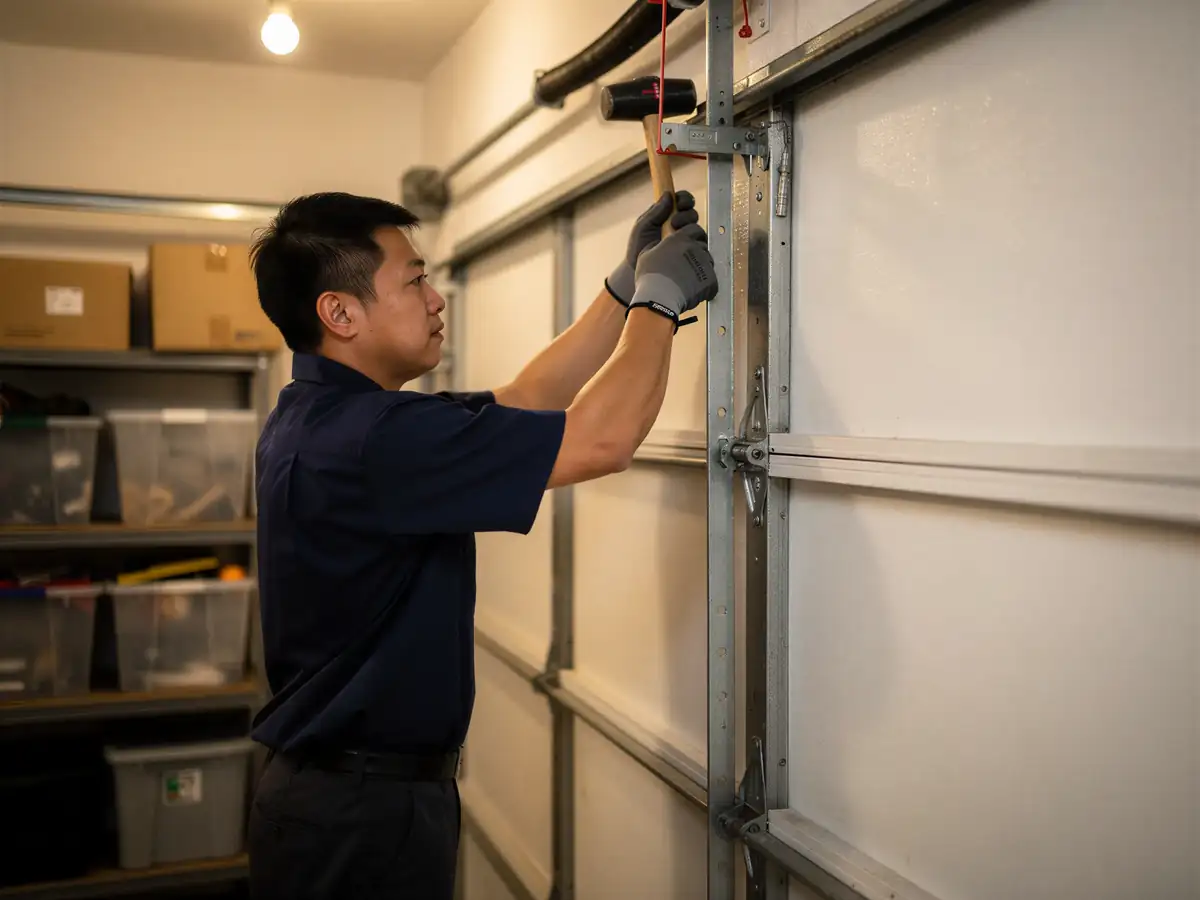
It starts with a scrape on one side, a panel that looks tilted when the door's halfway up, or a roller that pops visibly out of the channel when the opener kicks on. Sometimes the door stops a foot off the slab and won't go further because a bent track section is pinching the roller path.
Across the service area, most of this housing was built between 1964 and 2004
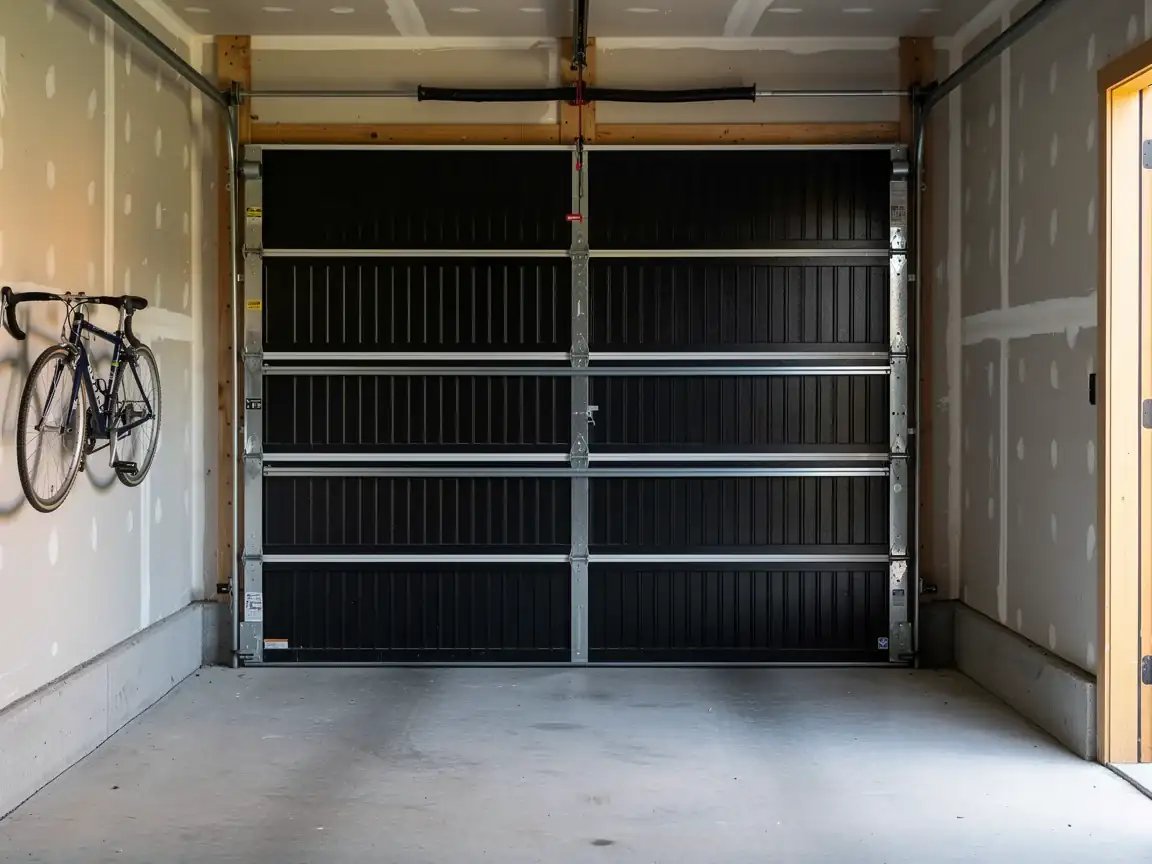
With the bulk going up in the 1980s and 90s across the 17 communities we work in. That means a lot of original steel track that's now 25 to 40 years old, often never realigned since the day it was installed. Track brackets loosen on the jamb over time, the vertical section leans a few degrees, and the rollers start riding the edge instead of the channel. You'll hear it before you see it - a grinding or popping sound right as the door passes the bend where vertical track turns to horizontal.
- 17 communities
- 40 years
If the door has already come off one side and is hanging at an angle
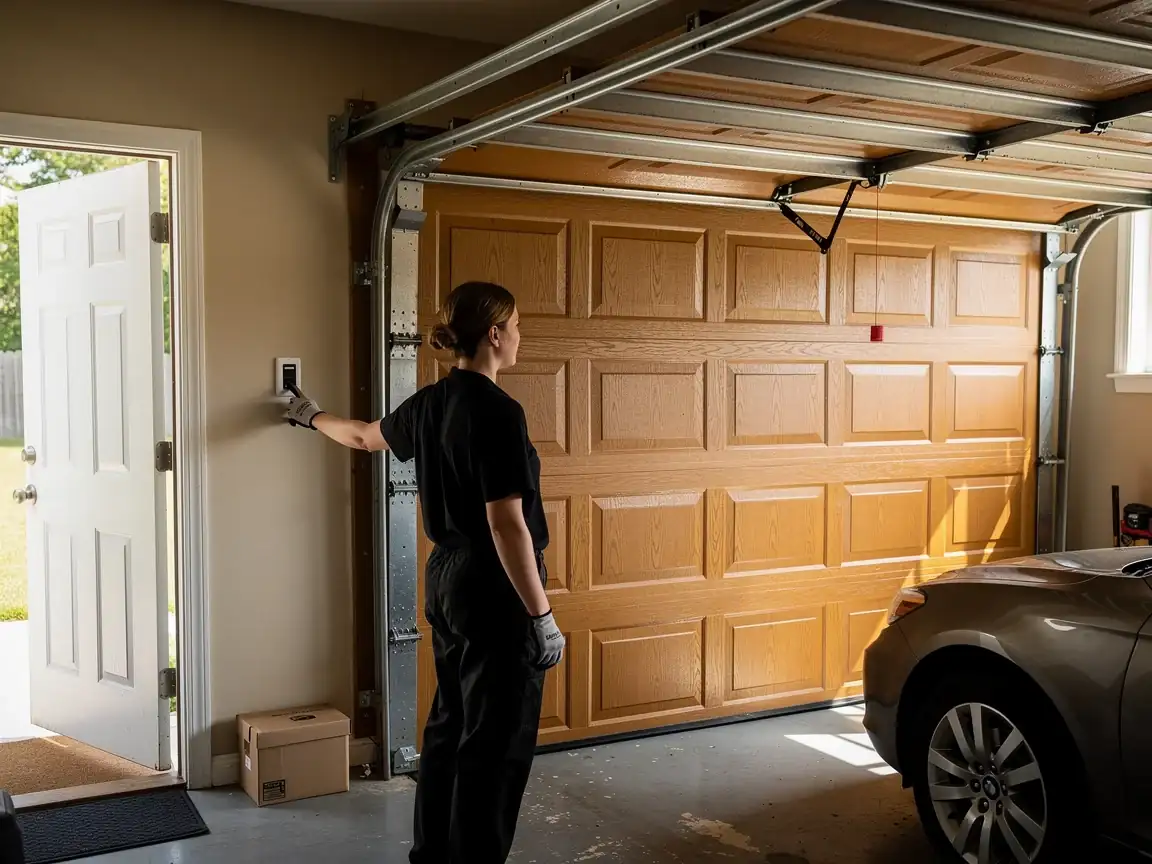
Don't run the opener again. Running a motor against a jammed or derailed door usually bends the track further or snaps a roller stem, turning a track job into a track-plus-roller job.
How to Book
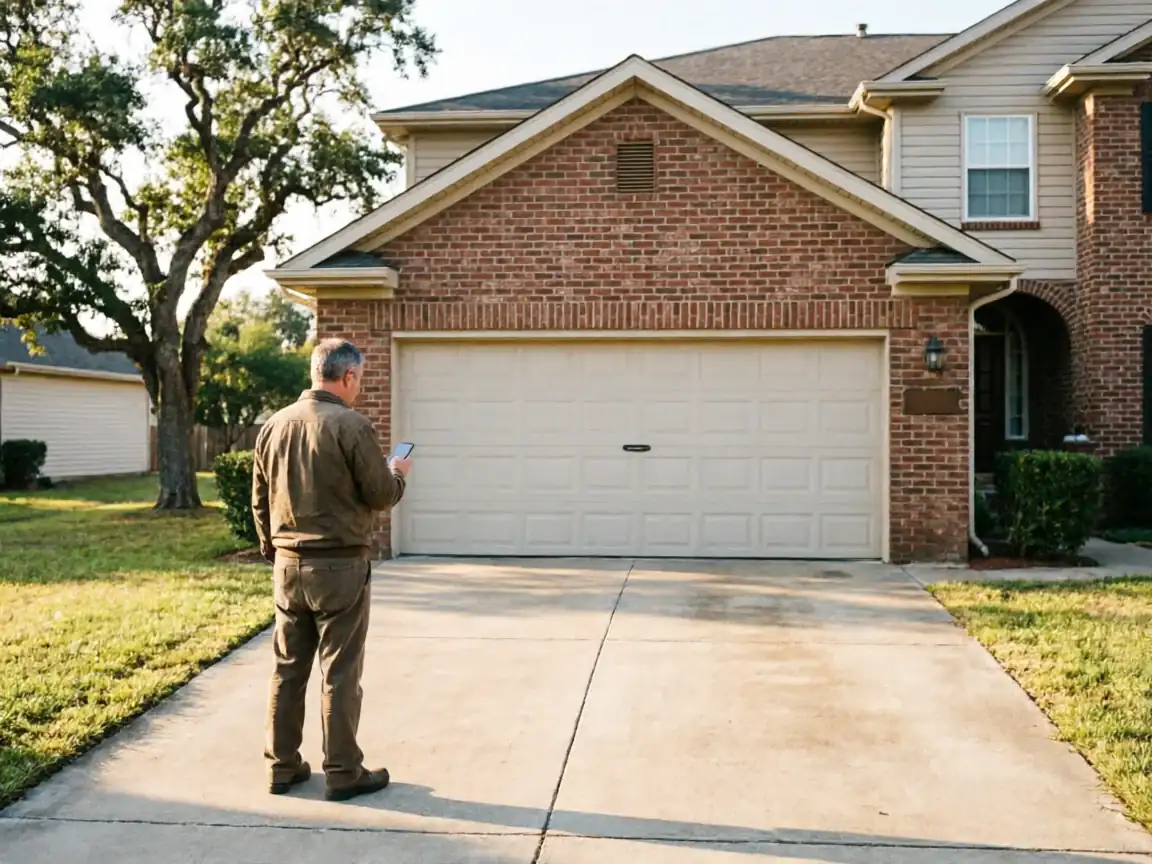
Call or use the contact page to get a tech out. Give us the symptom - door stuck partway, panel crooked, grinding noise, door that came off the rail on one side - and we'll know roughly what we're walking into before the truck leaves.
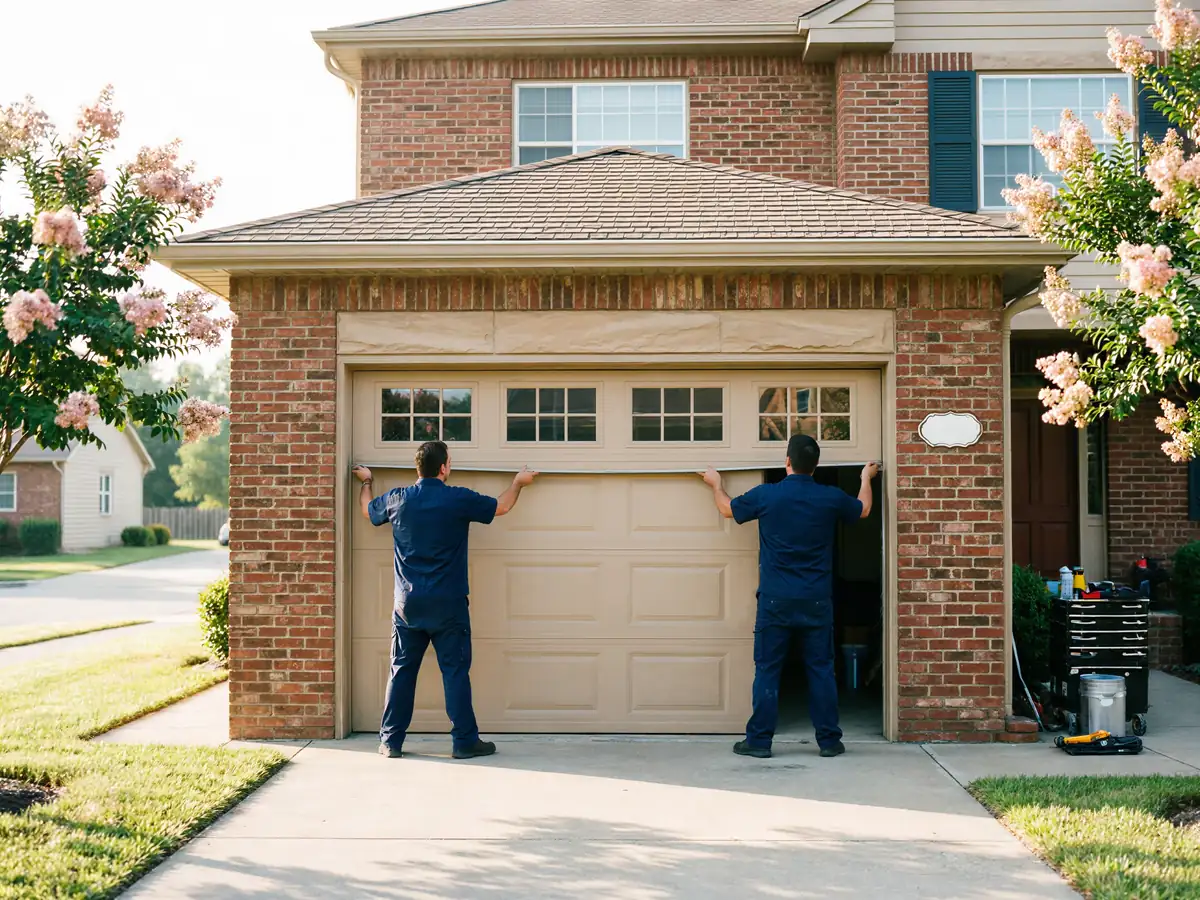
We work across the Norman service area, out to places like Noble, Goldsby, Slaughterville, Newcastle, Purcell, Lexington, Pink, Midwest City, Del City, Choctaw, Nicoma Park, Bethel Acres, McLoud, Harrah, Spencer, Blanchard, Forest Park, and into southeast Oklahoma City. Track and roller repairs are usually same-visit work - a tech brings standard track sections and rollers on the truck for common widths, so most off-track calls don't need a second trip.
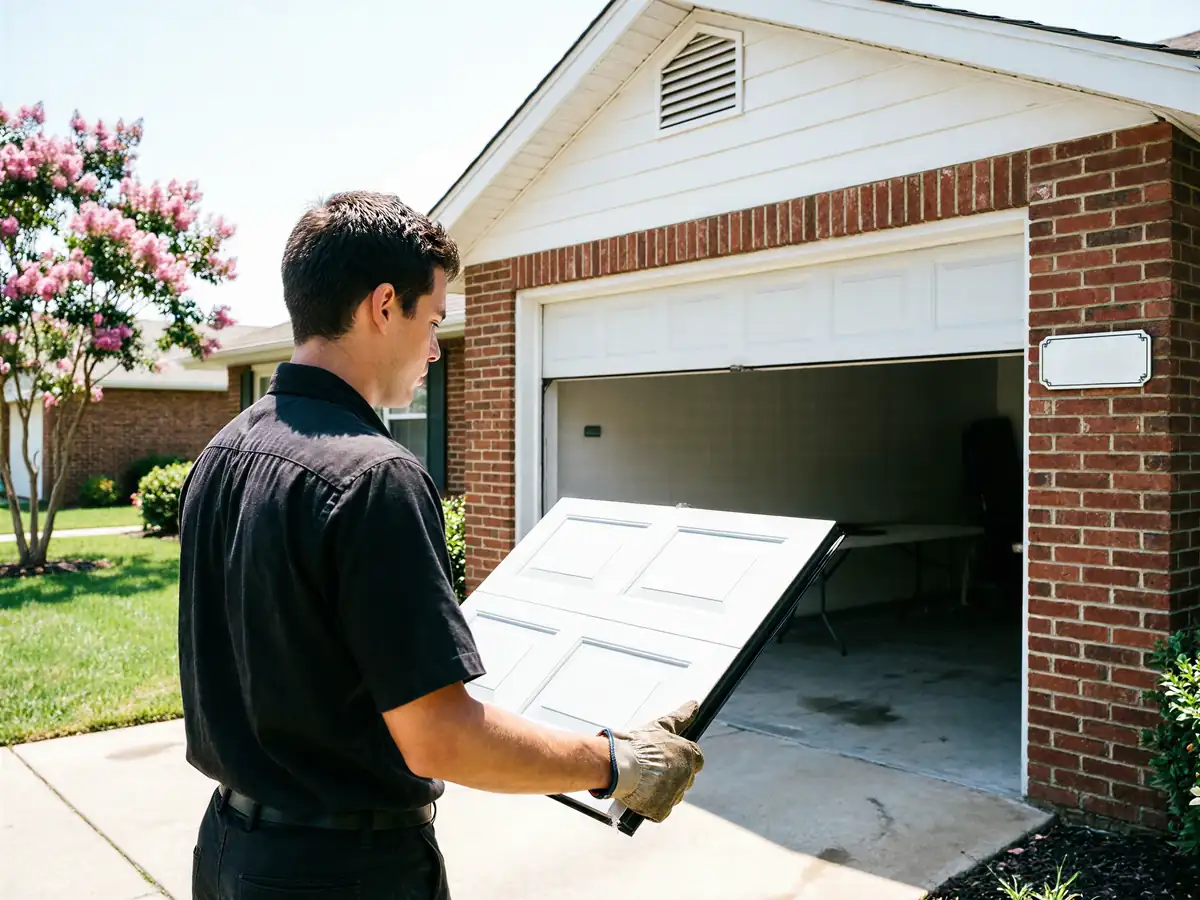
One limitation worth saying up front: if the track is bent in more than one spot, or the door itself is warped from being run off-rail for a while, straightening isn't always the right call. Sometimes a new track section is cheaper and more reliable than trying to hammer the old one back true. We'll tell you which one you're looking at before we start, not after.
Why This Fails Locally
This area sits in a moderate cold climate band, which means real freeze-thaw cycles every winter rather than one or two cold snaps. Steel track contracts in cold weather and expands again as temperatures swing, and over decades that cycling works bolts and brackets loose at the jamb. On a house built in the 1980s or 90s - which describes most of the stock here - that's 30-plus winters of expansion and contraction on the same hardware, with nobody ever going back to retighten it.
Housing built between 1964 and 2004 also tends to have narrower garage openings and lighter-gauge original track than what's sold today, so even a small bend has more effect on roller travel than it would on newer, heavier-duty track. Add a concrete slab that's shifted slightly over 30-plus years - common on homes this age - and the track that was plumb in 1987 may not be plumb now.
With 36,448 owner-occupied houses across this area's roughly 63,331 households, a large share of the doors we see on off-track calls are original builders' hardware that's simply aged into misalignment rather than been damaged in one incident. That's a maintenance pattern tied directly to the age of the stock, not a one-time accident.
Doing It Yourself
If the door is only slightly off
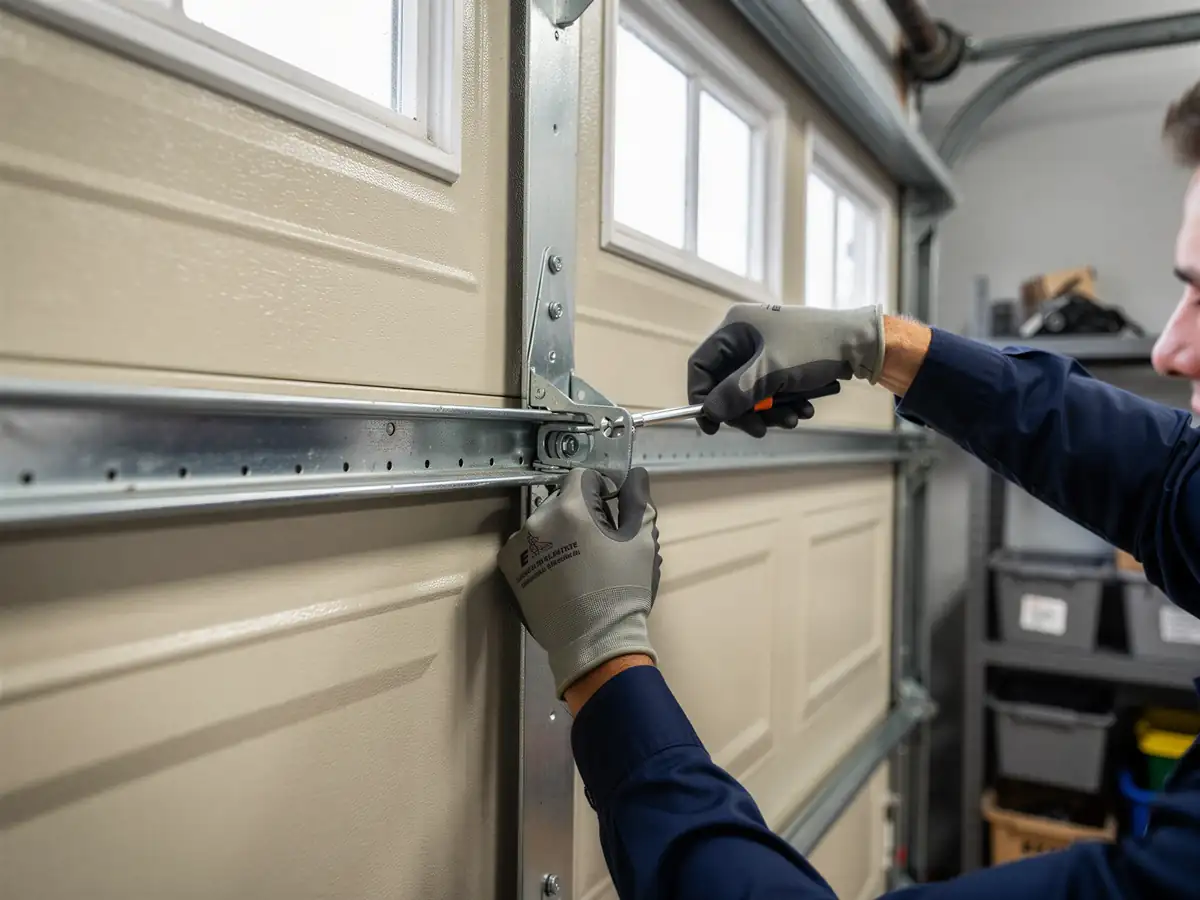
Rubbing on one side, not derailed - you can sometimes check and tighten the track bolts yourself. Unplug the opener first. Look at the brackets holding the vertical track to the jamb; if they wiggle by hand, that's your problem, and a wrench on those lag bolts may solve it without a service call.
What you shouldn't do yourself
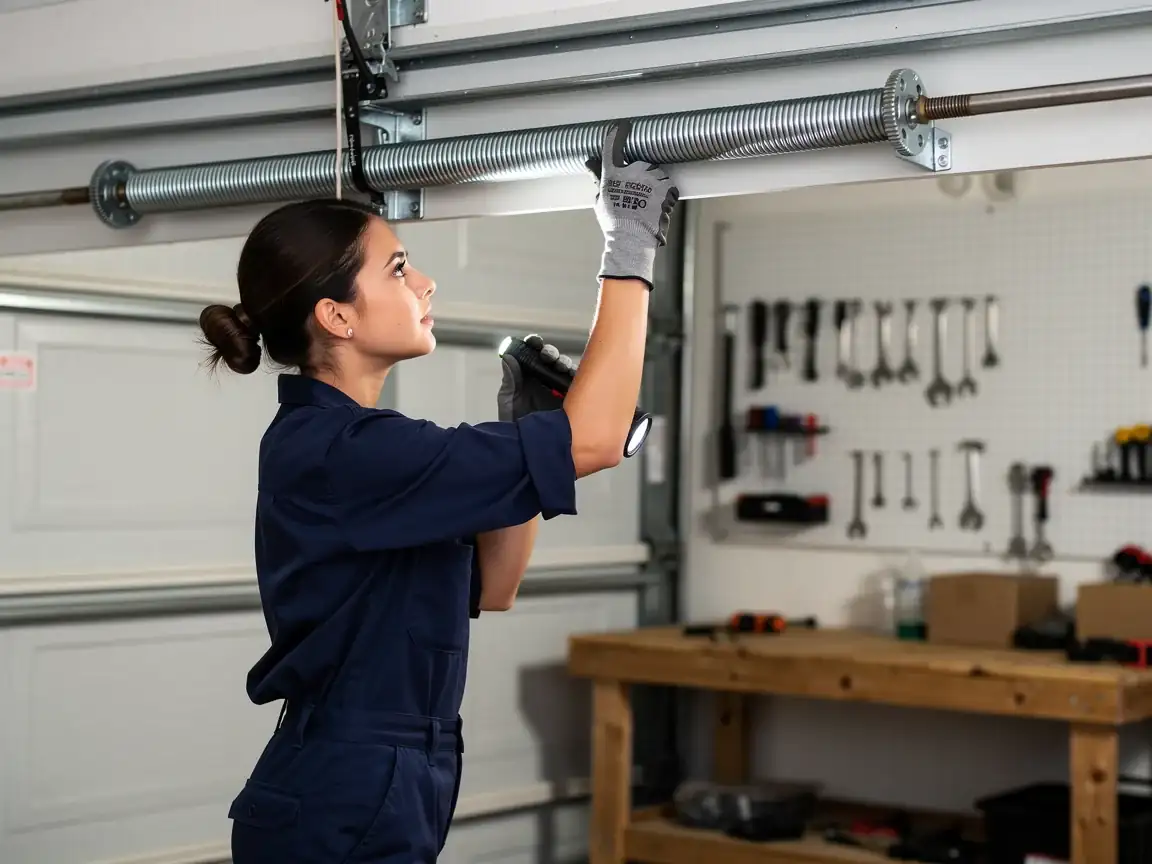
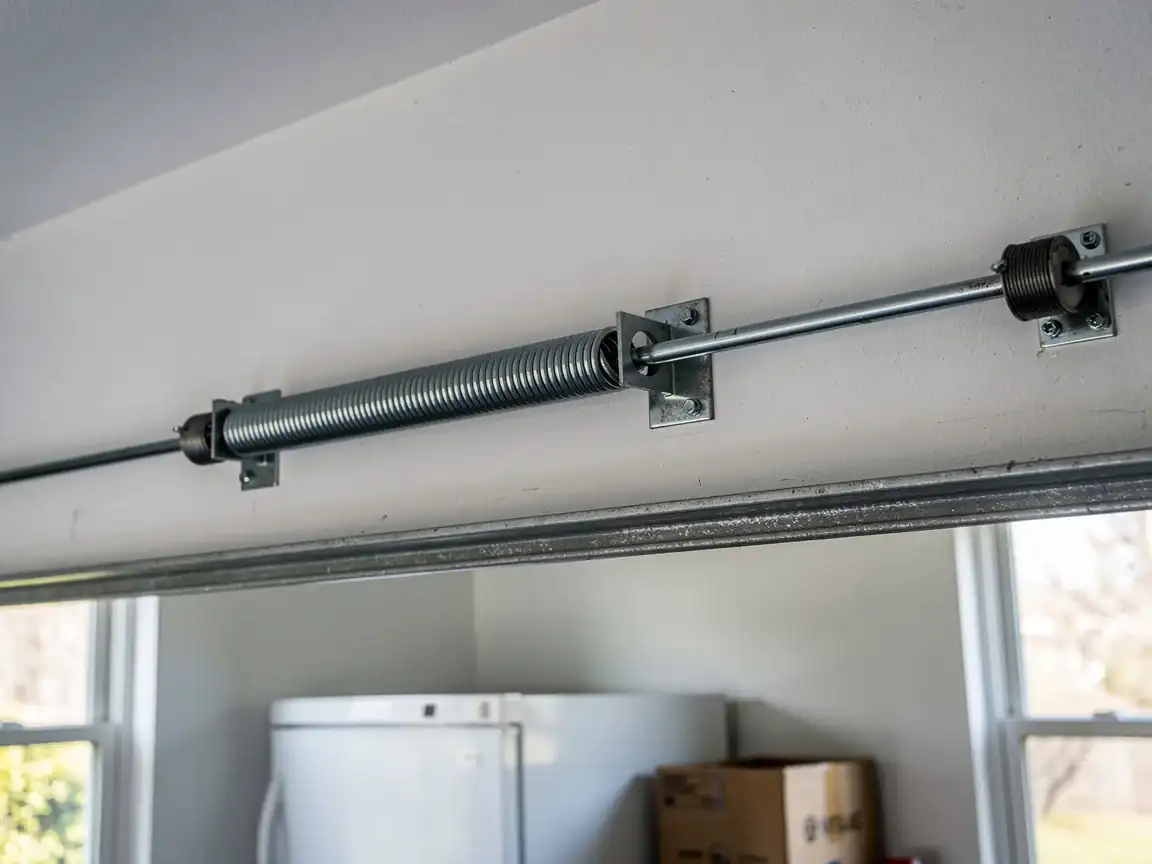
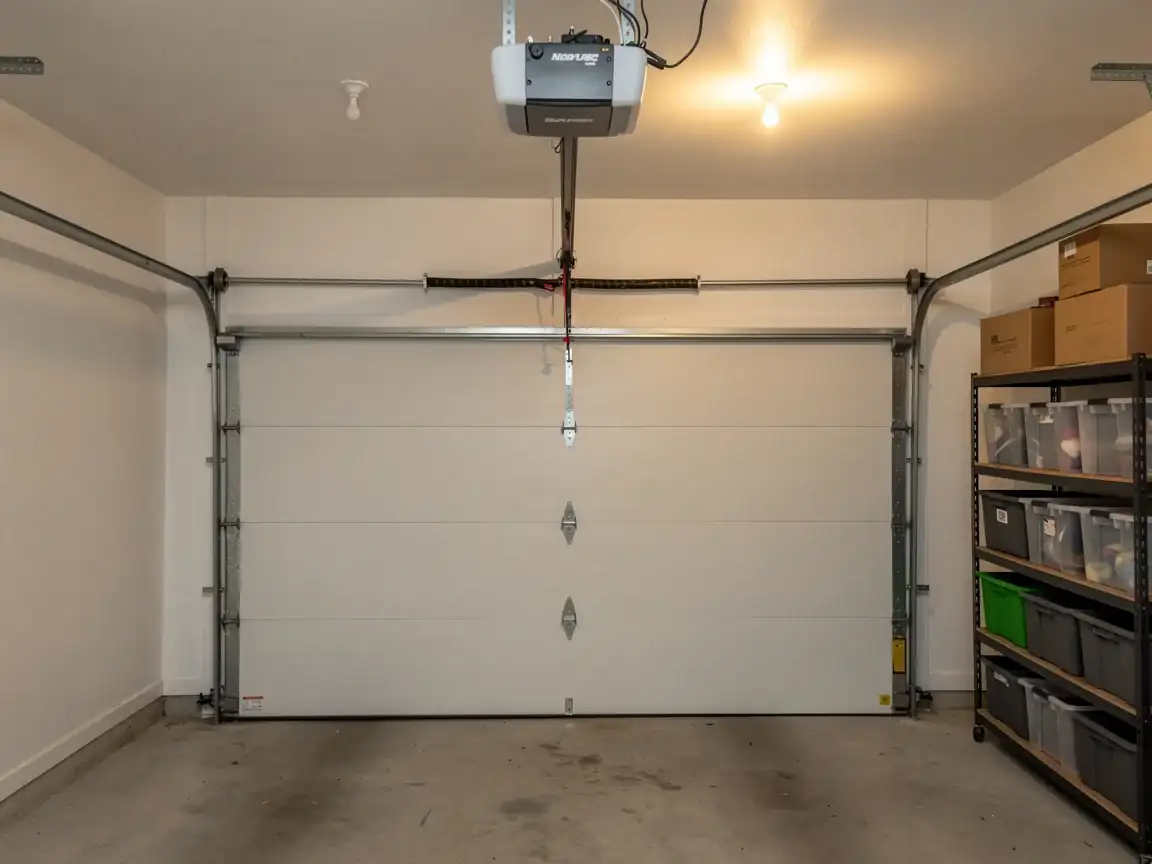
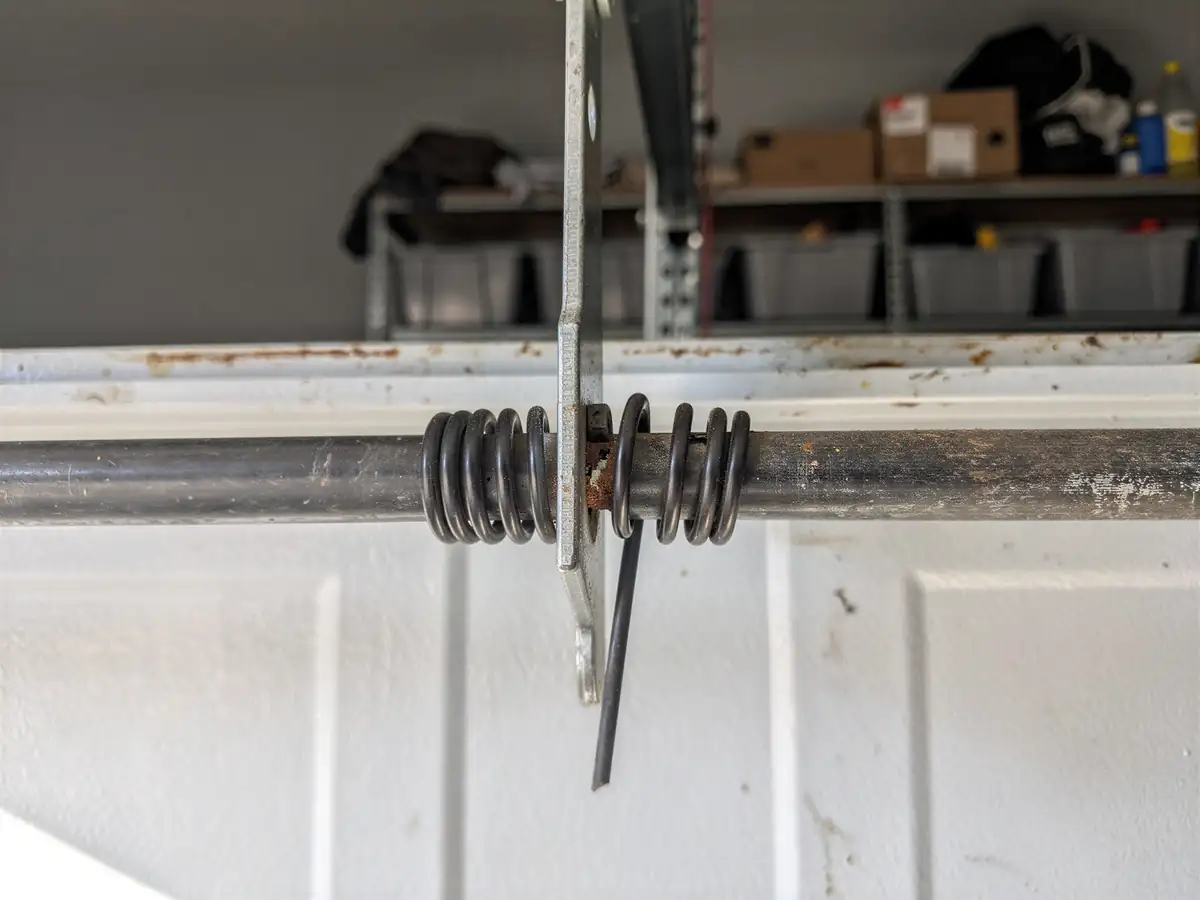
If a roller has left the track, if the door is sitting at a visible angle, or if you hear metal straining when you try to move it by hand, stop. A door under spring tension that's also off its track can come down unevenly, and torsion springs on these older setups store a lot of force. That's not a DIY repair - it's the kind of job where the wrong move bends the frame or hurts someone.
One honest note: we don't recommend trying to force a derailed door back onto the track yourself
Even with the opener disconnected. Getting the roller seated again usually takes a second set of hands and the right angle of leverage. It's a 20-minute fix for a tech and a good way to make things worse if you're guessing at it.