Getting Here
Purcell sits about 15 miles from our shop in Norman
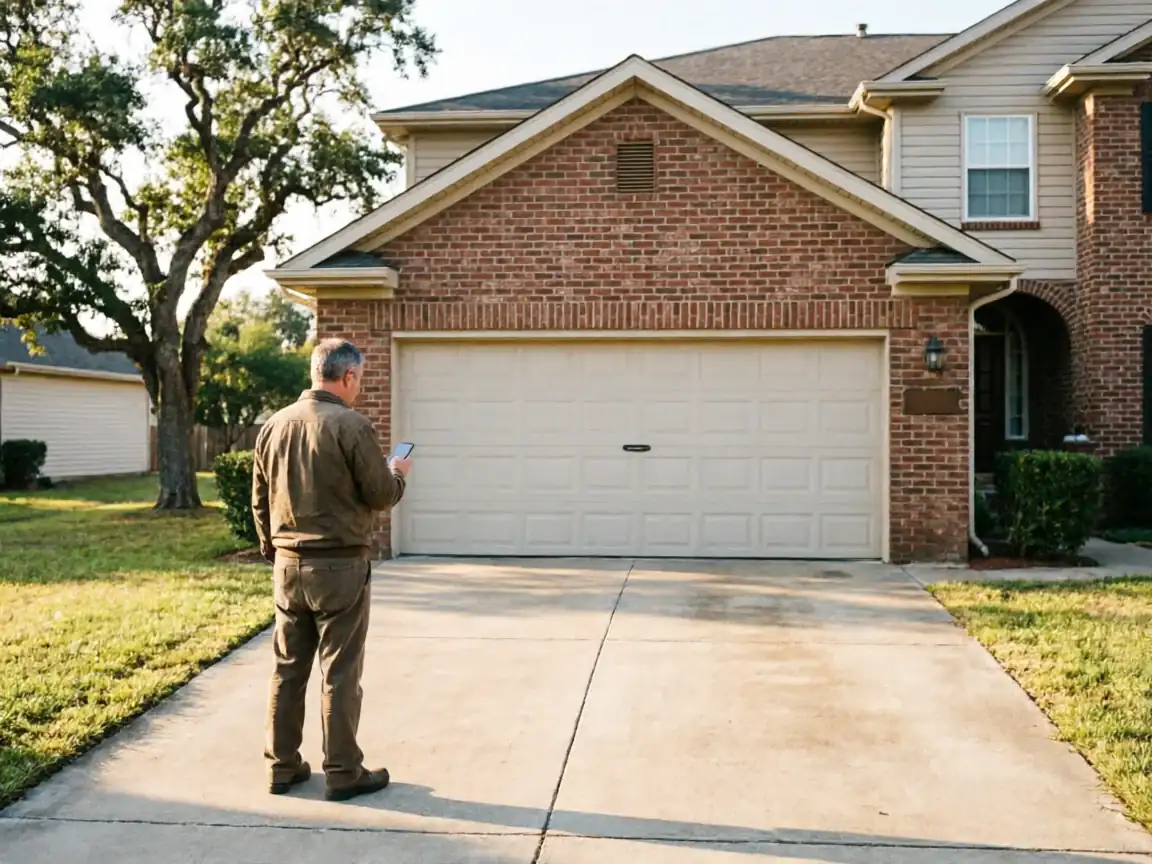
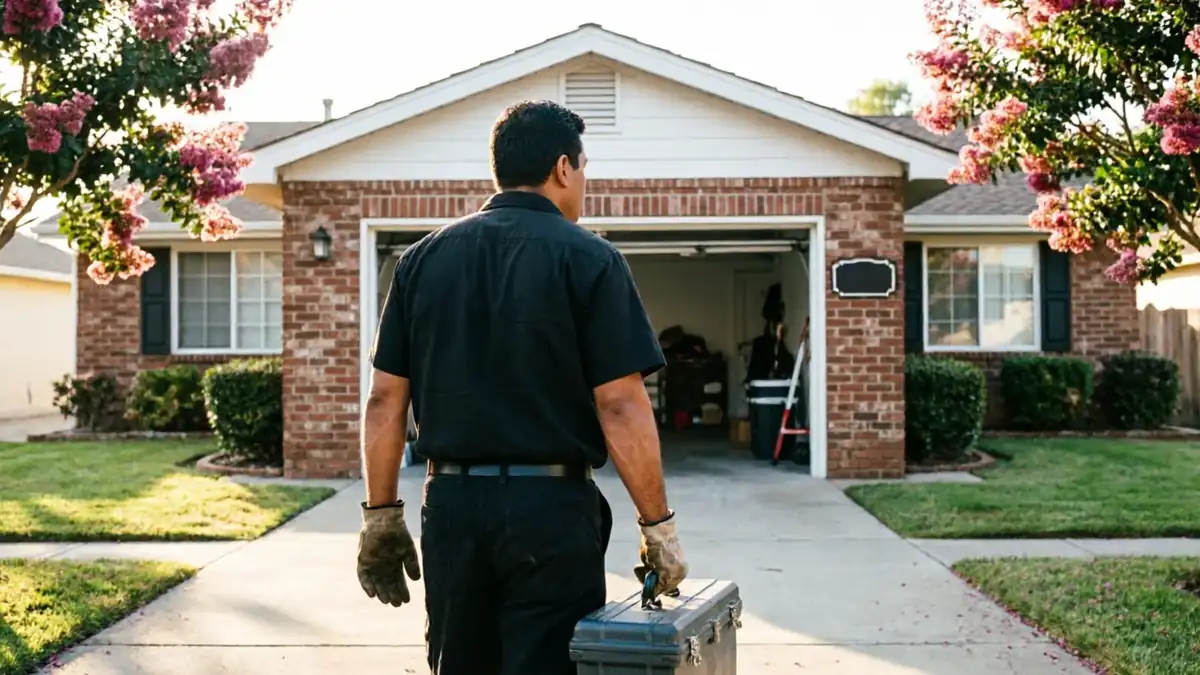
So when you call, you're calling a crew that drives out rather than one sitting around the corner. We don't pretend otherwise. That drive means we plan the trip, load the truck with the parts a Purcell job is likely to need, and come out to do the work in one visit when we can.
- 15 miles
We're not going to tell you we have a depot in town or that we can beat a same-day guarantee from a company based closer
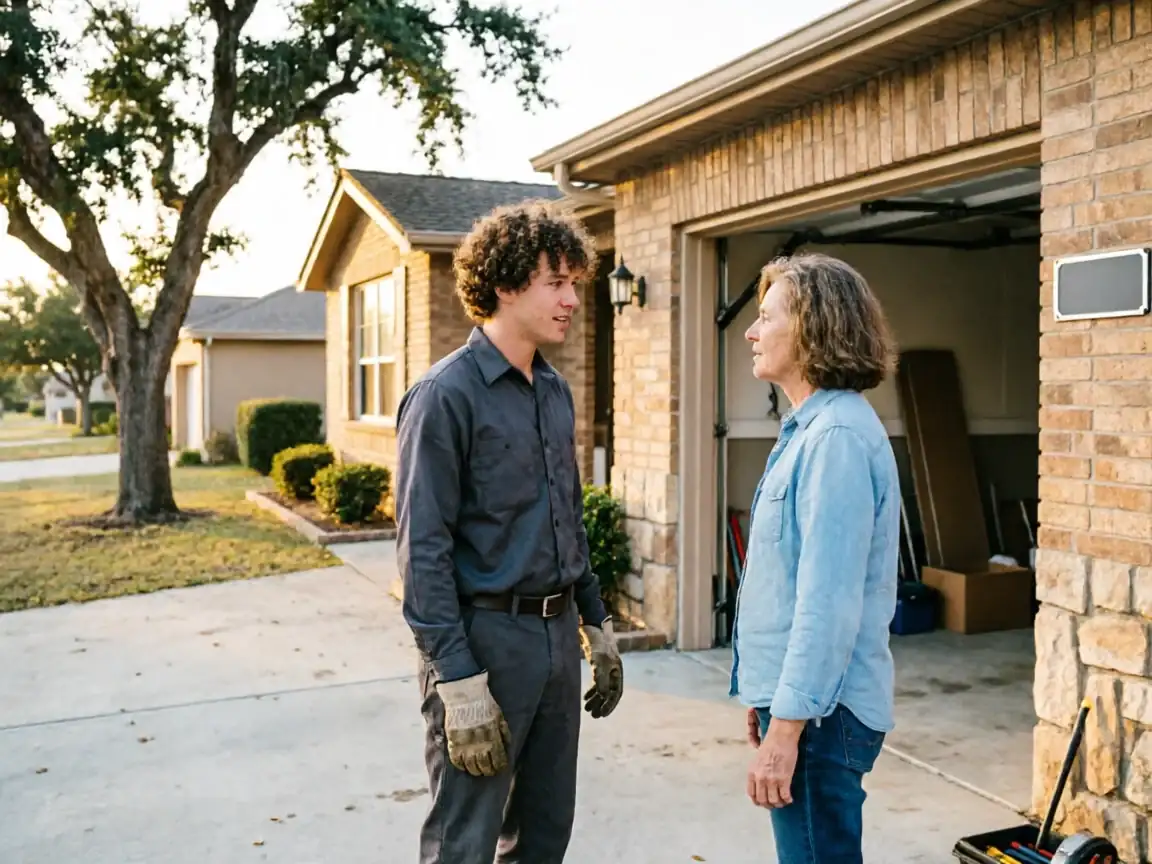
What we can tell you is that the distance is short enough that it doesn't change how we price or do the work once we're there - it just means you should expect us to ask a few questions on the phone first, so the truck is loaded right the first time. A 15-mile run is routine for us, not a special trip, but it's still a real drive and we're honest about that up front.
What We Do Not Do
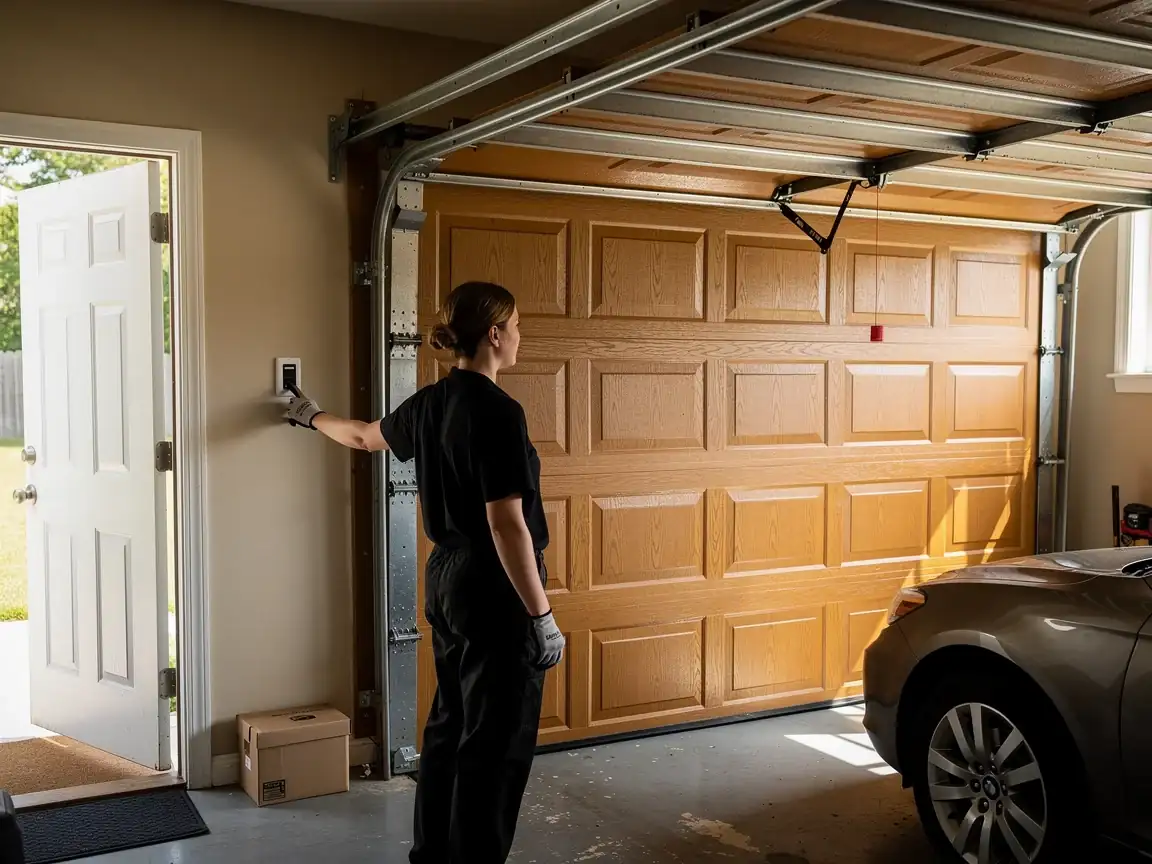
We don't install garage doors sight unseen based on a phone description alone - on an older house, the opening, the header, and the track mounting can all be slightly different from what's standard today, and guessing wrong means a second trip. We don't try to force a modern opener onto worn-out track or a bent panel and call it fixed; if the door itself is the problem, we say so instead of selling you a bracket.
We also don't carry every obsolete part on the truck for every era of door. A house built in the early 1980s can still have original hardware that newer doors don't use, and if that's what's on your door, we may need to order the part rather than finish in one trip. That's a limitation, not a sales pitch - we'd rather tell you that than promise a same-visit fix we can't deliver. And we don't do work outside garage doors and openers; if the issue turns out to be the framing or the slab, that's a different trade.
How That Shows Up in the Door
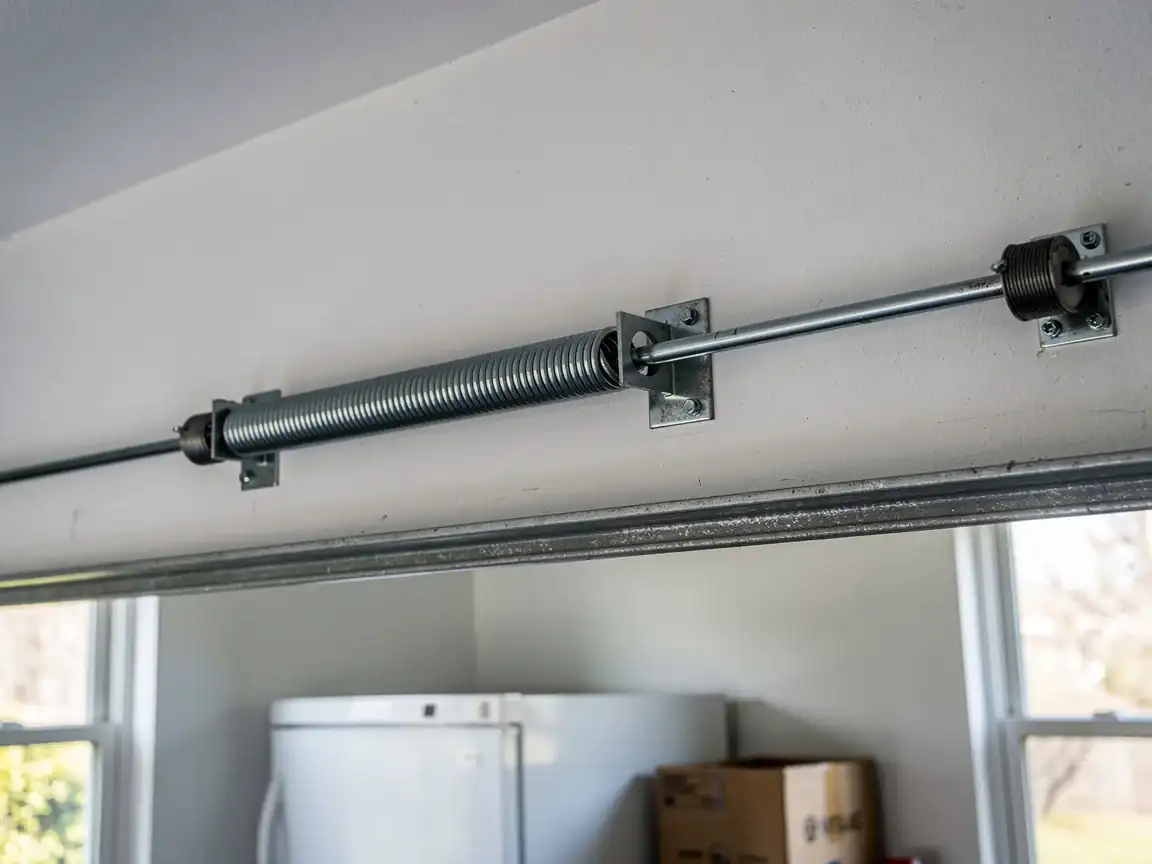
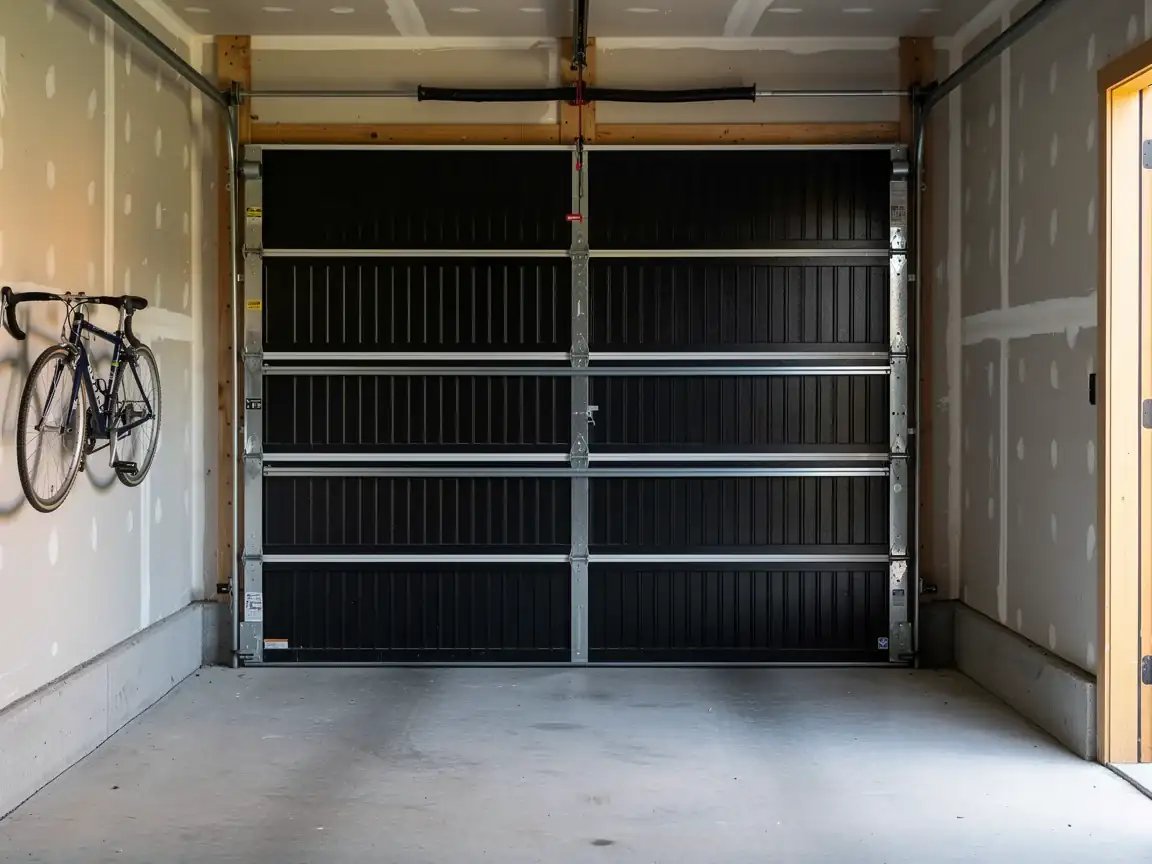
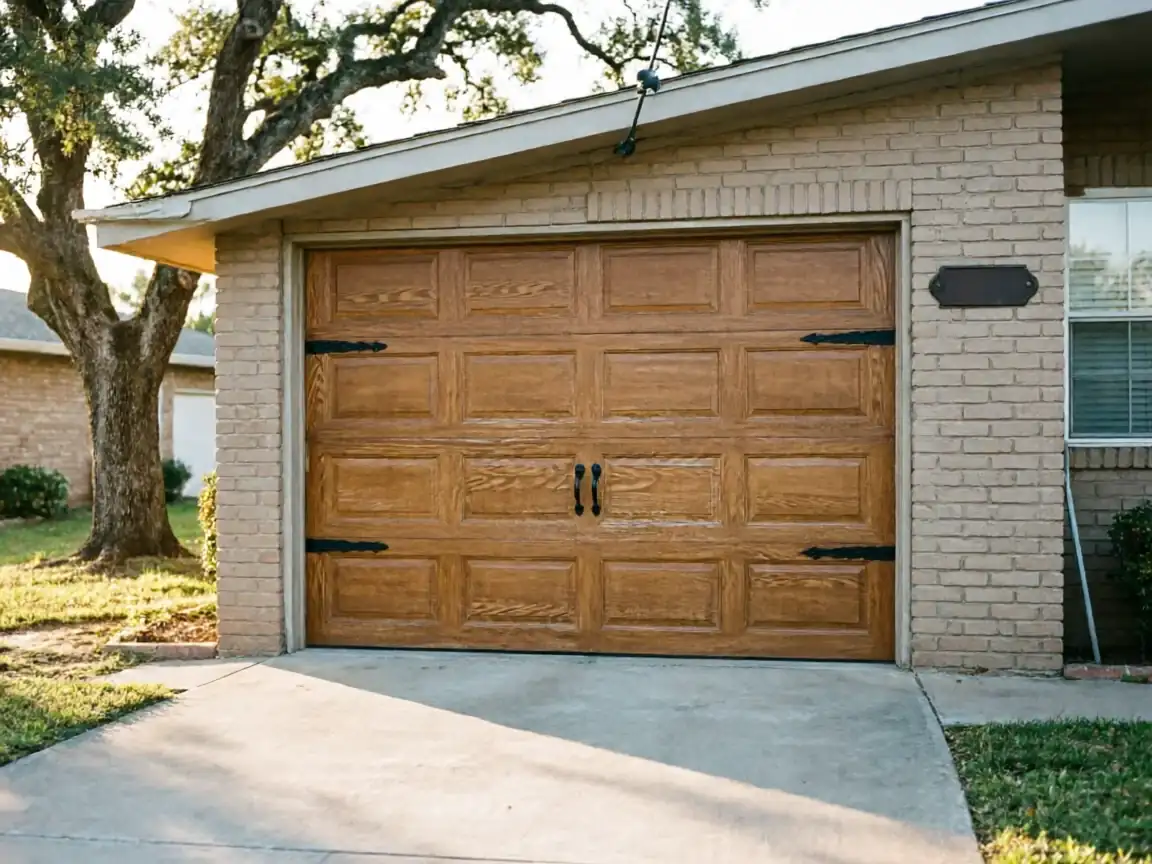
Housing across the wider service area went up mostly between 1964 and 2004, with a median around 1987 - but Purcell's own housing stock centers closer to 1982, a few years ahead of that curve. That matters more than it sounds like it should. Doors from that era were commonly installed with extension springs on steel track brackets rather than the torsion setups builders switched to later, and the panels tend to be a heavier gauge steel without the foam-core insulation that shows up in homes from the 1990s on.
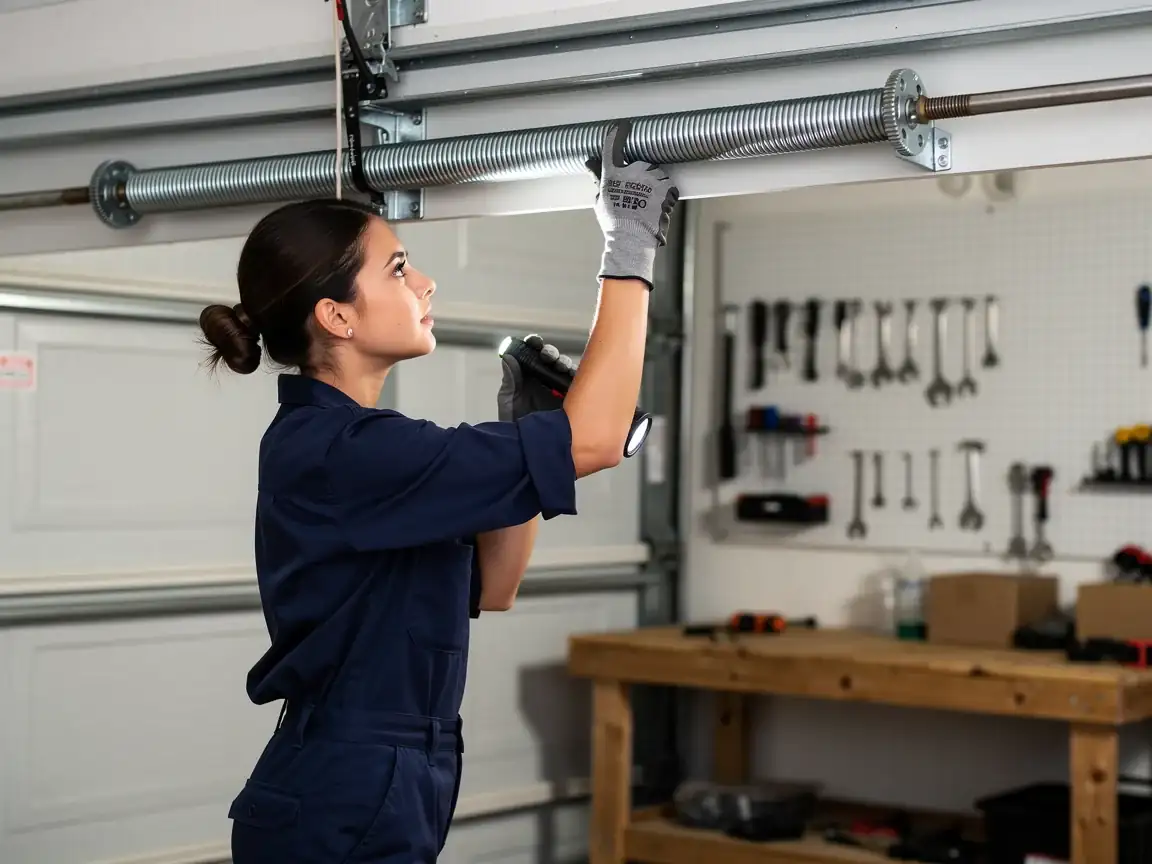
The cold-moderate climate here doesn't help old extension spring setups. Steel contracts in winter, and a spring that's already fatigued from 30-plus years of cycles is more likely to let go on a cold morning than a mild one. On a 1982-era door, that's often the first call: a snapped extension spring, not a torsion spring, which changes both the repair and the parts we bring. If your door is original to a house built in that window, the opener is also probably not original - most of those chain-drive units didn't last 40 years, so you're likely on a second or third opener already.
The Houses Here
Purcell has around 2,547 households
With a median household income near $60,529 - noticeably below the roughly $75,000 median across the wider service area. That gap matters for how we talk about repair versus replacement: on an older door with original hardware, a straight spring or roller fix is often the right call here, not an automatic push toward a full new door.
- 2,547 households
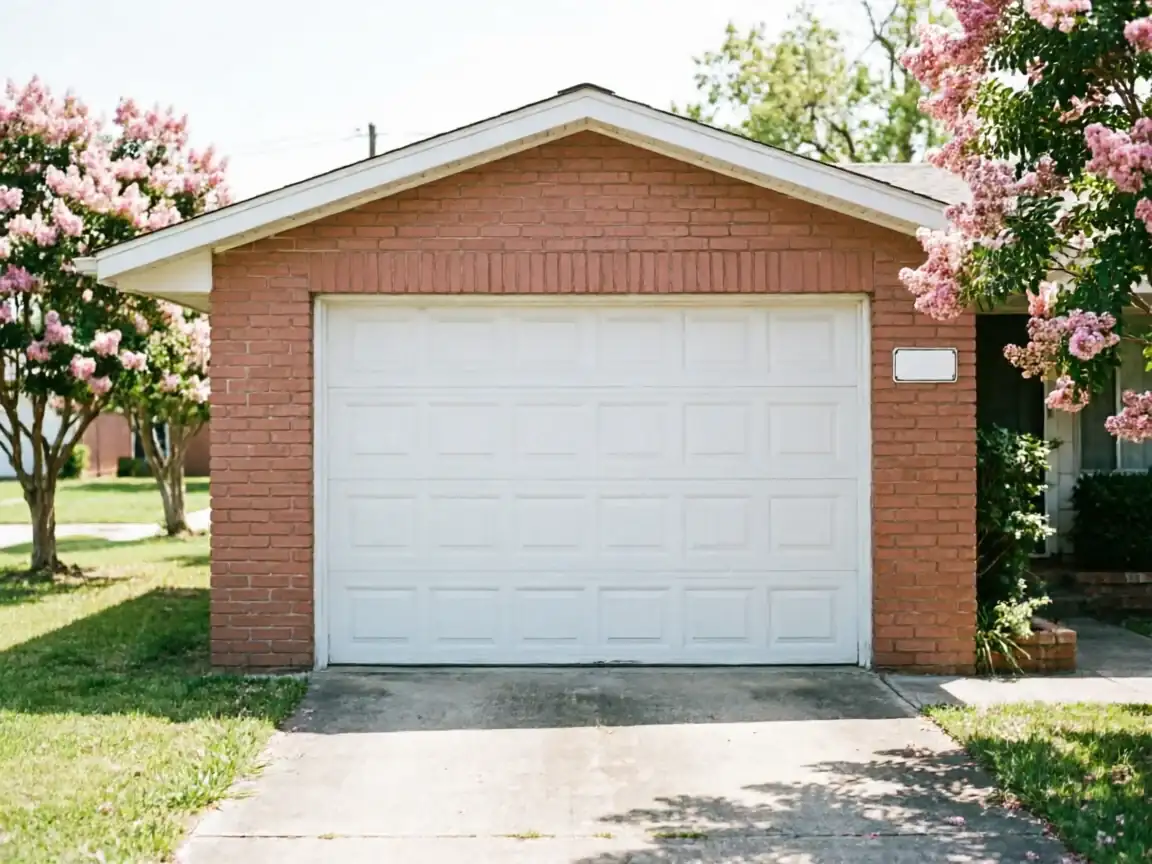
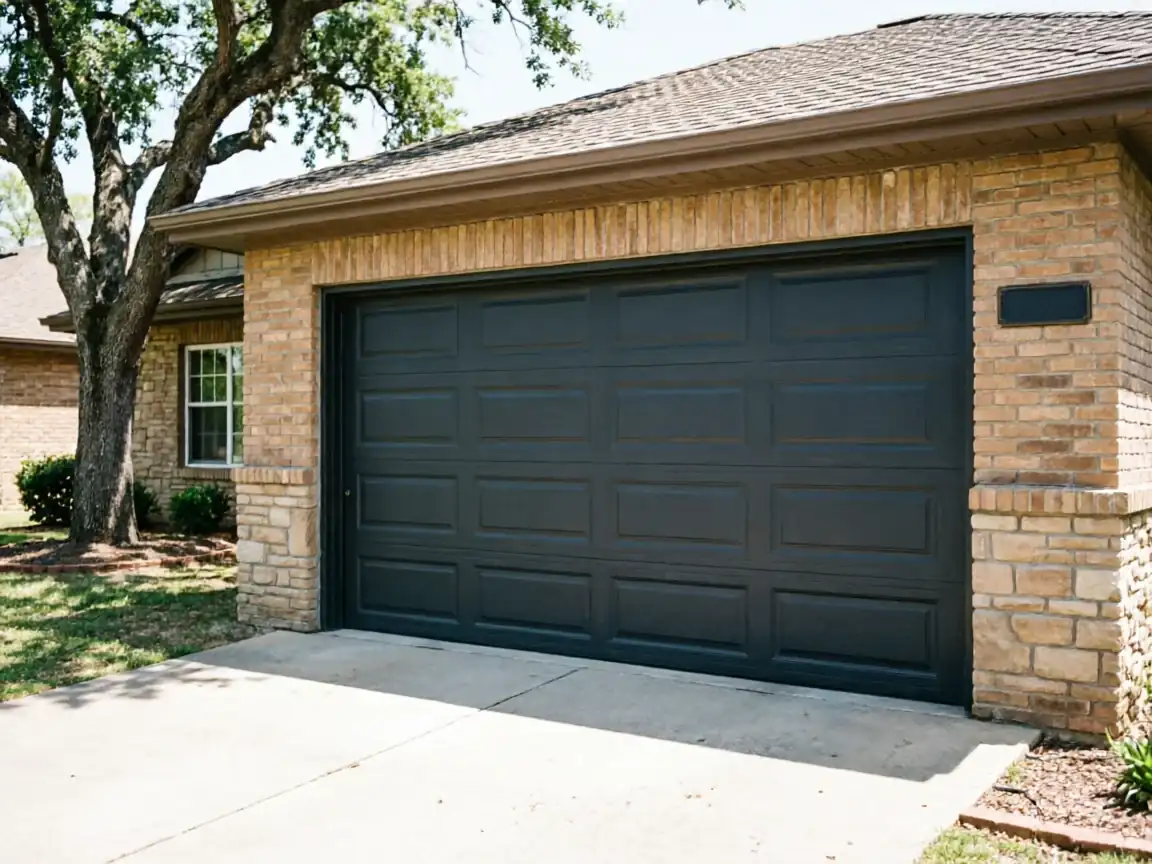
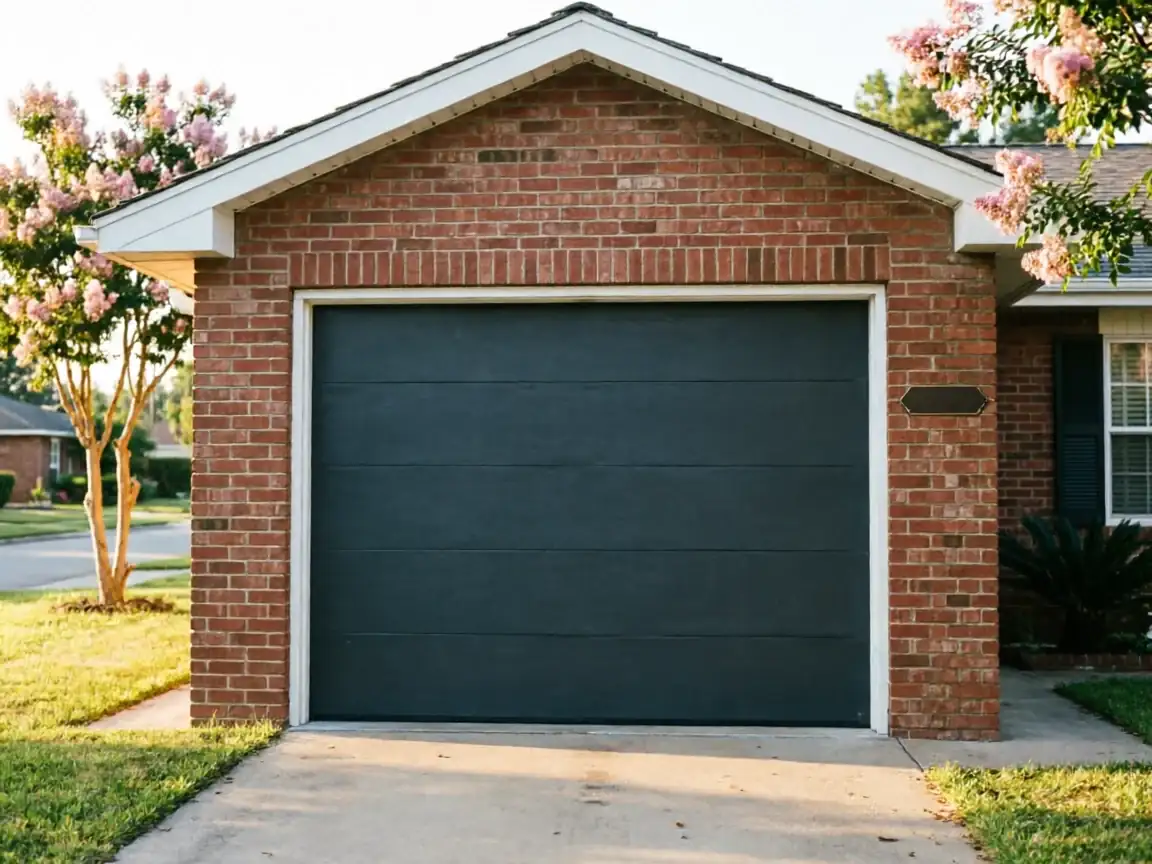
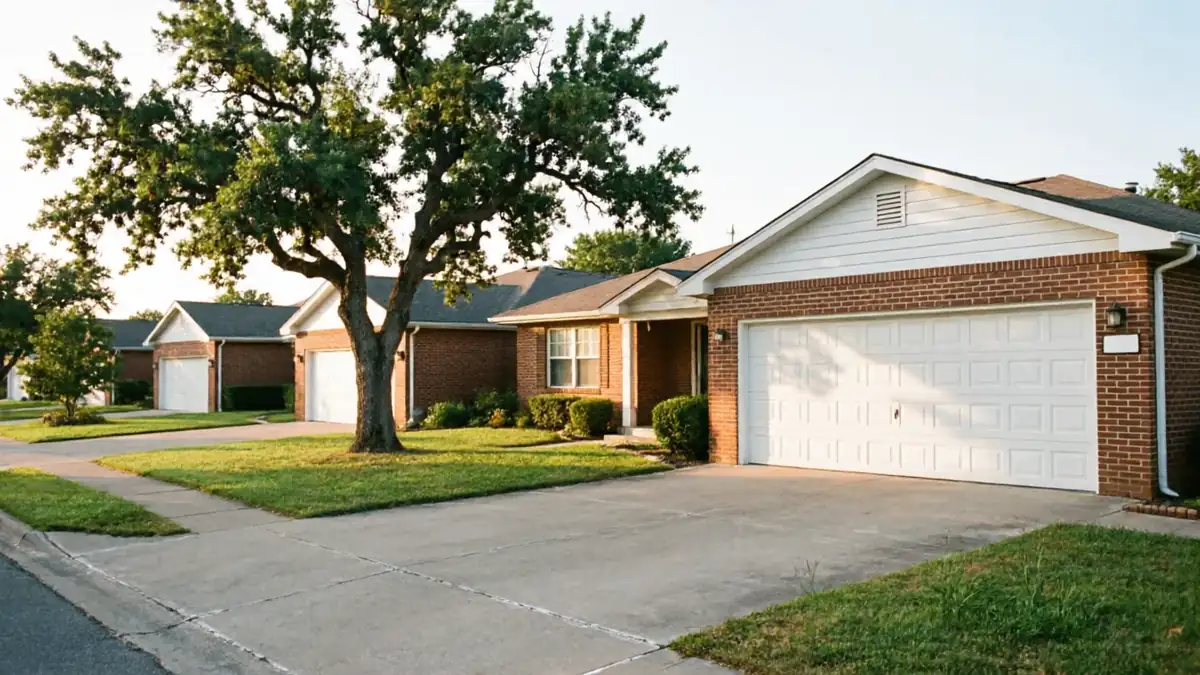
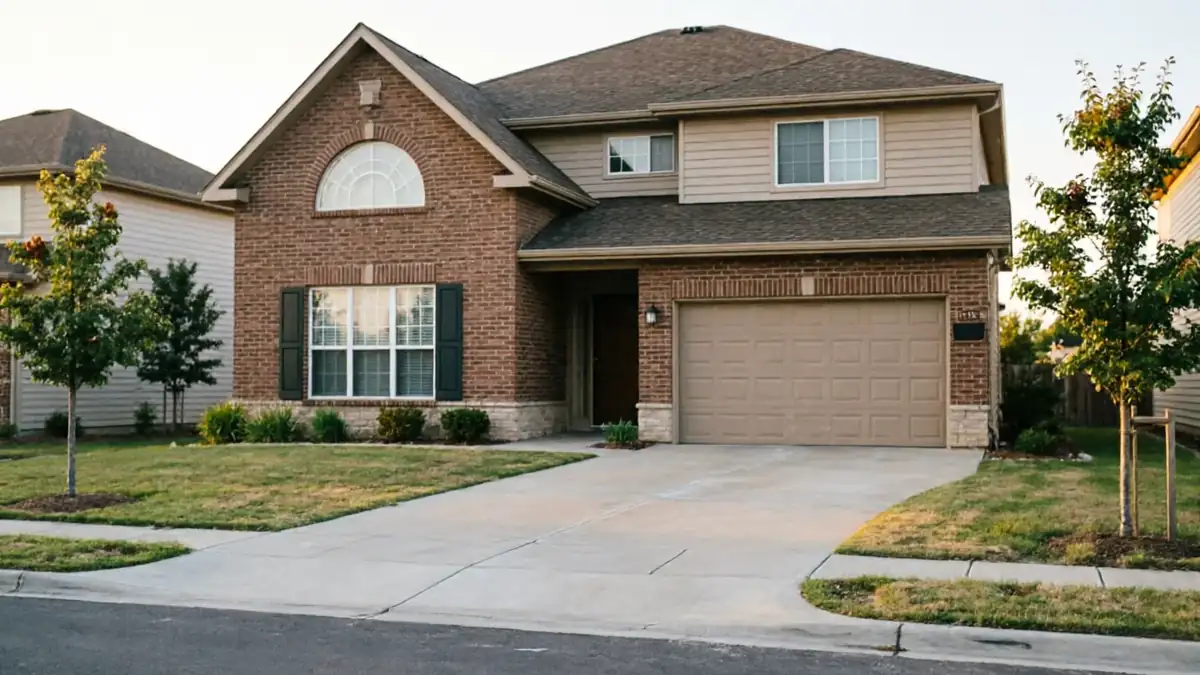
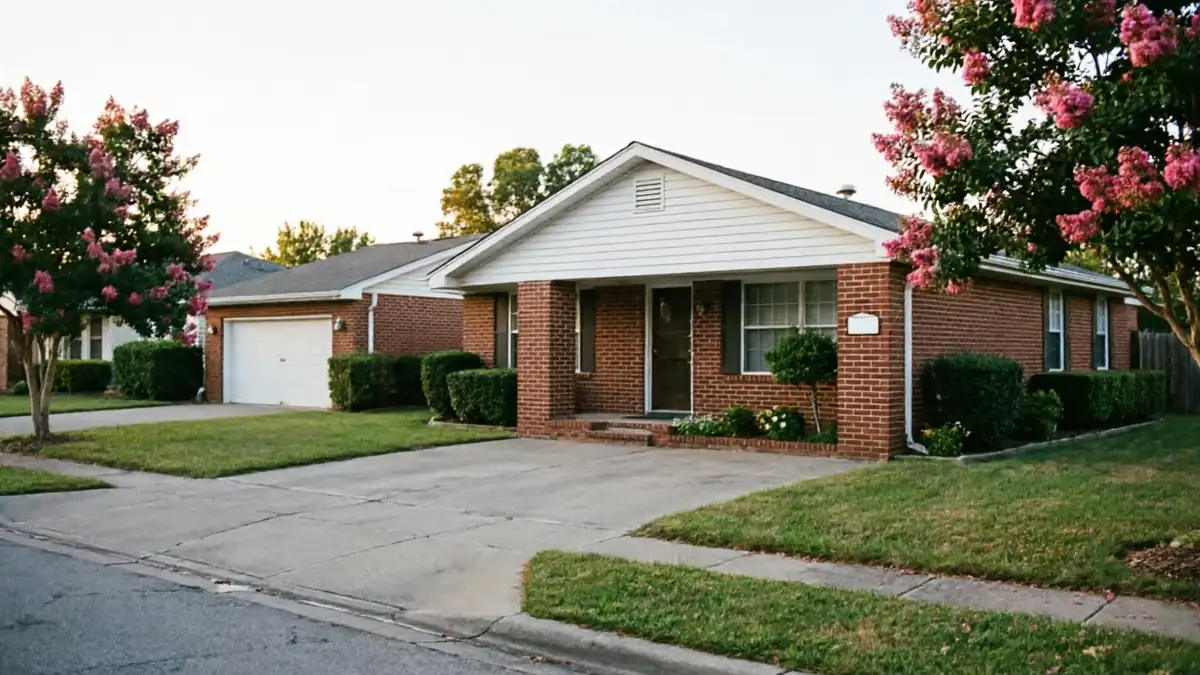
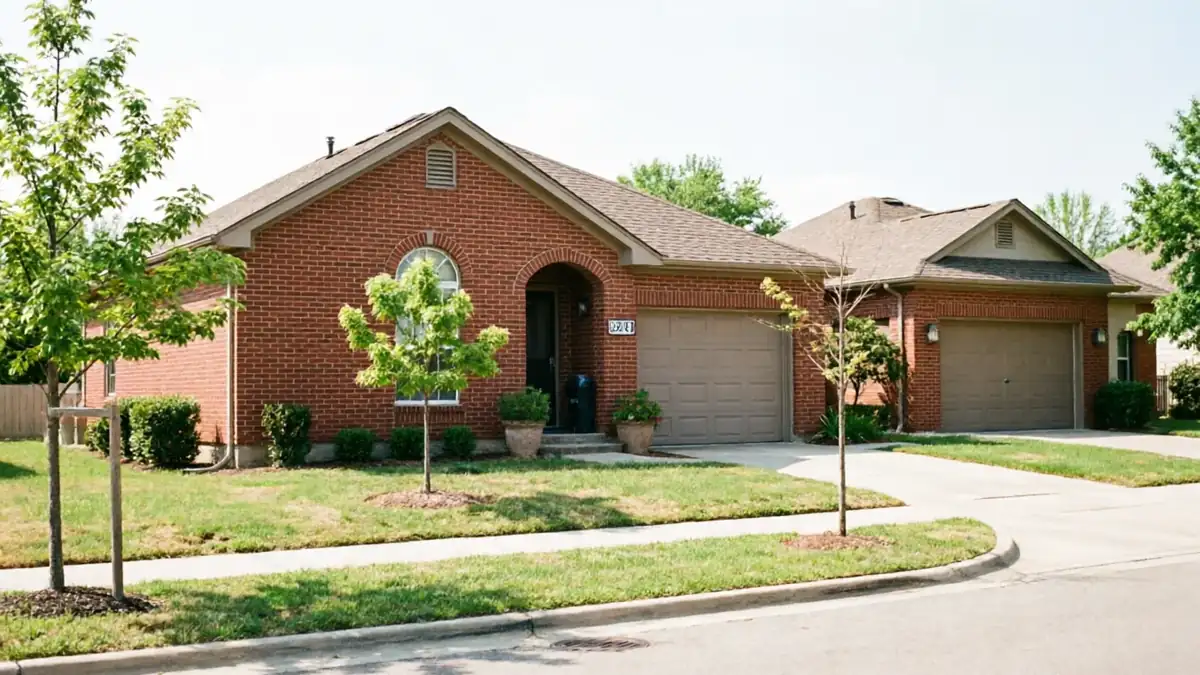
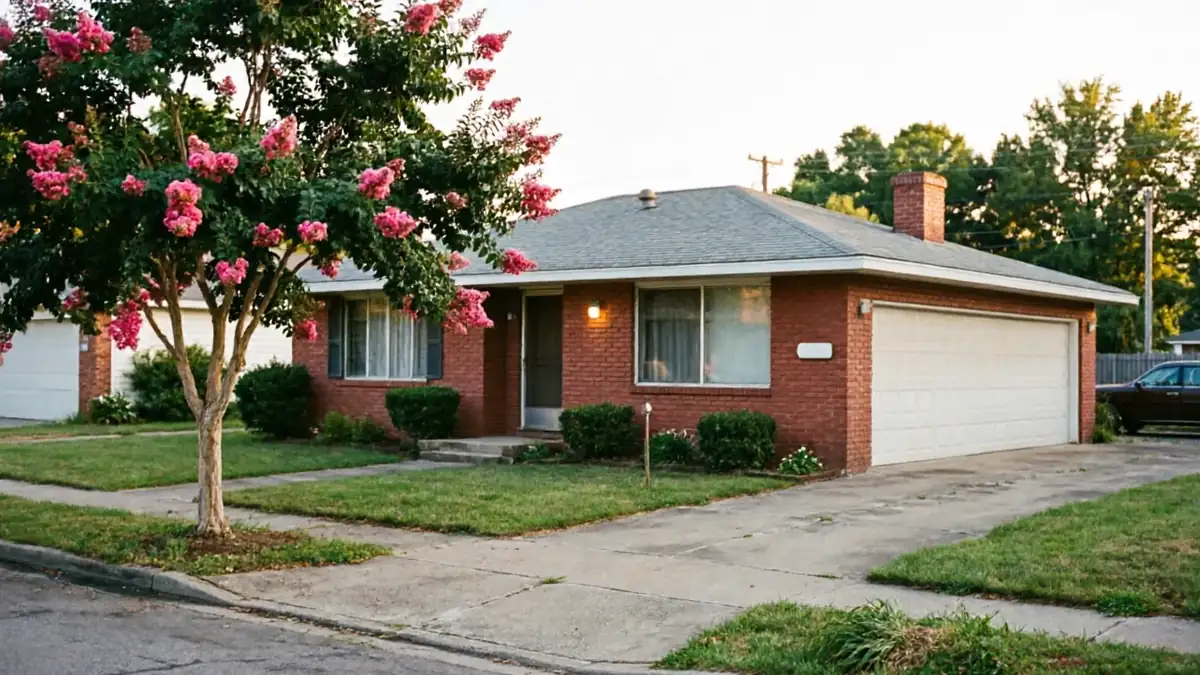
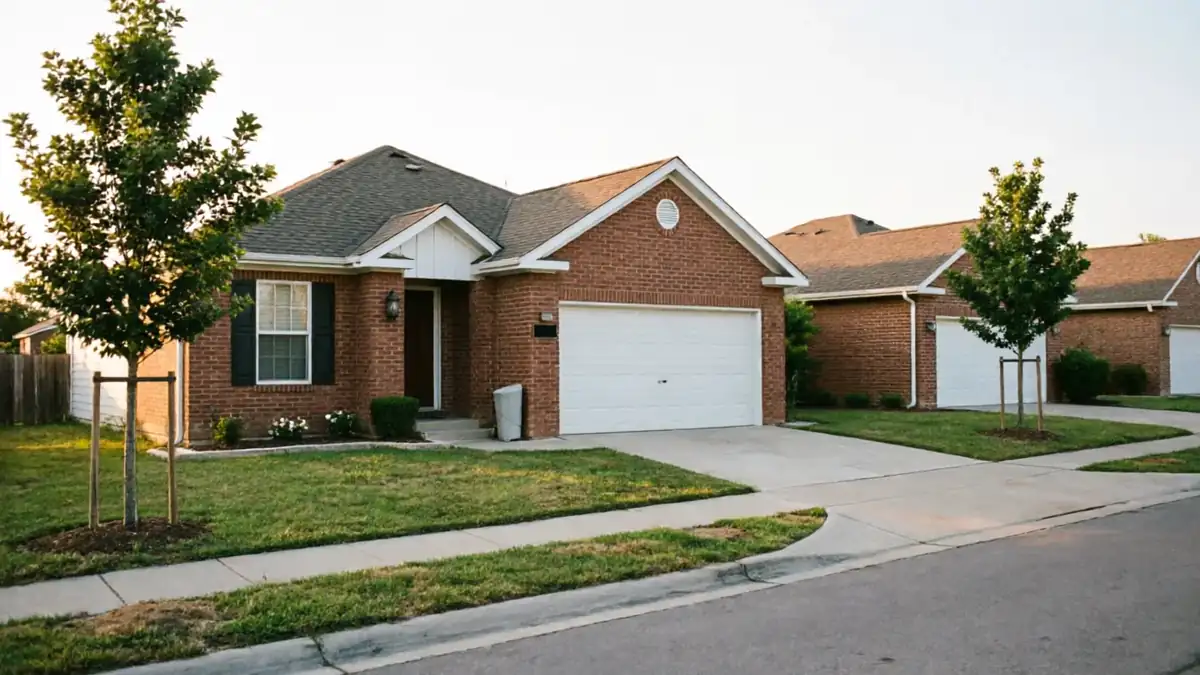
With most homes built around 1982, the garage doors we see tend to be single-layer steel on extension springs
Sized for the single and double openings standard to that era's construction, not the wider three-car openings common in newer builds elsewhere in the service area. Track mounting brackets from that period are usually bolted straight to the framing rather than the jamb-mounted hardware used later, which is a small detail until it's the reason a bracket doesn't fit a replacement part bought off a shelf meant for a newer door.