The Situation
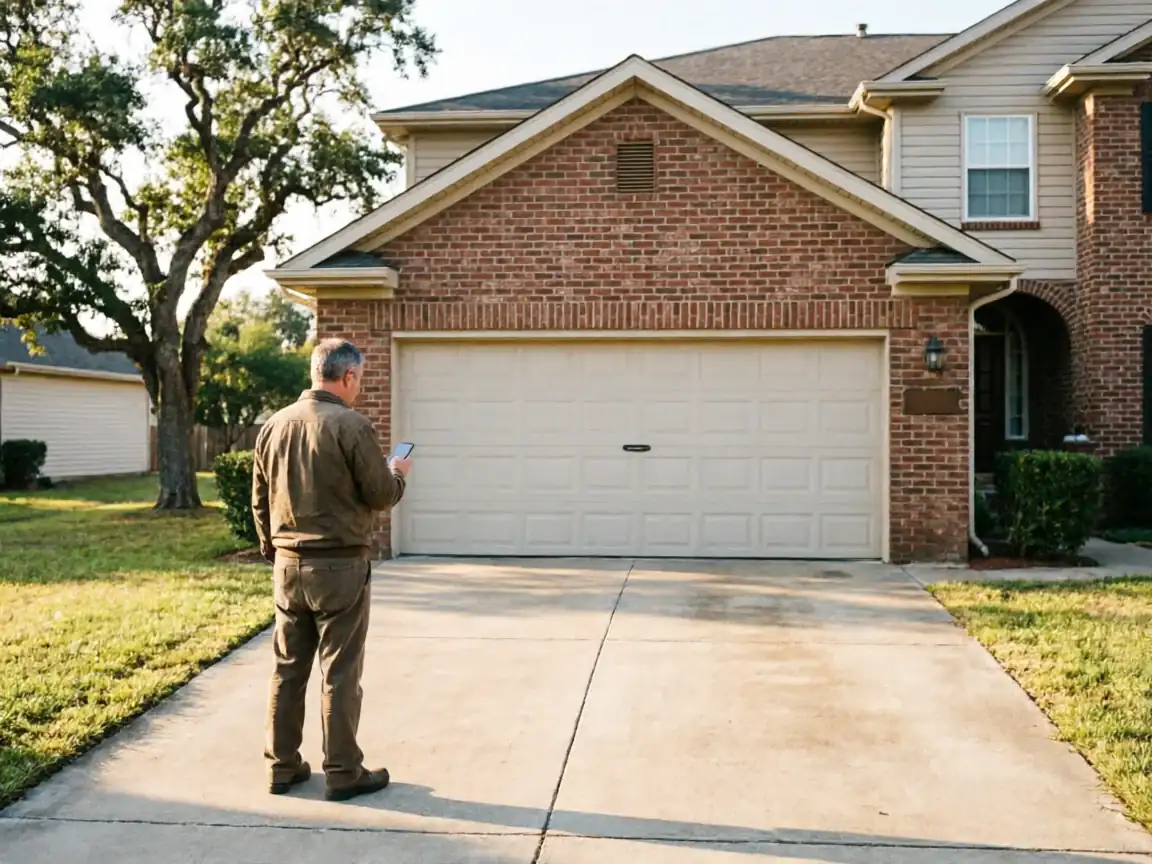
Most of the houses we get called to in Norman went up somewhere between 1964 and 2004
With the bulk of the stock dating to the 1980s and 90s across the area's older subdivisions. That matters because track alignment problems trace back almost every time to the original install hardware from that era, not to anything exotic. A door that's run on the same galvanized track and roller setup for thirty-plus years has had a lot of time to drift out of true, even if nobody ever hit it with a car.
The track itself rarely fails on its own
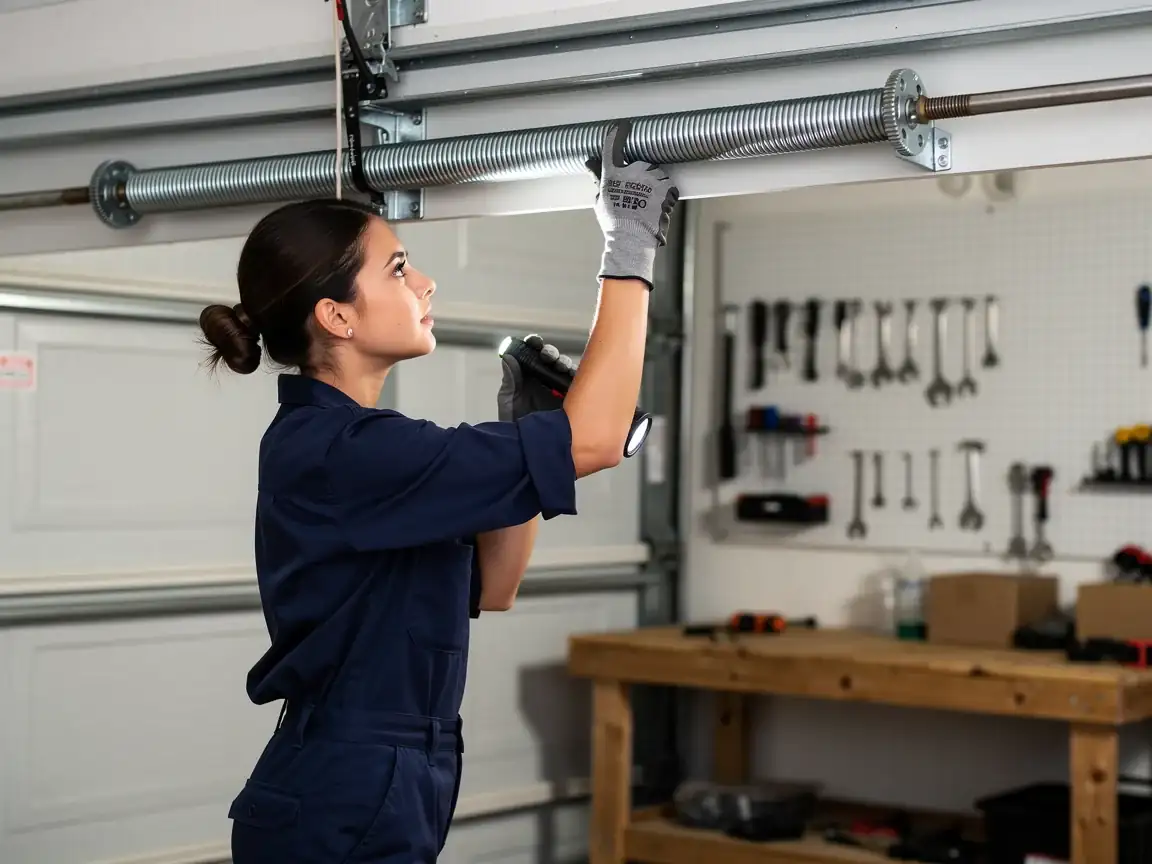
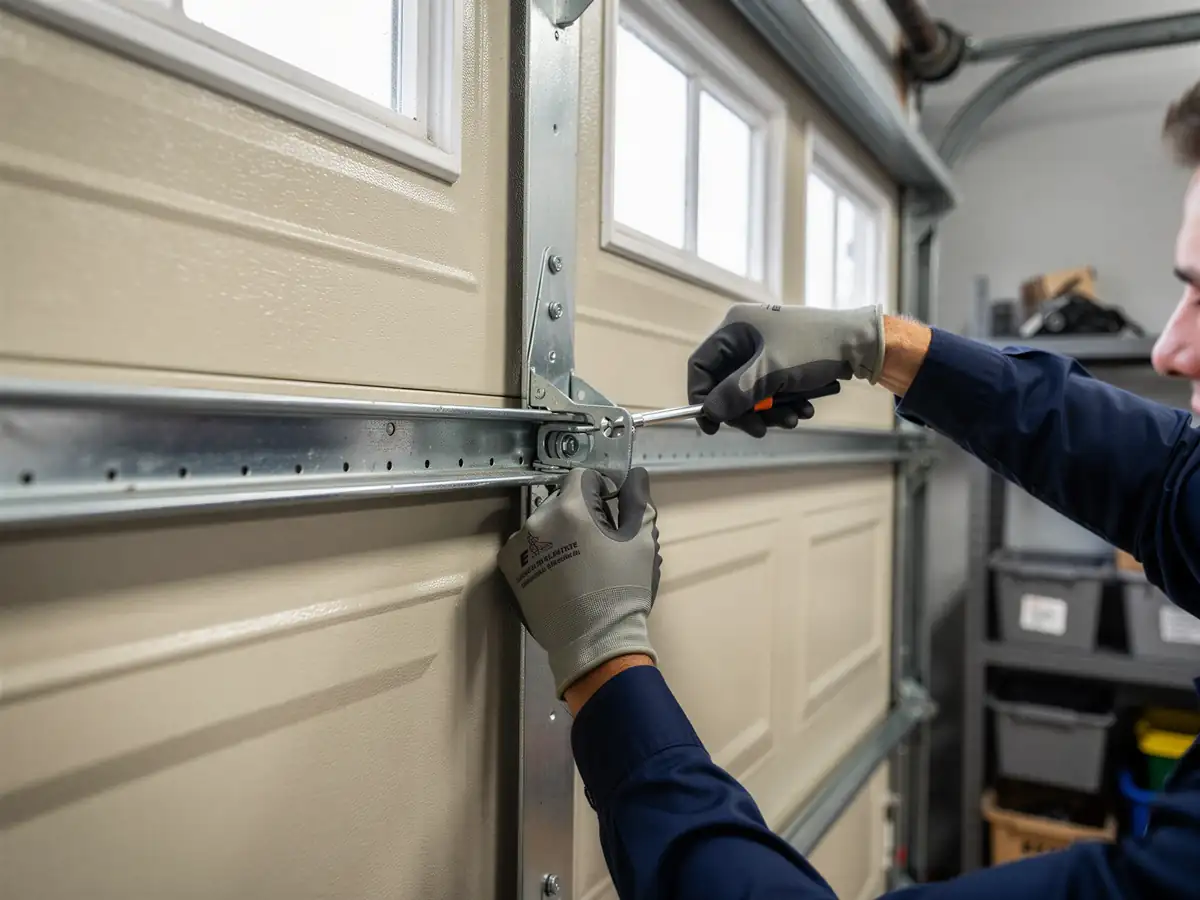
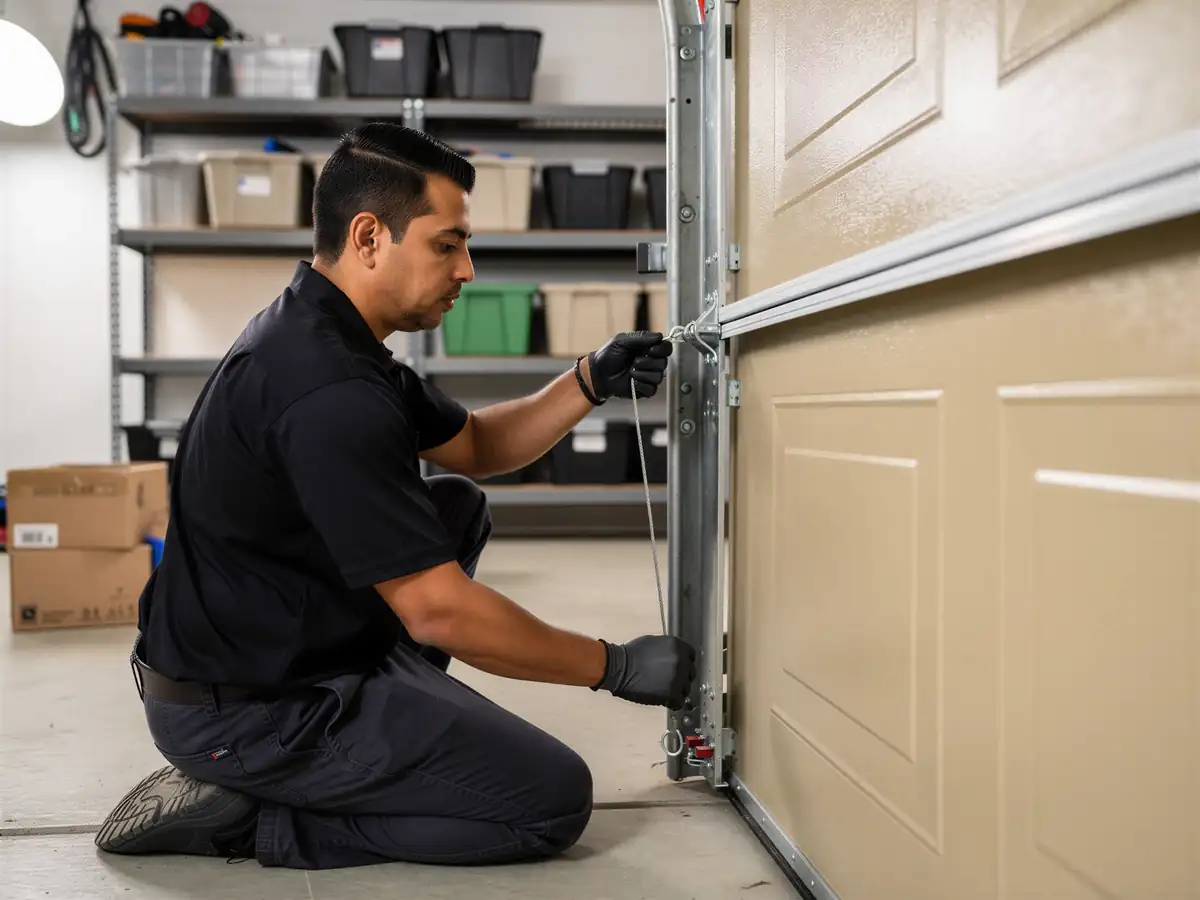
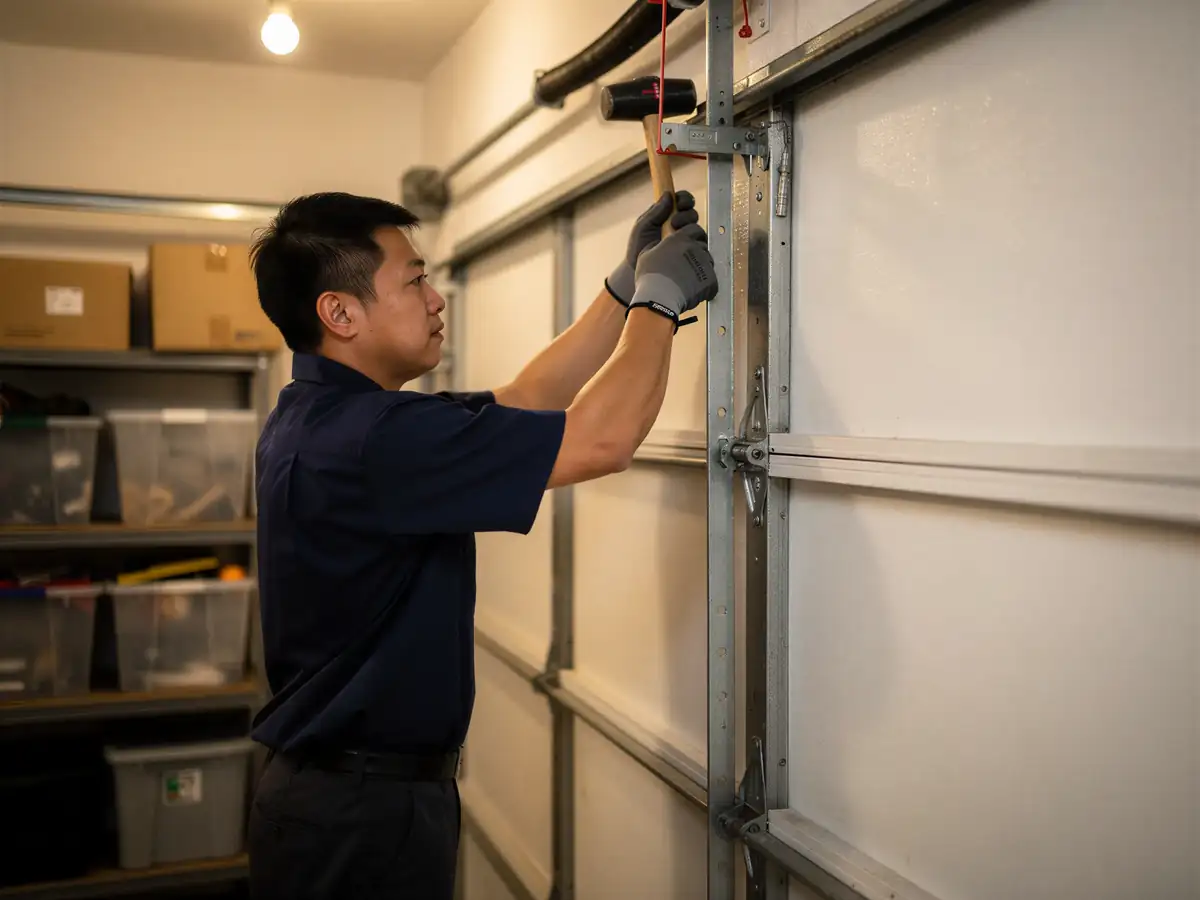
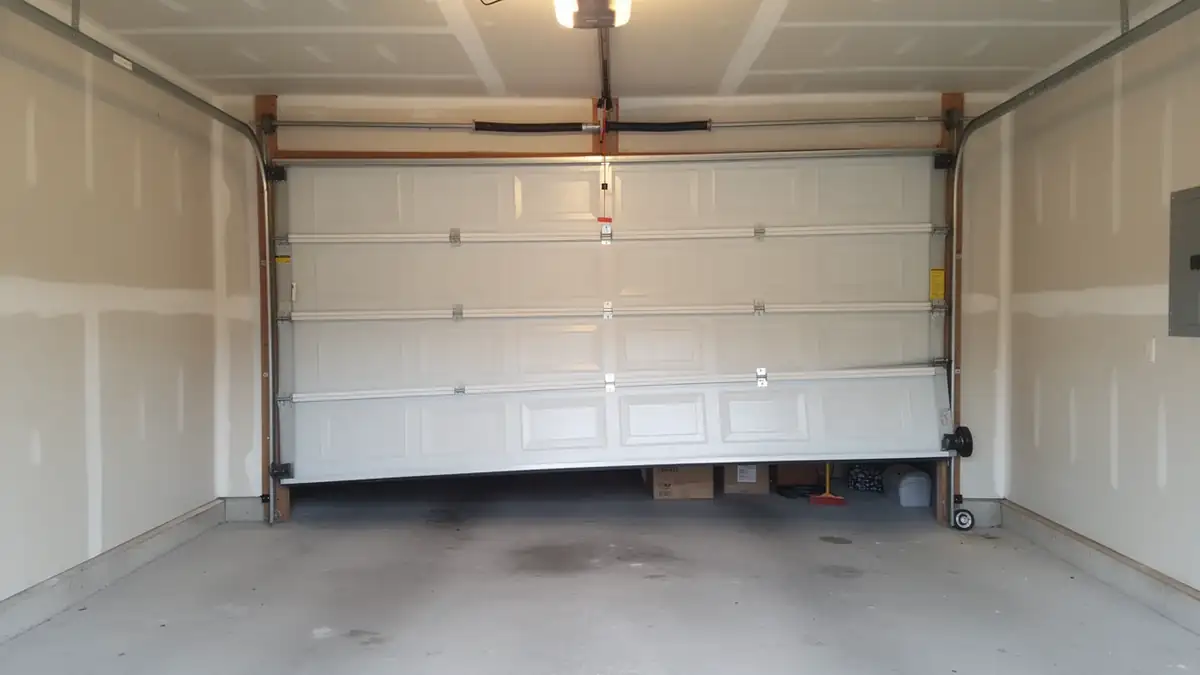
It's the brackets holding it to the frame, the hinges between panels, and the rollers riding inside it that wear down first. On a house from the 80s or 90s stock common across this area, those brackets were often fastened with lag screws into framing that's shifted a little over the decades. Add a slightly bent track from someone backing into it once, years ago, and you get a door that walks sideways every time it opens, catching more each cycle until a roller finally jumps the rail.
Where People Go Wrong
The most common mistake we see is someone noticing the door rubbing or scraping on one side and tightening the track bolts instead of checking alignment first. Tightening a bracket that's already out of plumb just locks the misalignment in place. On the older end of the Norman stock, from houses pushing toward fifty years old now, we also see owners replace rollers without checking whether the track itself has pulled away from the frame, which means the new rollers wear the same way inside a week.
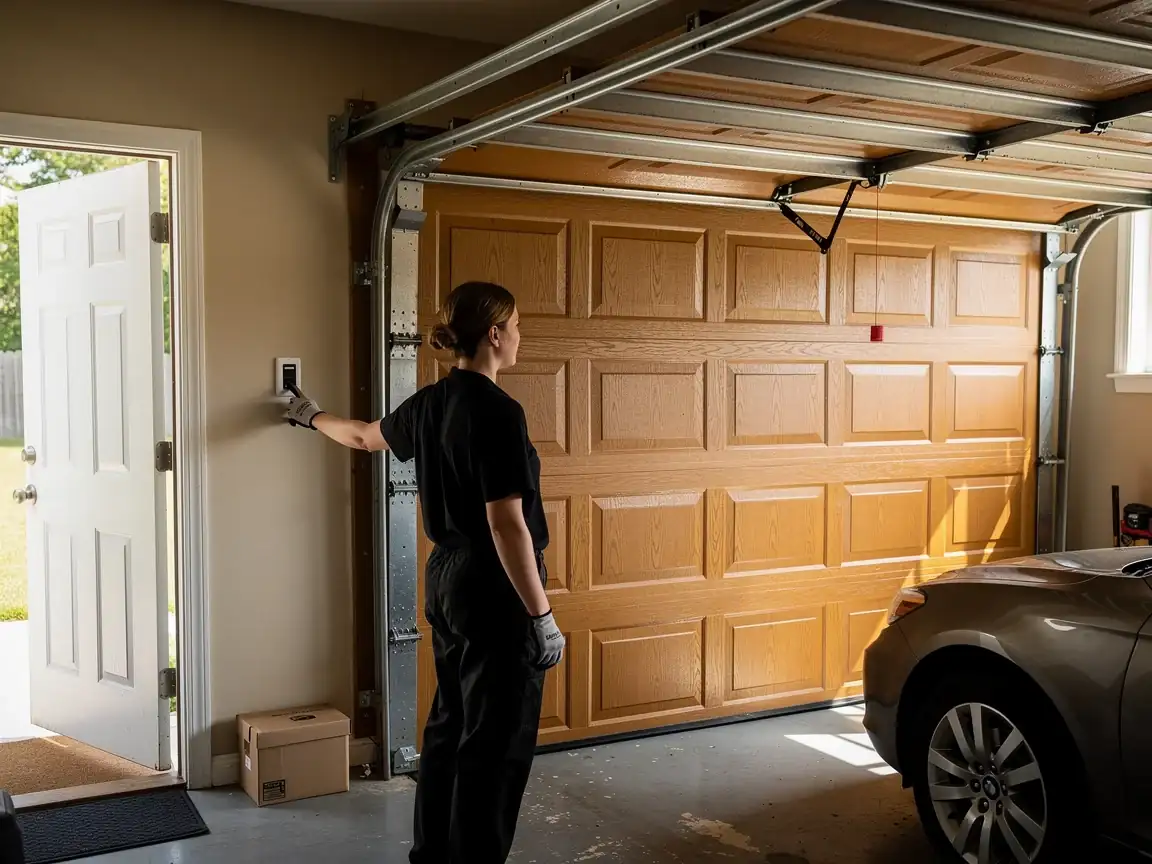
Another pattern: people assume a door that's gone off track did so because of the opener. In most of the jobs we see, the opener had nothing to do with it. The opener's job is to pull a cable; if the track or rollers are already compromised, the opener will keep trying to run a door that physically can't travel straight, which is how you end up stripping gears or burning out a motor chasing a mechanical problem that started somewhere else entirely.
When Waiting Is Fine
Not every noise means the door's about to jump its track. If a door that's otherwise running straight develops a light squeak at one or two points in the cycle, that's usually just a dry roller or hinge pin, and it's fine to wait and lubricate it on your own schedule rather than call it in as an emergency. A door still traveling evenly, closing flush, and not binding anywhere doesn't need a same-day visit just because it's noisy.
Where we'd tell you not to wait: if you can see daylight between the roller and the track at any point when the door is moving, or if the door has started leaning to one side as it travels. Those are signs the hardware is already partway off and the next cycle could be the one where it comes free. Everything else - a stiff spot, a squeal, a door that's a little slow to start - can usually sit on a list until a scheduled visit.
What Local Conditions Do
We're in a cold-moderate climate band here
Which means Norman doors see real temperature swings across a year without the deep-freeze extremes some places get. That swing still matters for track alignment. Steel track and the sheet-metal panels common on doors from the 1964-2004 building window expand and contract a measurable amount between a summer afternoon and a winter morning. On a door whose brackets are already a little loose, that cycling works the fasteners back and forth until they're no longer holding the track plumb.
This is slower and less dramatic than storm damage, which is part of why it gets missed
There's no single afternoon where the track clearly failed. It's a few thousand open-close cycles across enough hot days and cold mornings that the alignment walks a fraction of an inch at a time, until one day a roller catches the edge of the rail instead of riding inside it.