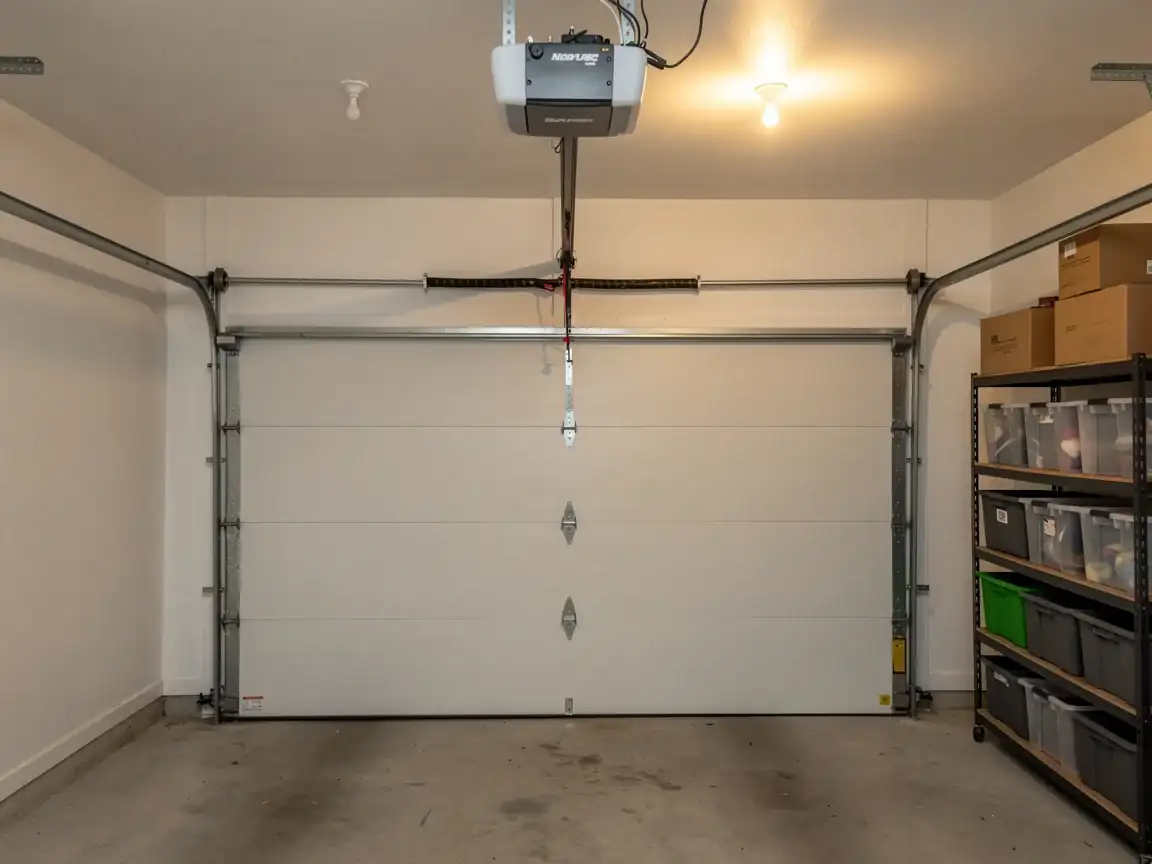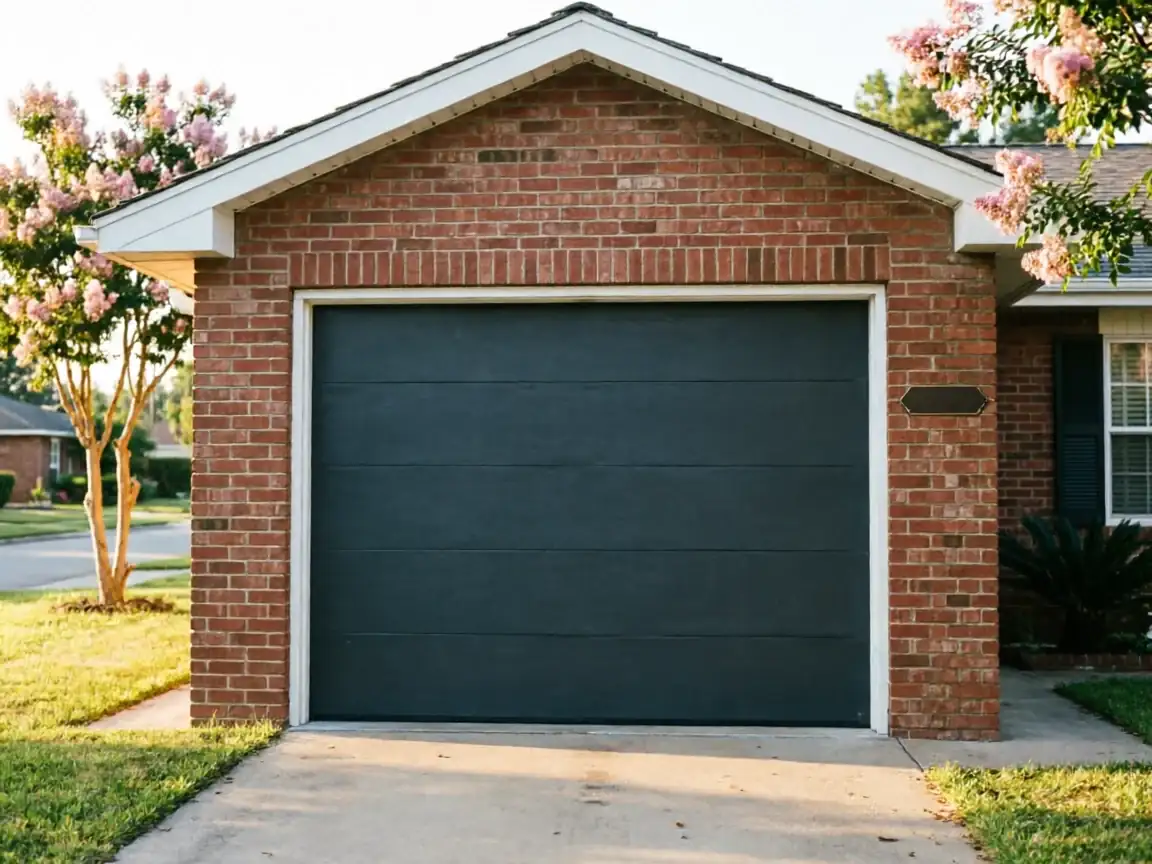
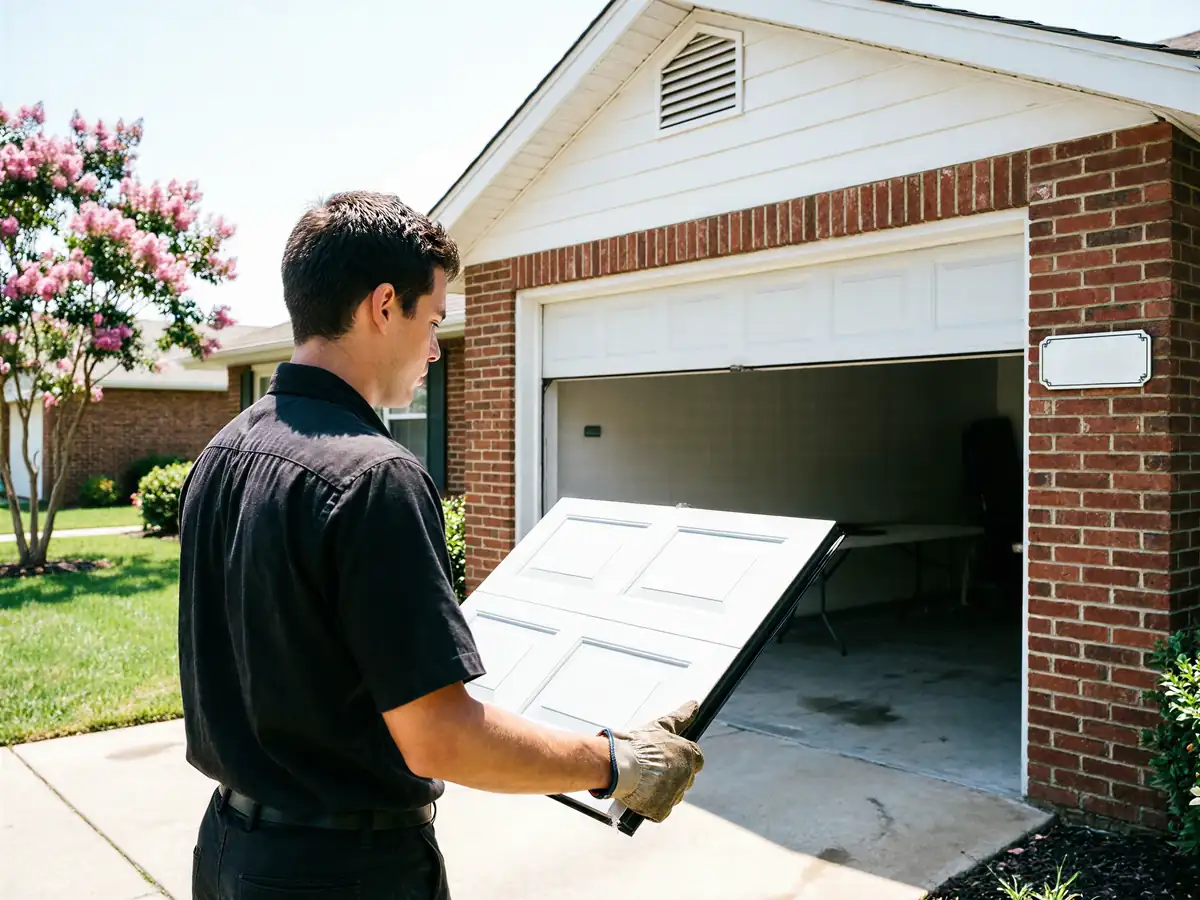
Why This Fails Locally
Most of the calls we get from Goldsby aren't about a door that won't open
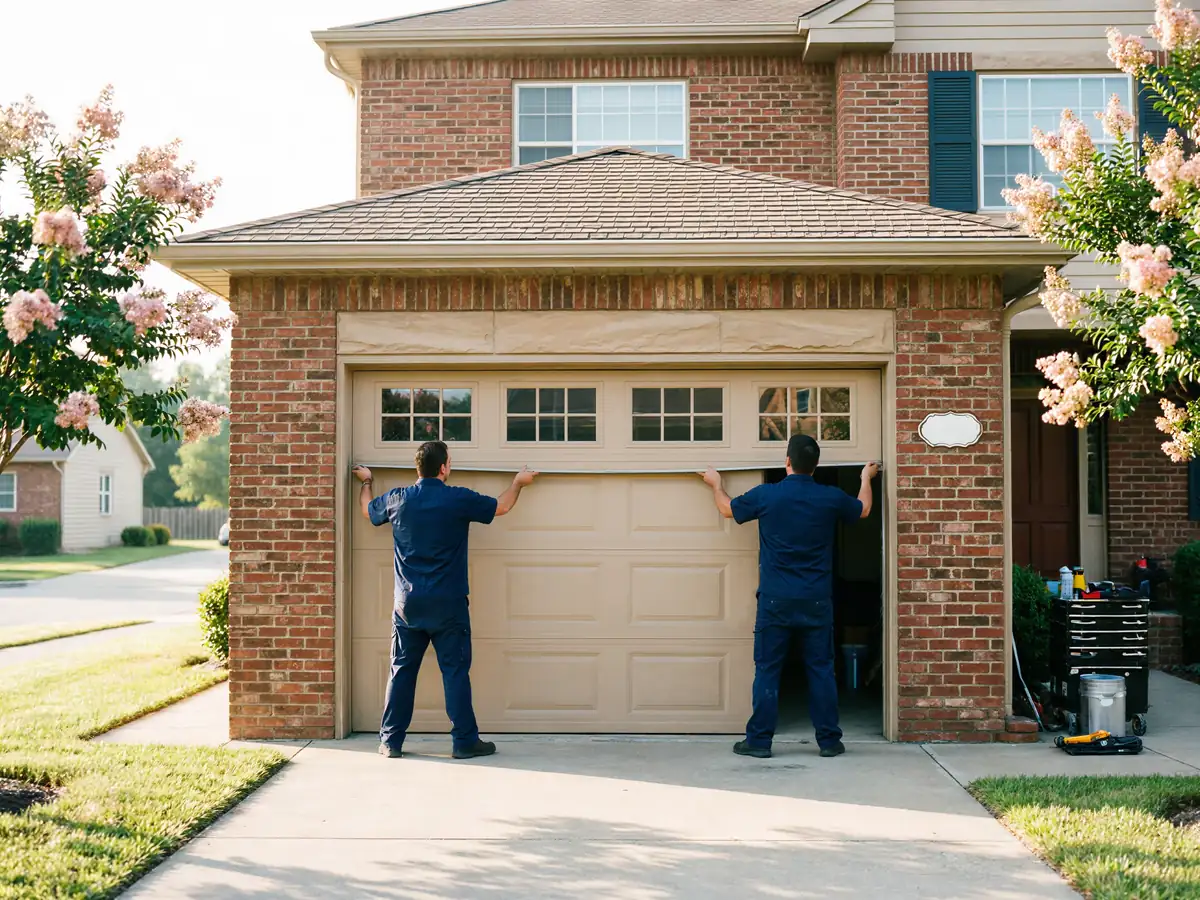
They're about a dented panel on a door that works fine otherwise - someone backed a trailer into it, a kid's bike fell against it, a hailstorm left a crease across the bottom section. The fix seems simple until you try to order the replacement skin and find out the color and texture don't exist anymore.
That's a build-year problem, not a bad-luck problem
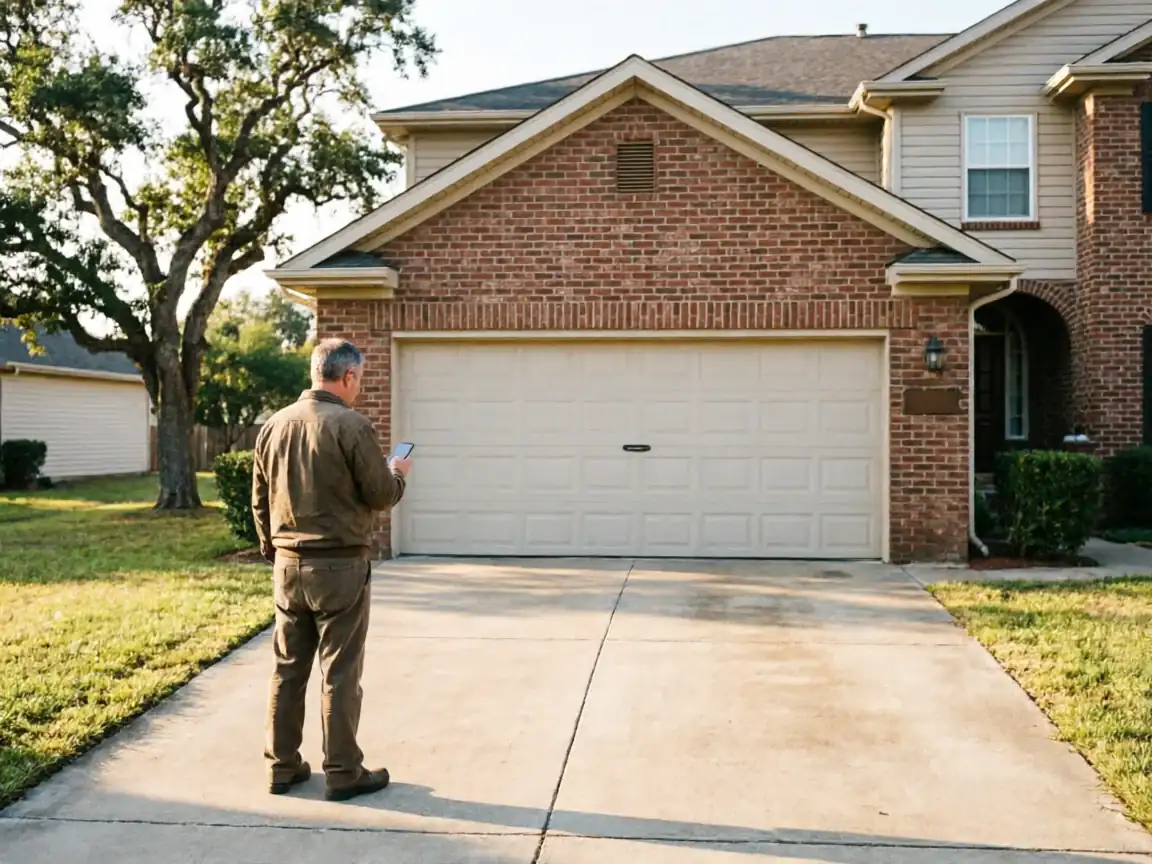
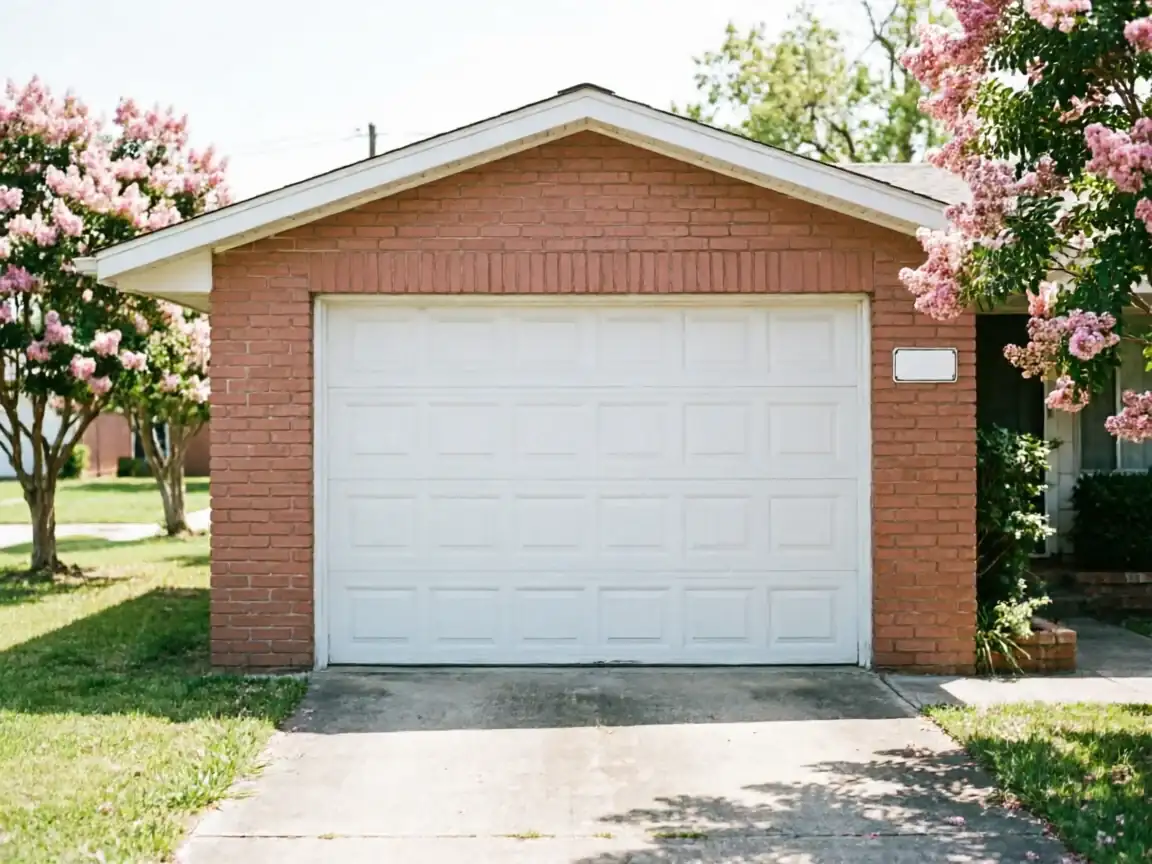
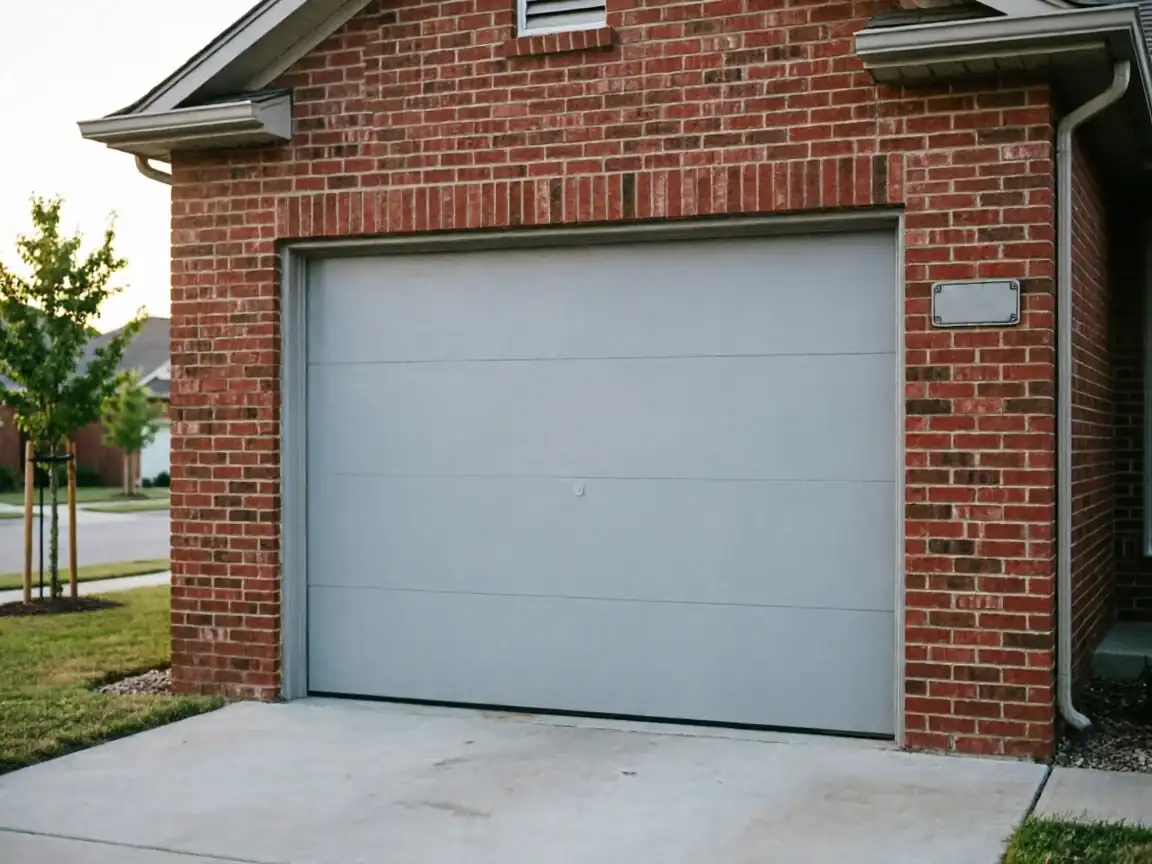
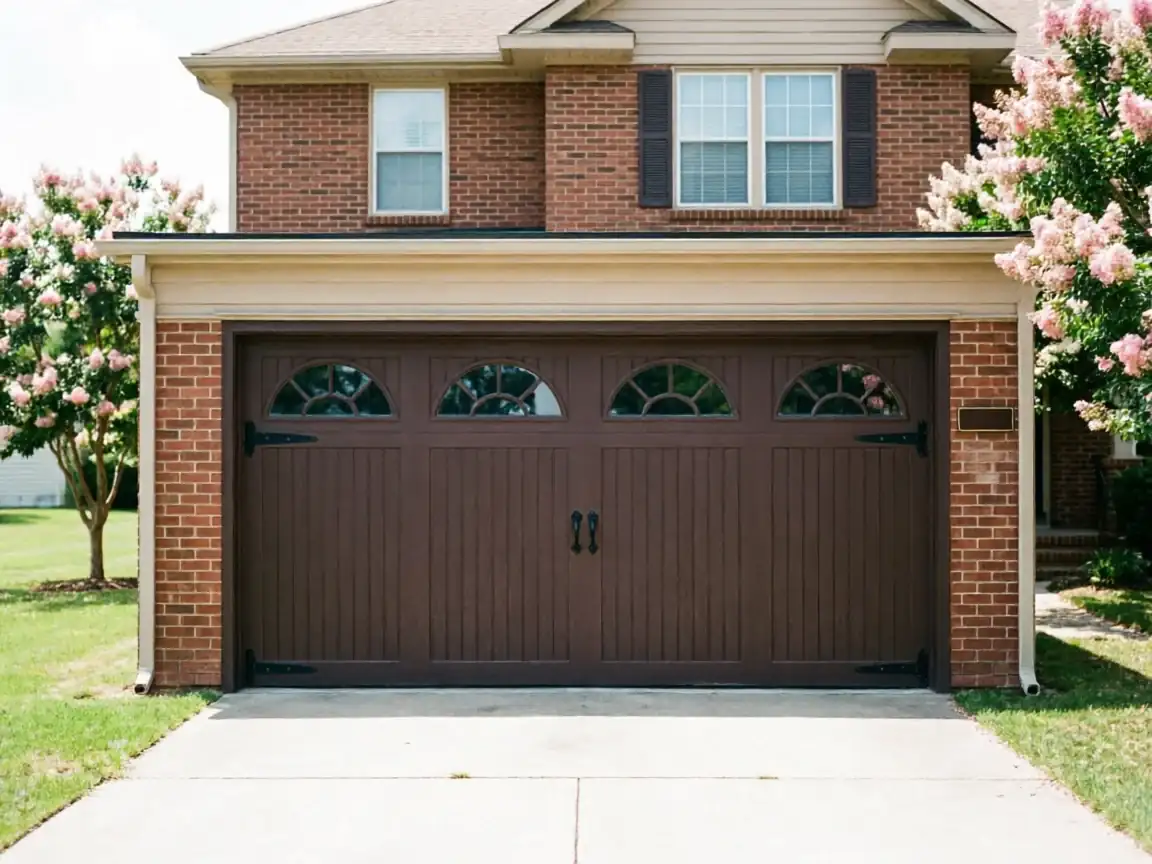
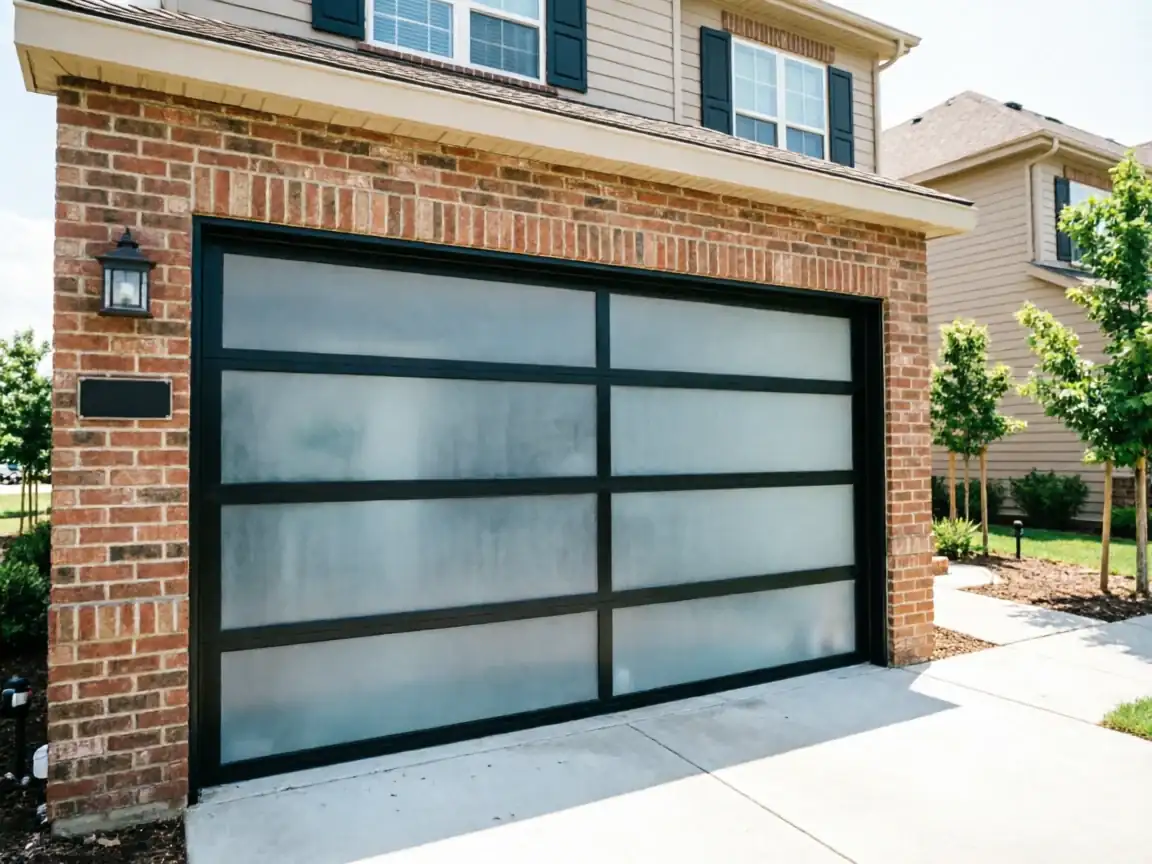
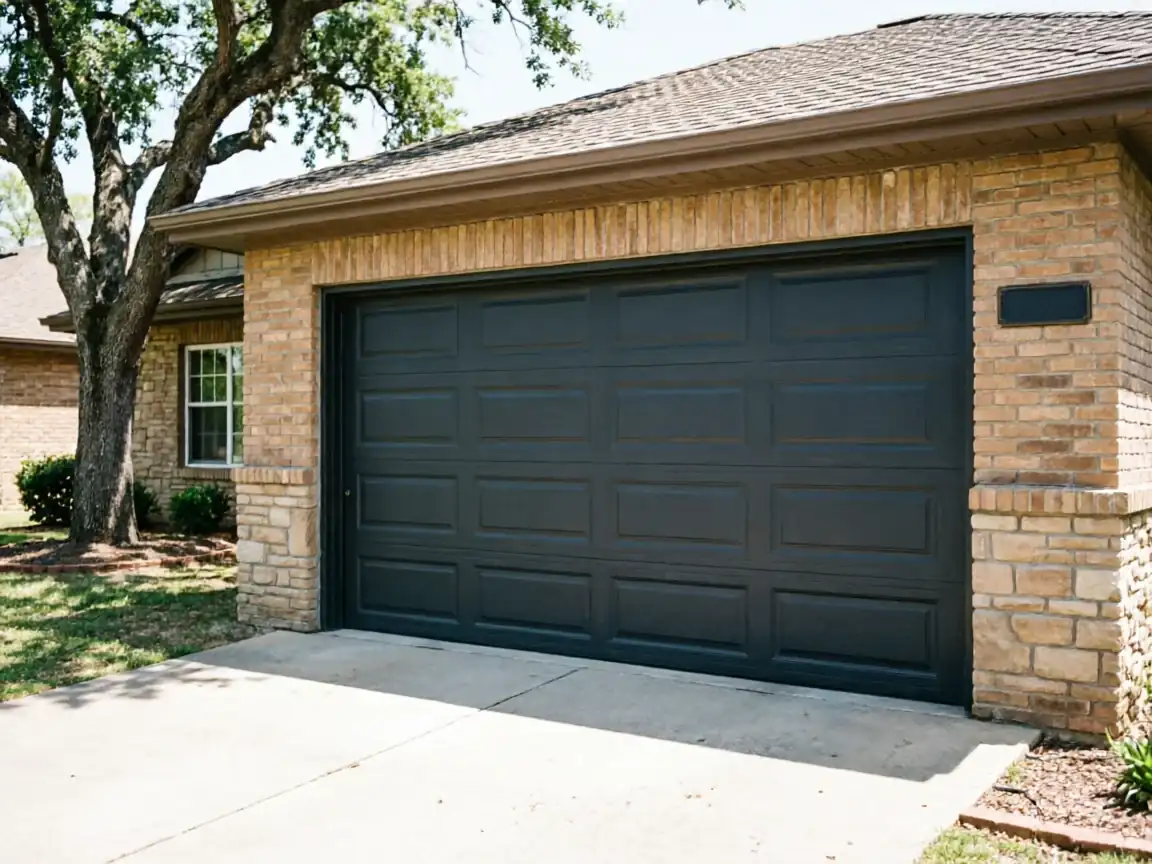
Goldsby's housing stock centers on a median build year of 2004, nearly two decades newer than the 1987 median across the broader service area. Builders in Goldsby's growth years spec'd developer-grade steel sectional doors in a handful of factory finishes, and a lot of those lines got discontinued or reformulated once the subdivisions filled out. So the panel itself is easy to source. Matching it to the three panels next to it, on a door that's sat in Oklahoma weather for fifteen-plus years of fade, is the actual job.
What the Repair Takes
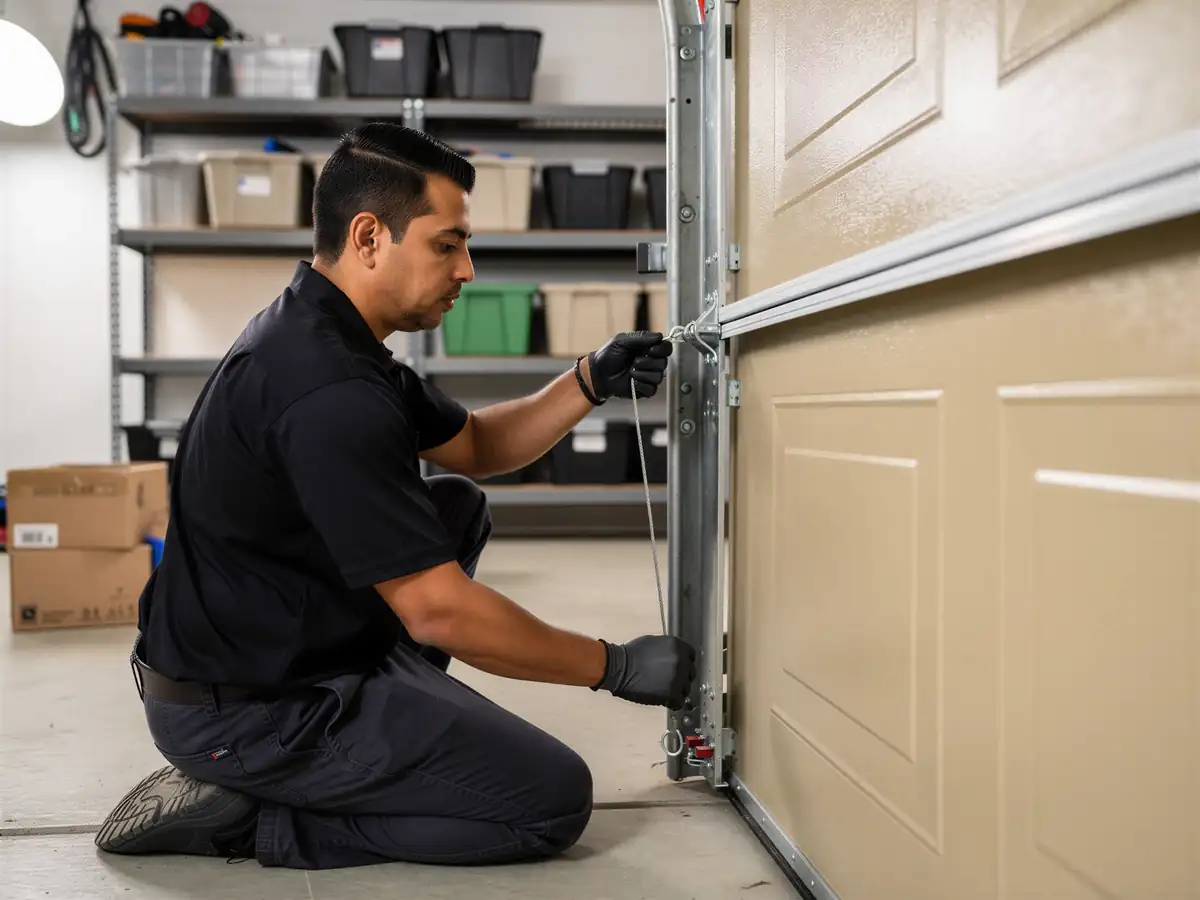
We start by pulling the model and section number off the door itself, usually stamped on the inside edge of a panel or printed on a sticker near the bottom bracket. From there it's a matter of sourcing the matching section - same width, same panel design, same insulation core if the door is insulated, which most builds from this era are.
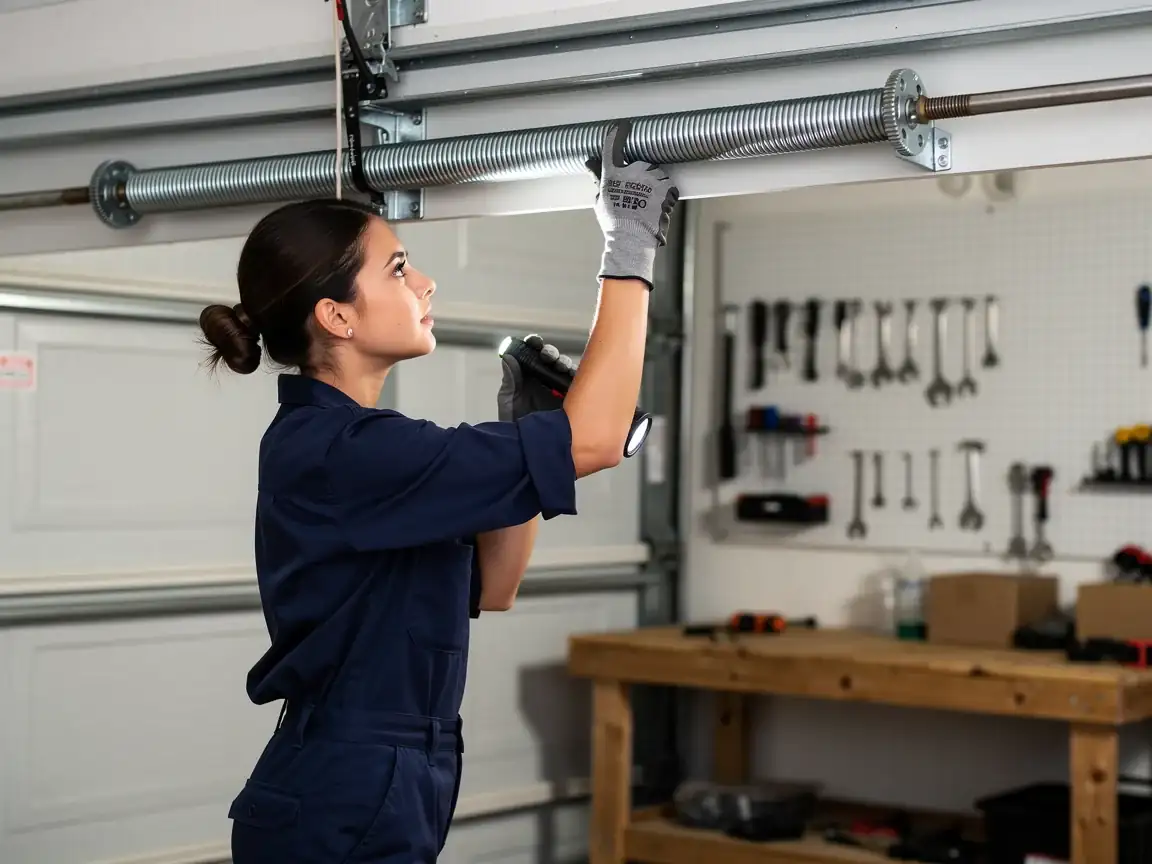
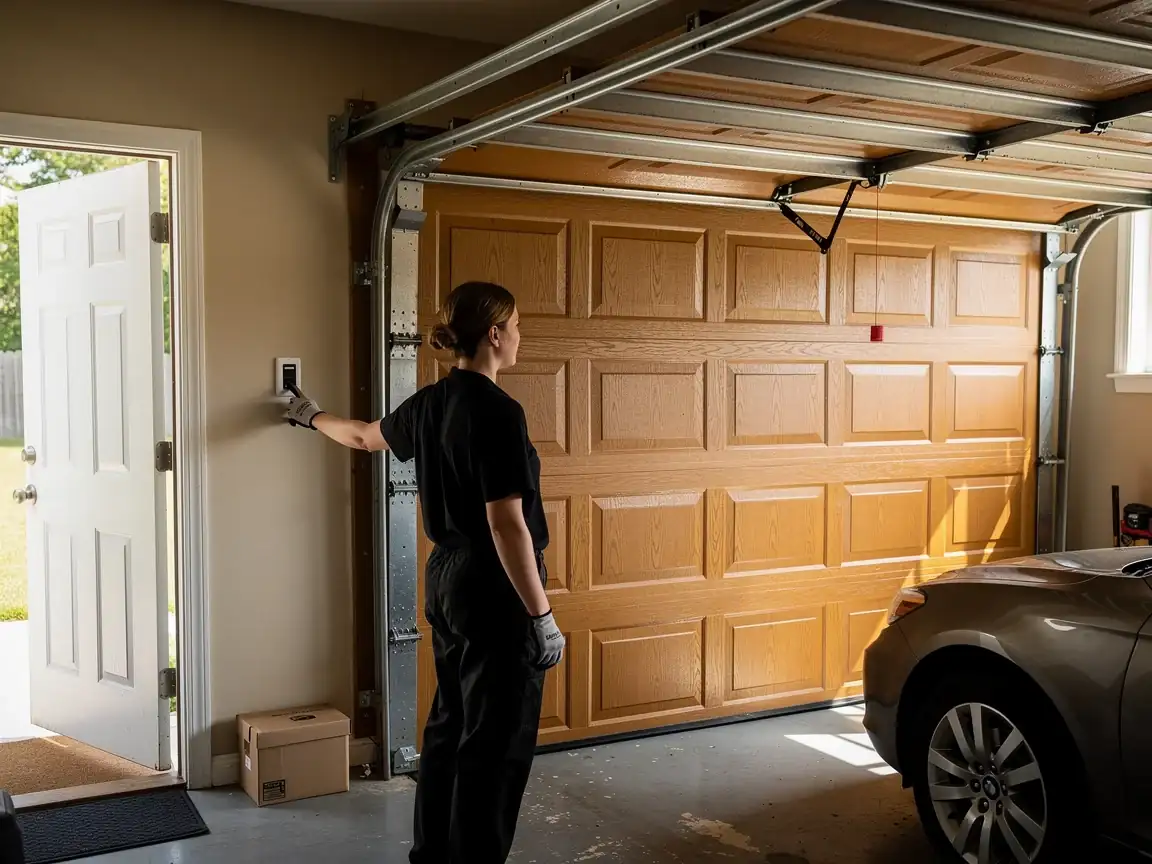
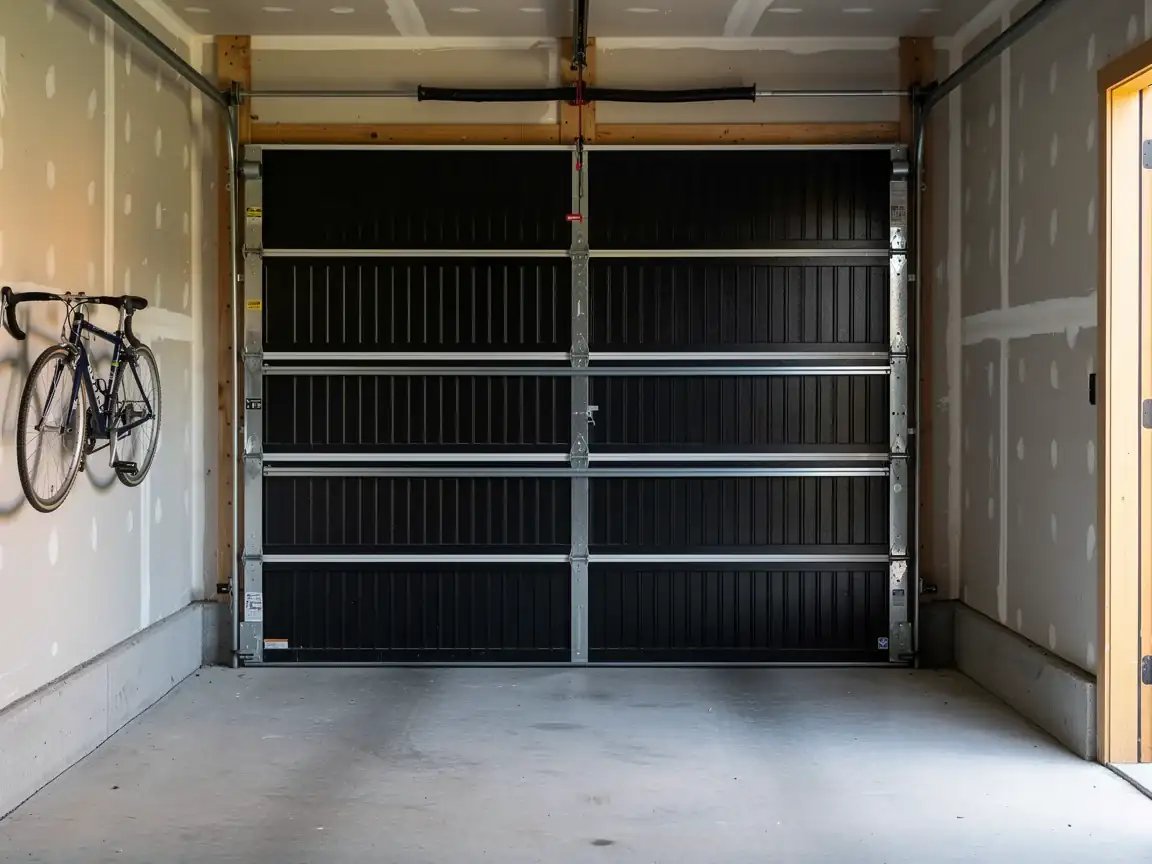
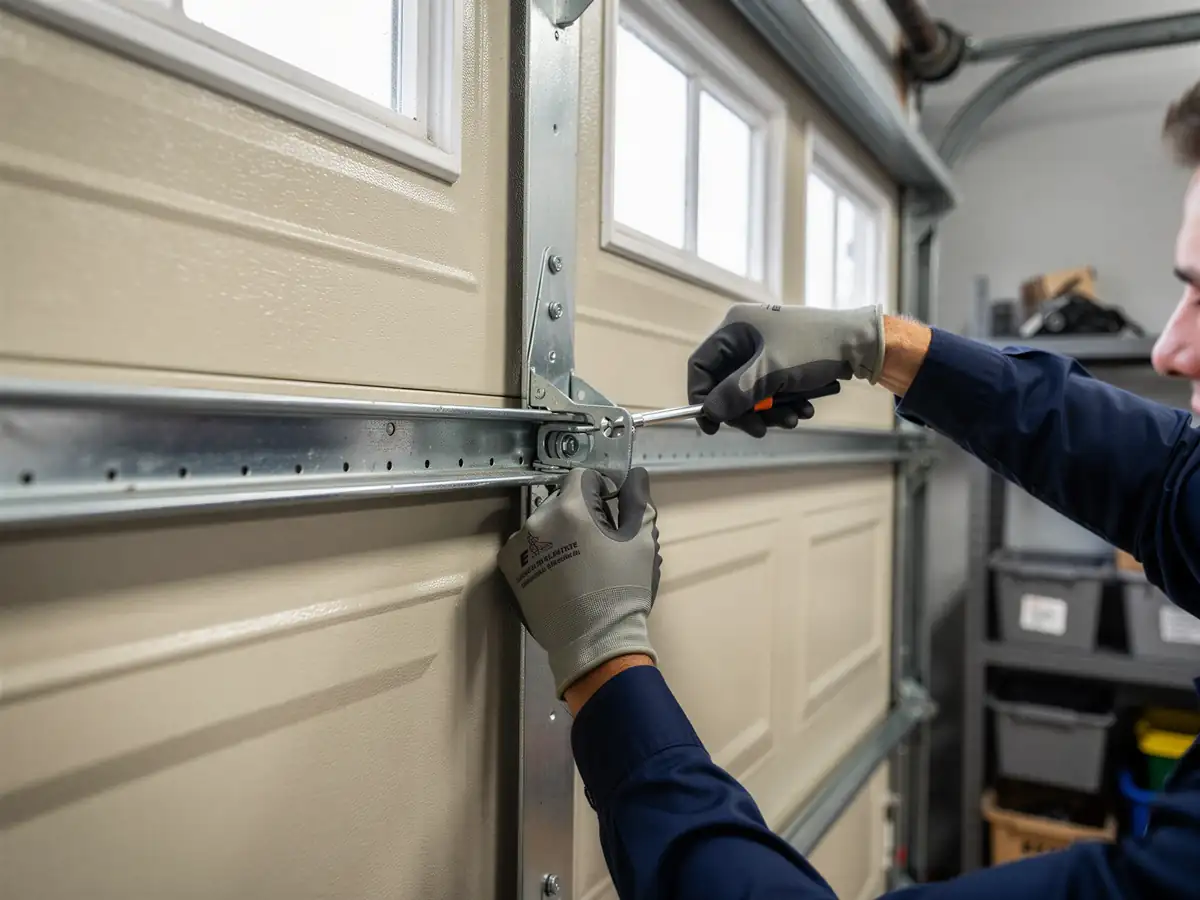
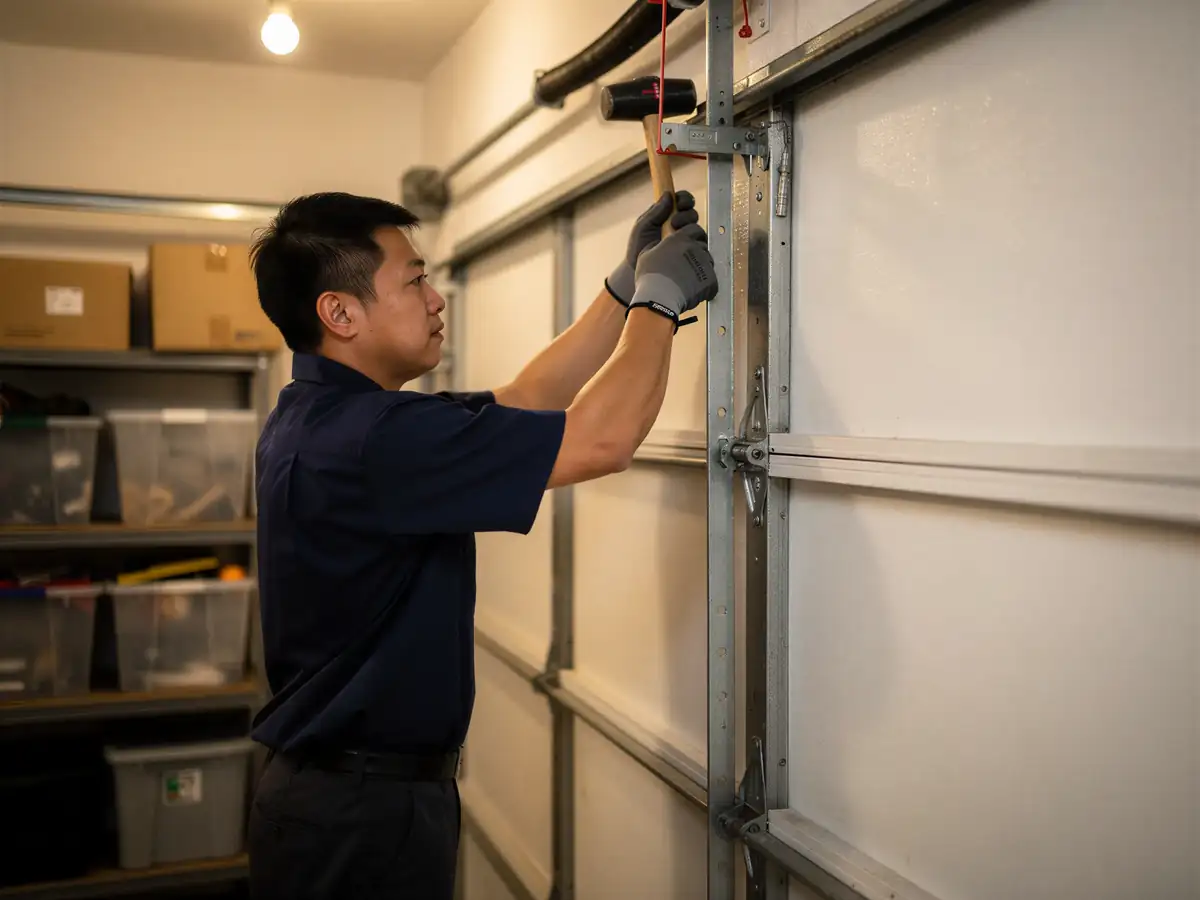
Once the section is in hand, the job is mechanical: disconnect the opener, relieve spring tension, remove the hinges and rollers holding the damaged section to its neighbors, swap it in, and reset hardware torque so the door tracks straight. On a double-car door that's four to six hinge points and a stack of roller brackets to realign. We check the track alignment on both sides before we call it done - a panel that's slightly out of square will bind against the track within a season.
Doing It Yourself
If it's a single bottom panel with no spring involvement and you've got the exact replacement section in hand, swapping hinges and rollers is within reach for someone comfortable with a ratchet and a ladder. The part most owners get wrong is color and finish matching - ordering by model number without checking the actual swatch against the faded original panels next to it.
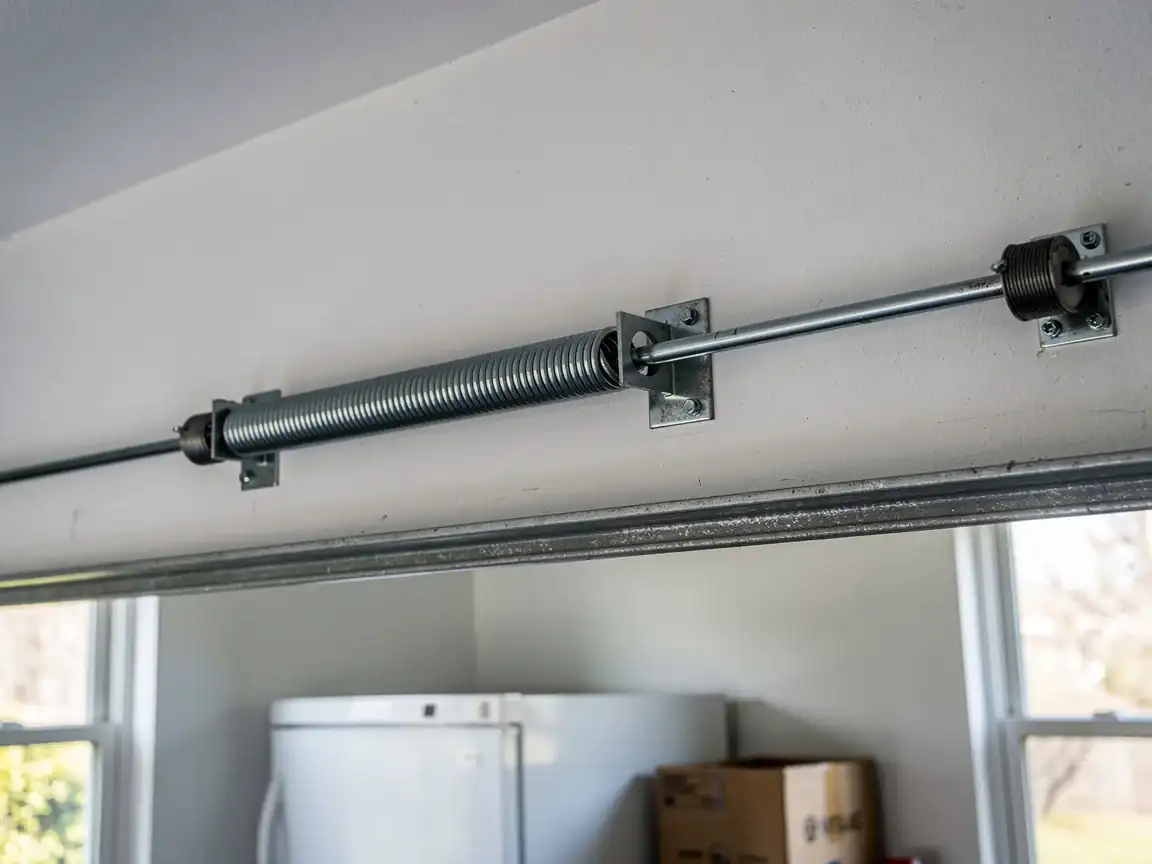
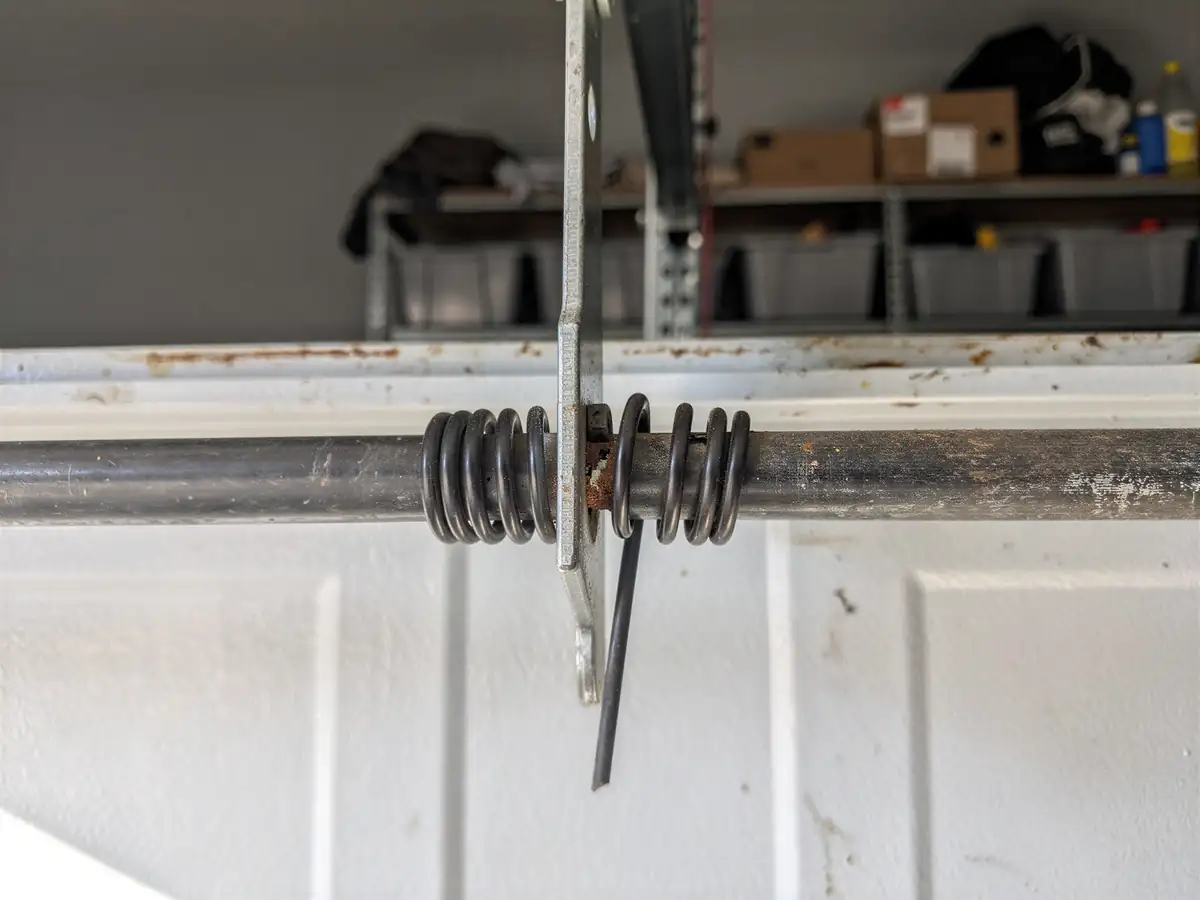
Where we tell people to stop: anything involving the top panel near the spring assembly, or any section replacement on a door where the torsion spring has to come under tension to get access. A wound spring on a sectional door carries enough force to break bones. If the damaged panel sits anywhere near the spring bar, or if the door won't stay in a fixed position once disconnected from the opener, that's not a DIY afternoon - call it in.
Time on the Job
A straightforward single-panel swap, once the part is on site
Runs under two hours including hardware realignment. The time sink isn't the labor - it's sourcing a panel that matches a 2000s-era developer line that may not be in current production. We've had jobs where the section ships same week, and others where a close-enough color match takes longer to track down than the install itself.
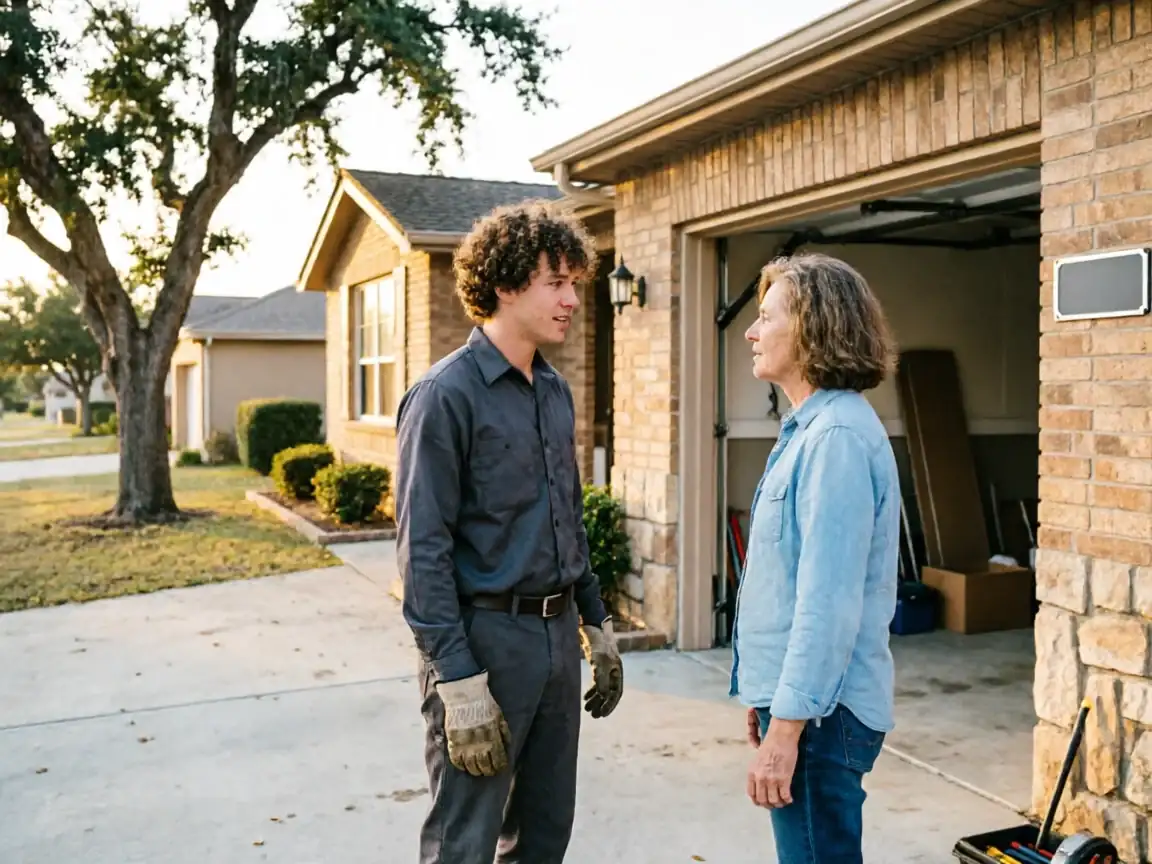
We're coming from Norman, 11 miles out
Which adds some drive time to the front end of scheduling but doesn't change the repair window once we're on site. If your door needs more than one section replaced, or if the track has bent along with the panel, expect the job to run closer to half a day.
- 11 miles
What Can Go Wrong
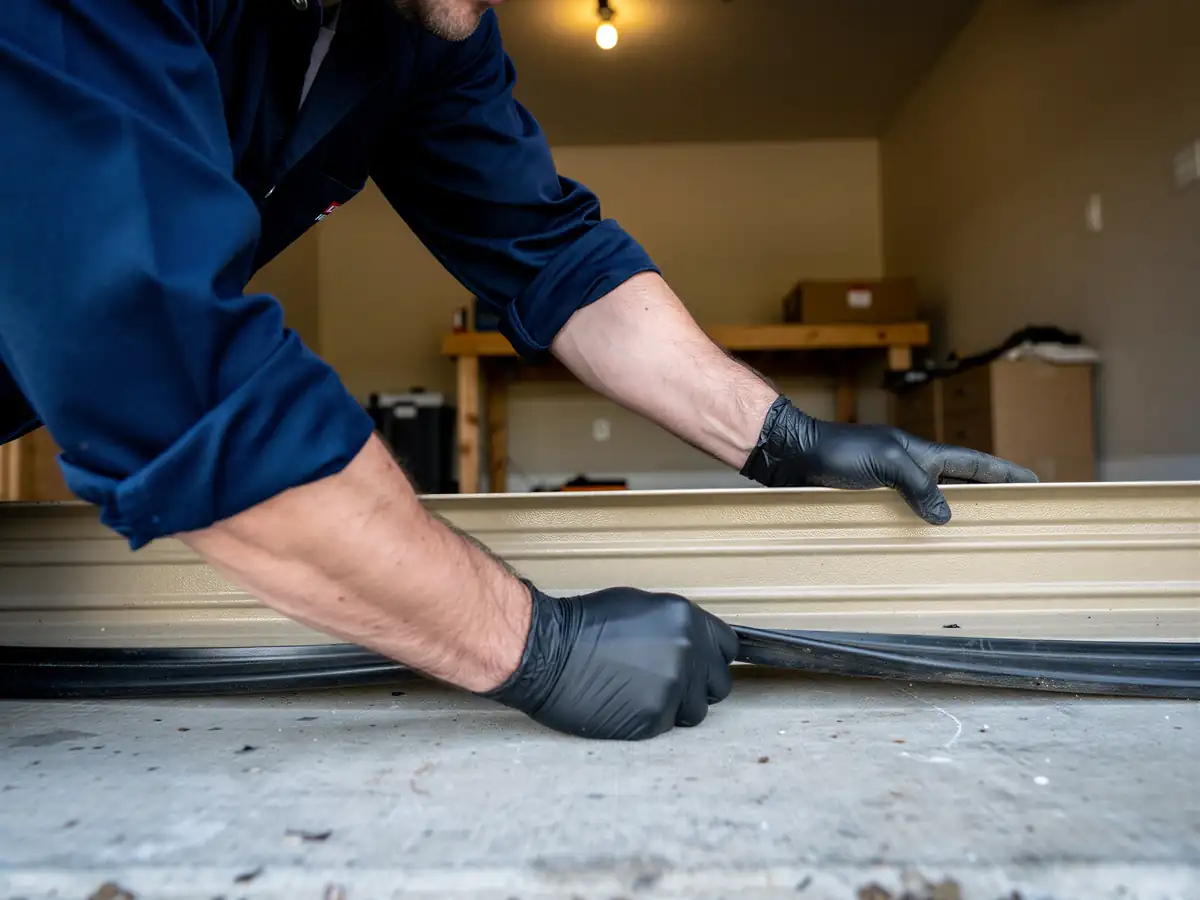
The most common issue isn't the repair - it's the color mismatch once the new section is up. Factory finishes fade differently depending on sun exposure, and a replacement panel straight off the line will look slightly off next to fifteen years of weathering, even with a correct part number.
Second issue: hardware that's seized. Hinges and roller brackets on doors from the early 2000s building boom are original equipment in a lot of Goldsby homes, and after two decades of Oklahoma's cold-moderate climate swings, bolts can be rusted enough that they strip rather than turn. We carry replacement hardware for exactly this reason rather than forcing old bolts.
Third: if the door was out of square before the panel broke, swapping in a new section without correcting the track first just relocates the binding to a different spot on the door.
The Cost of This Job
Panel replacement cost depends mostly on whether the part is a common stock size or a less common one from a discontinued developer line, and whether insulation core matching adds to the part price. We don't have a flat number to quote here without seeing the door - this page isn't the place to guess at it.
What we can say: with Goldsby's median household income running at $96,650, well above the broader area's $75,000 figure, most owners here choose to replace a mismatched or dented panel outright rather than patch it and live with the look. That's a homeowner decision, not something we push - a door that still seals and runs straight is a door that's doing its job, cosmetics aside.