Time on the Job
We run this job out of Norman, 11 miles down the road
So there's no branch sitting in Slaughterville and we don't pretend otherwise. A panel swap on a single-car or double door usually runs a couple hours once the crew is on site with the right panel in the truck, but that clock doesn't start until the part is confirmed and loaded. Most of the delay on these jobs isn't labor, it's sourcing the right panel for a door that's been out there since the early '90s.
- 11 miles
That timing matters more here than it does on newer streets
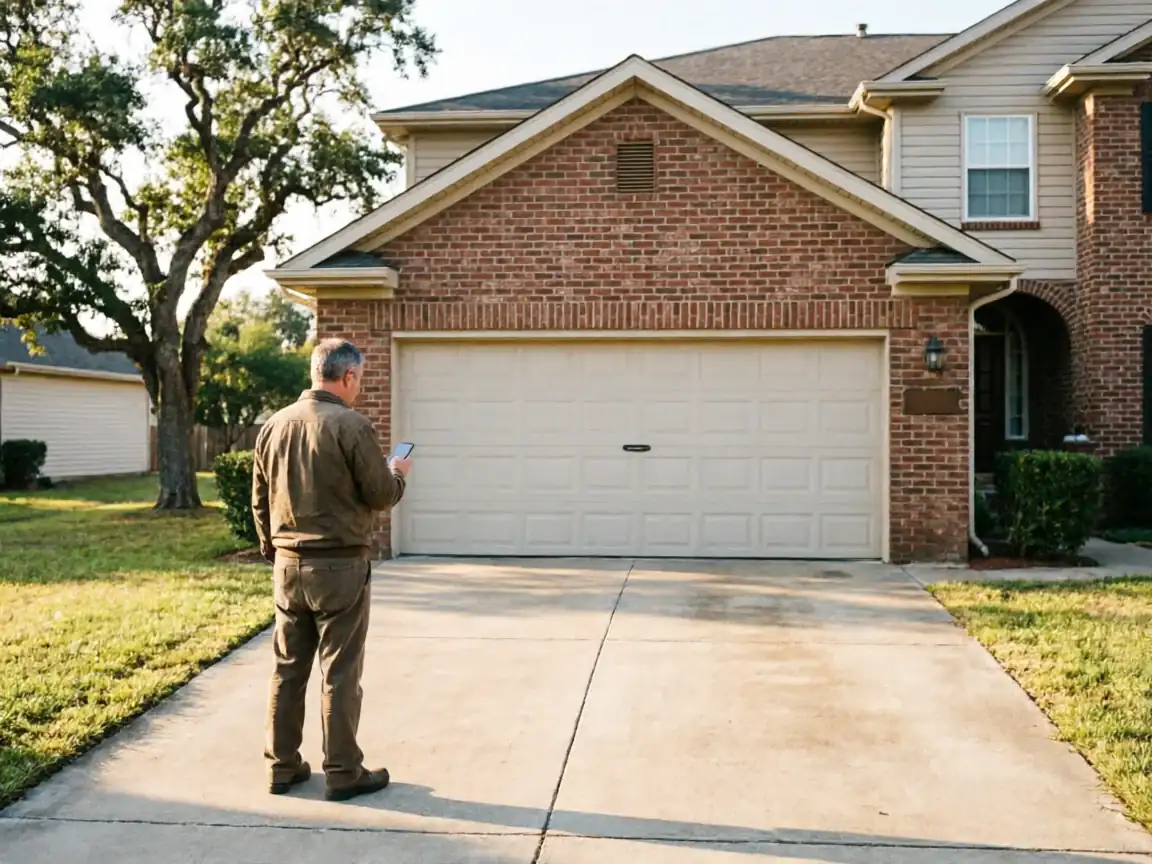
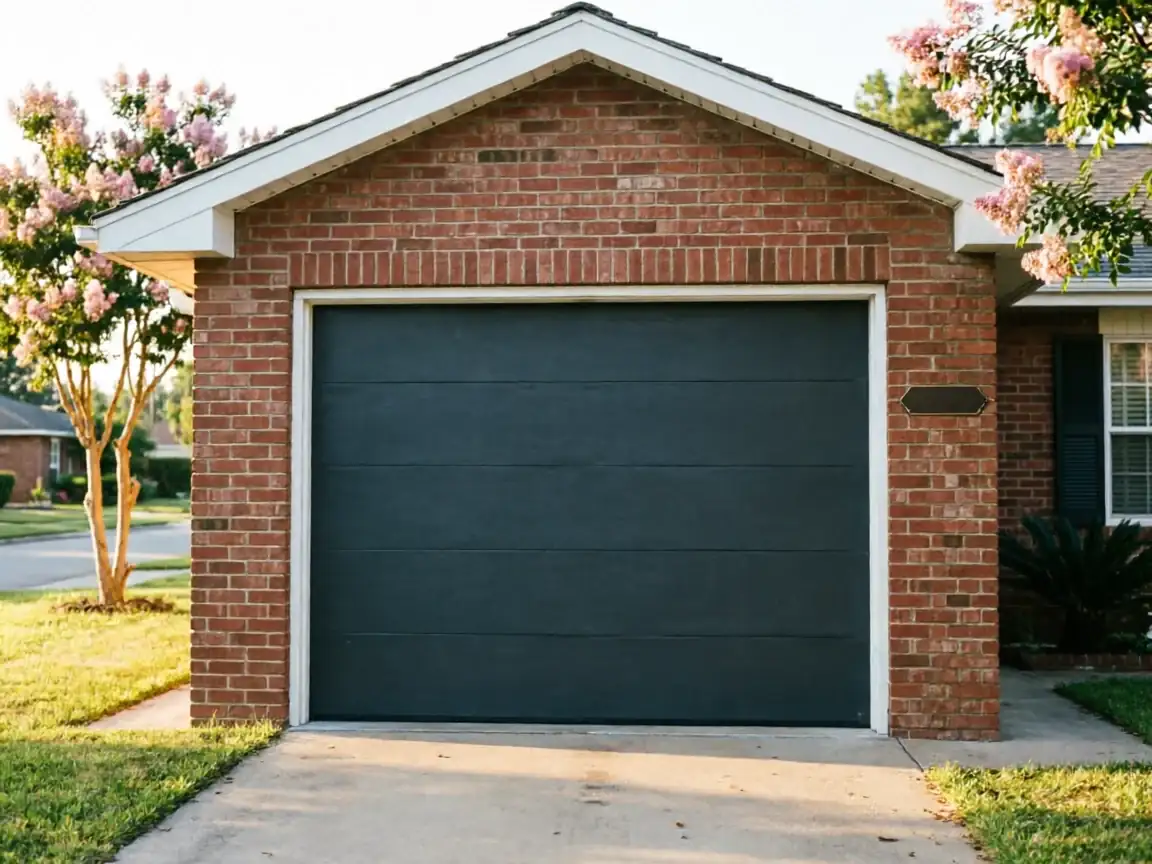
Houses in this part of the county went up mostly in 1991, give or take a few years either side, and that median build year is the whole reason panel work here looks different from a panel job on a 2015 door. The steel gauge, the seam style, and the fastener pattern from that era aren't what's sitting on the shelf at most suppliers now. We don't carry a depot out there, so every trip is planned around having the correct panel in hand before the truck leaves Norman.
What the Repair Takes
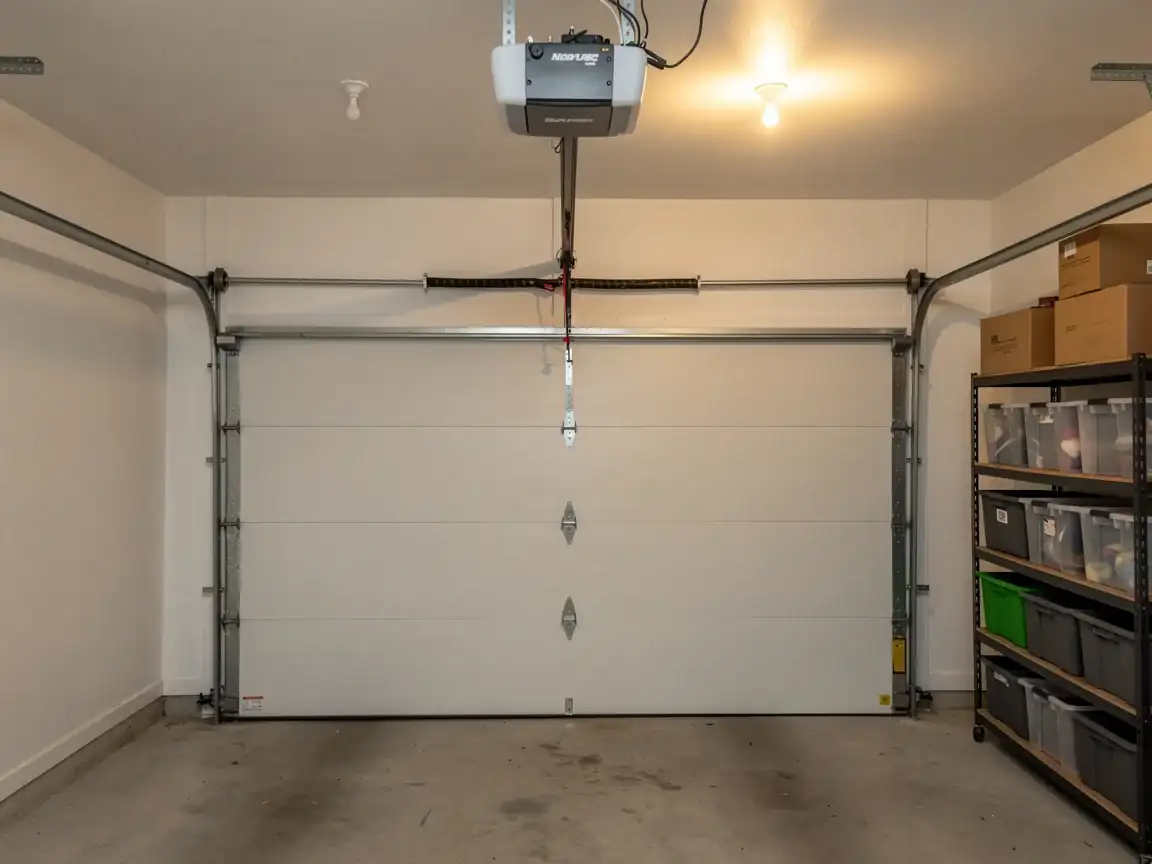
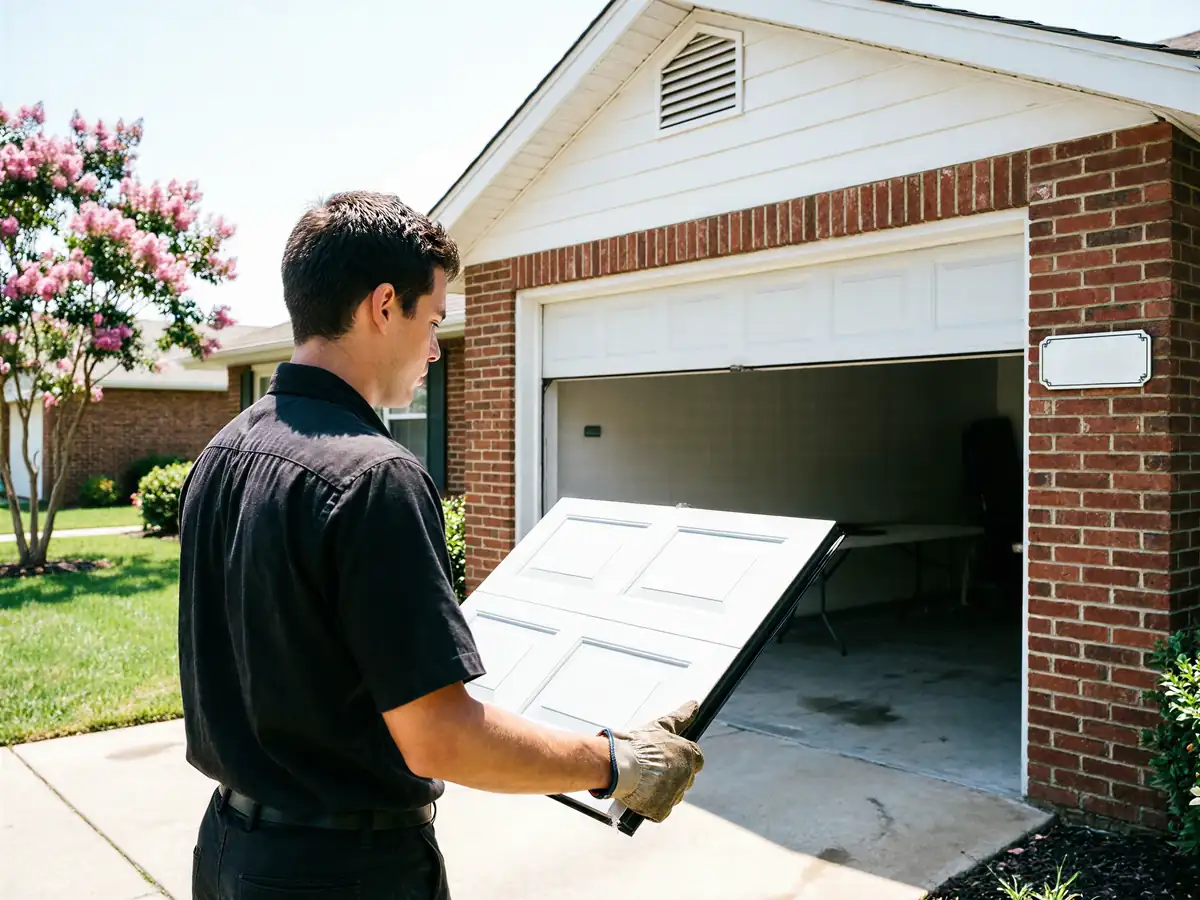
First step is matching the panel, not swapping it. A door built around 1991 was likely installed with a flush or short raised-panel steel section, and a lot of those exact profiles aren't in current catalogs. We measure the section height, the rib spacing, and the color before we order anything, because a mismatched panel on an otherwise sound door looks worse than the dent it's replacing.
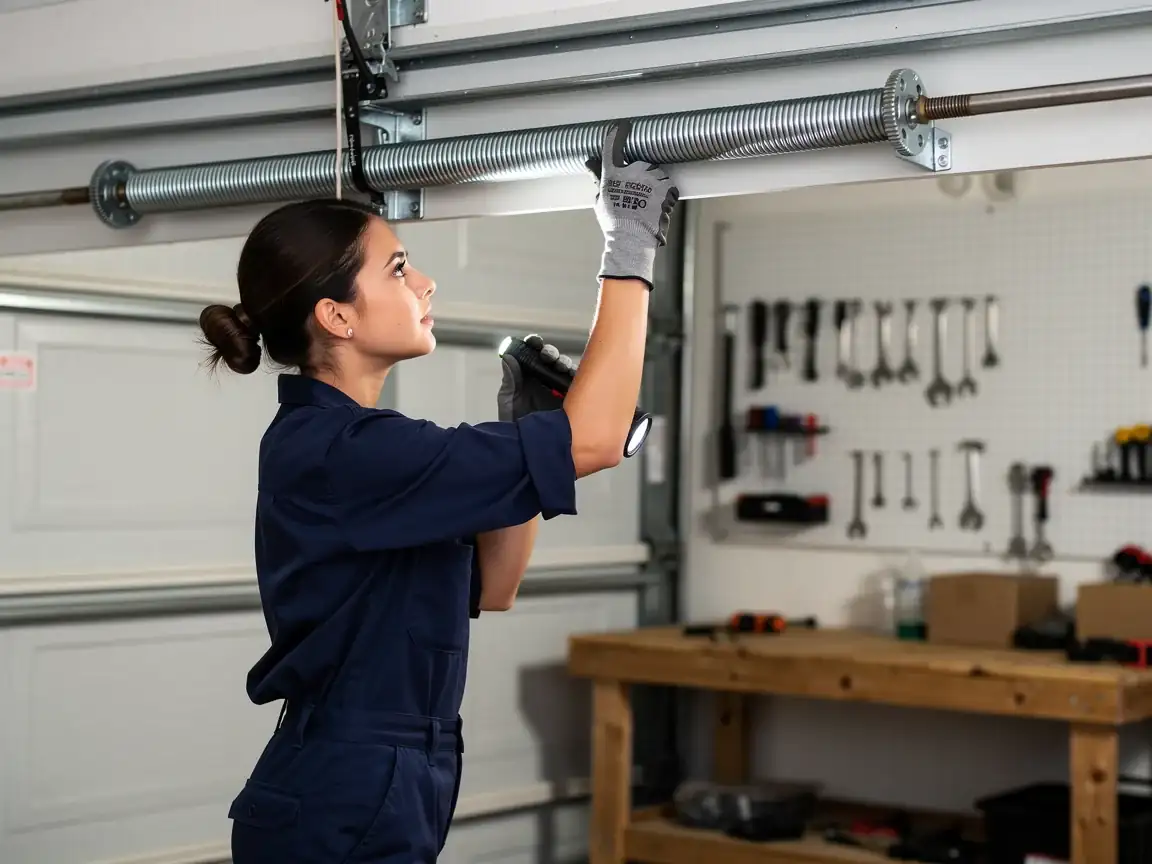
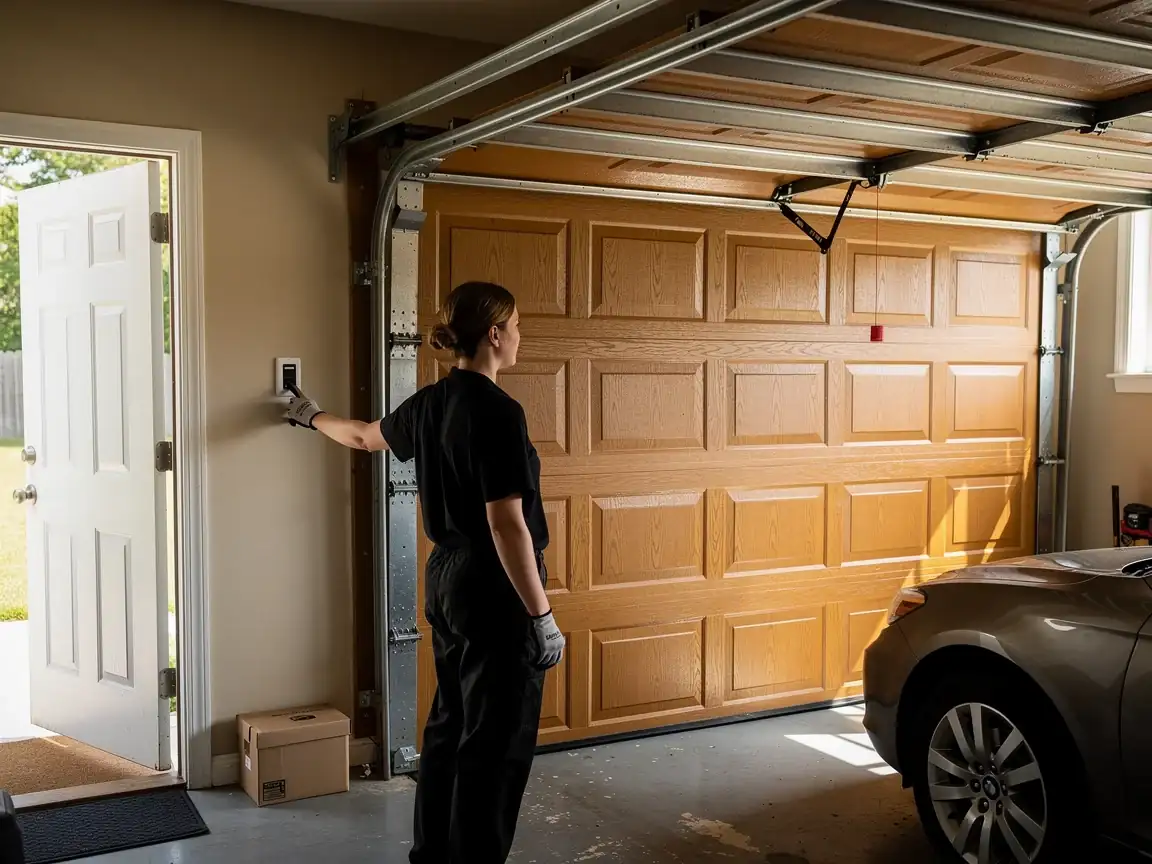
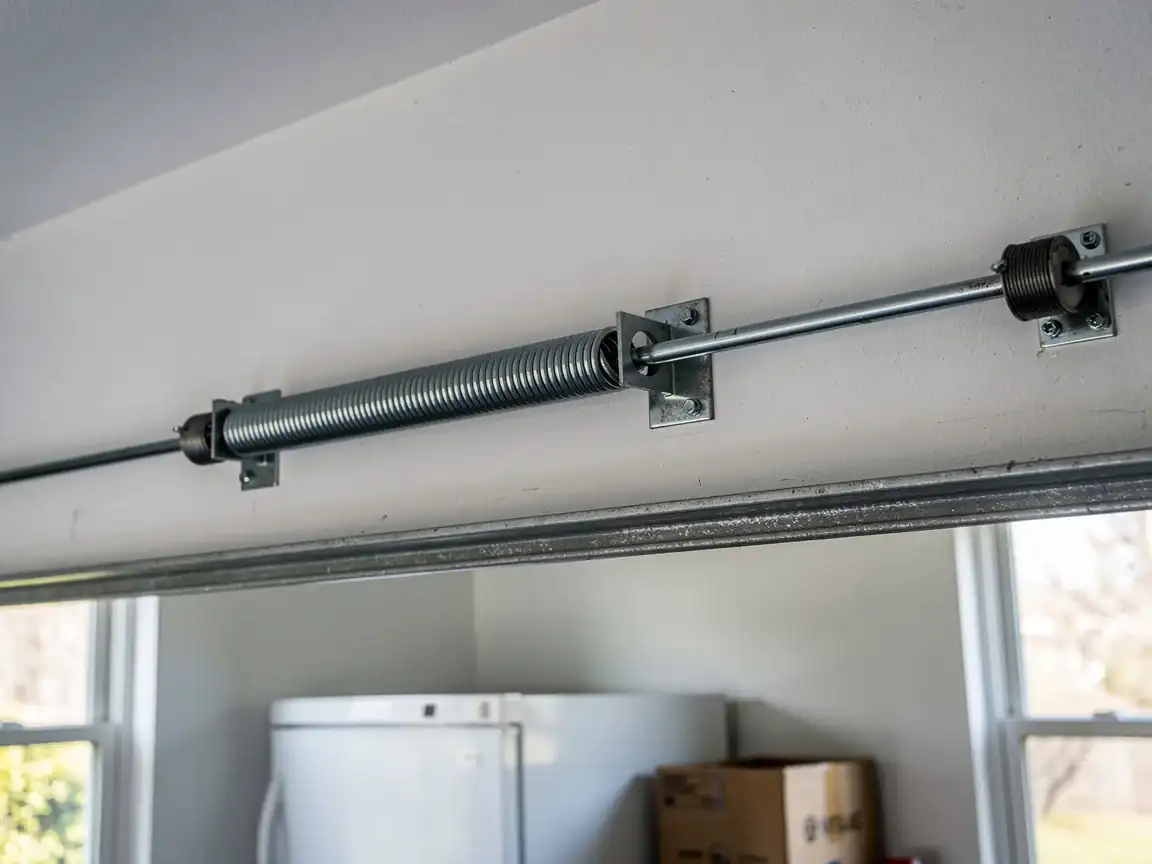
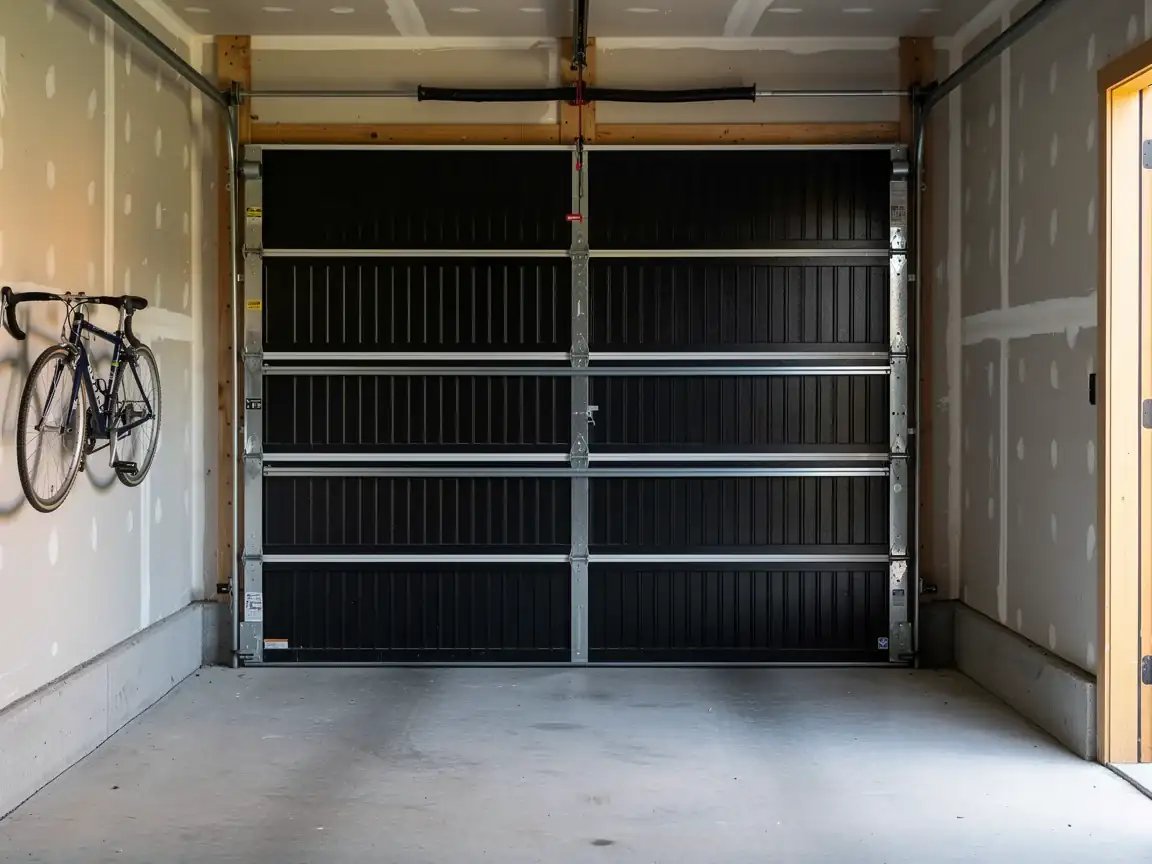
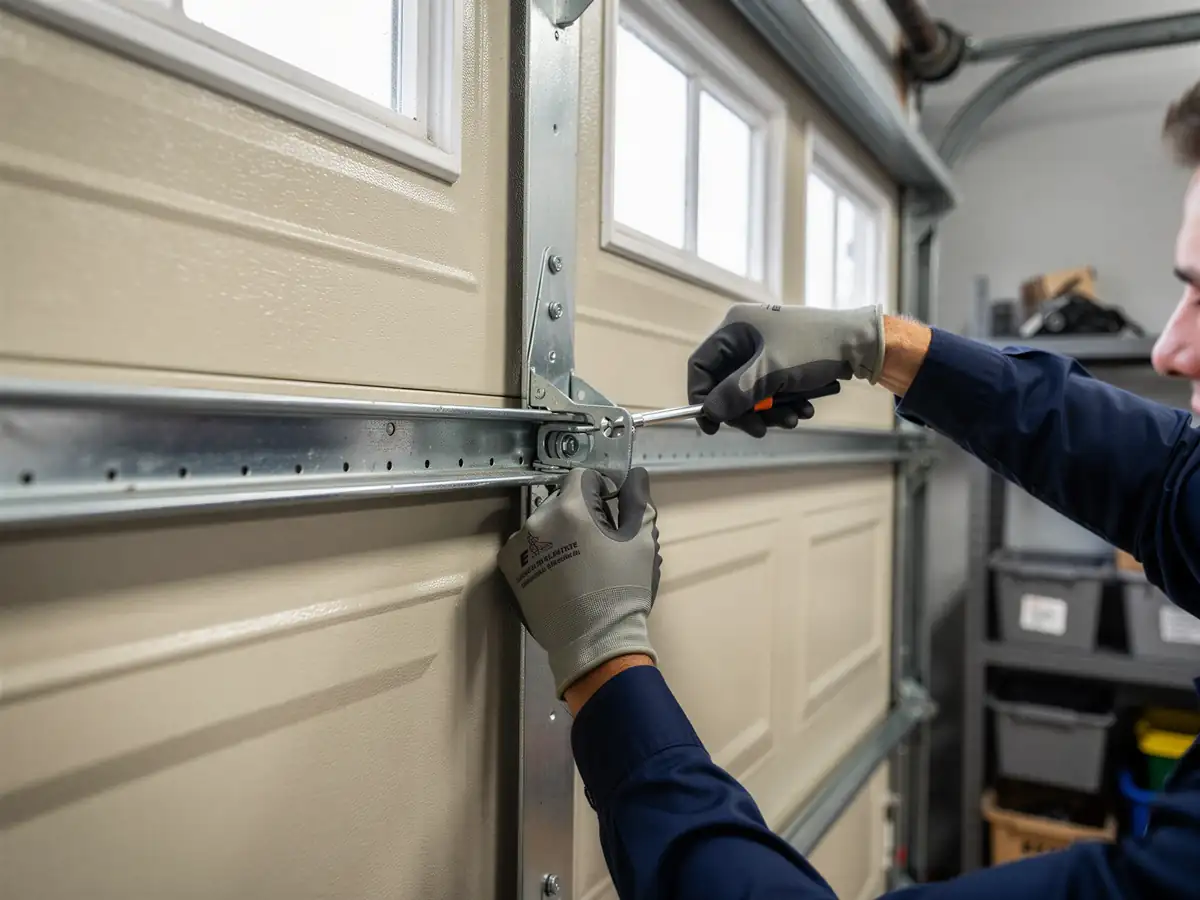
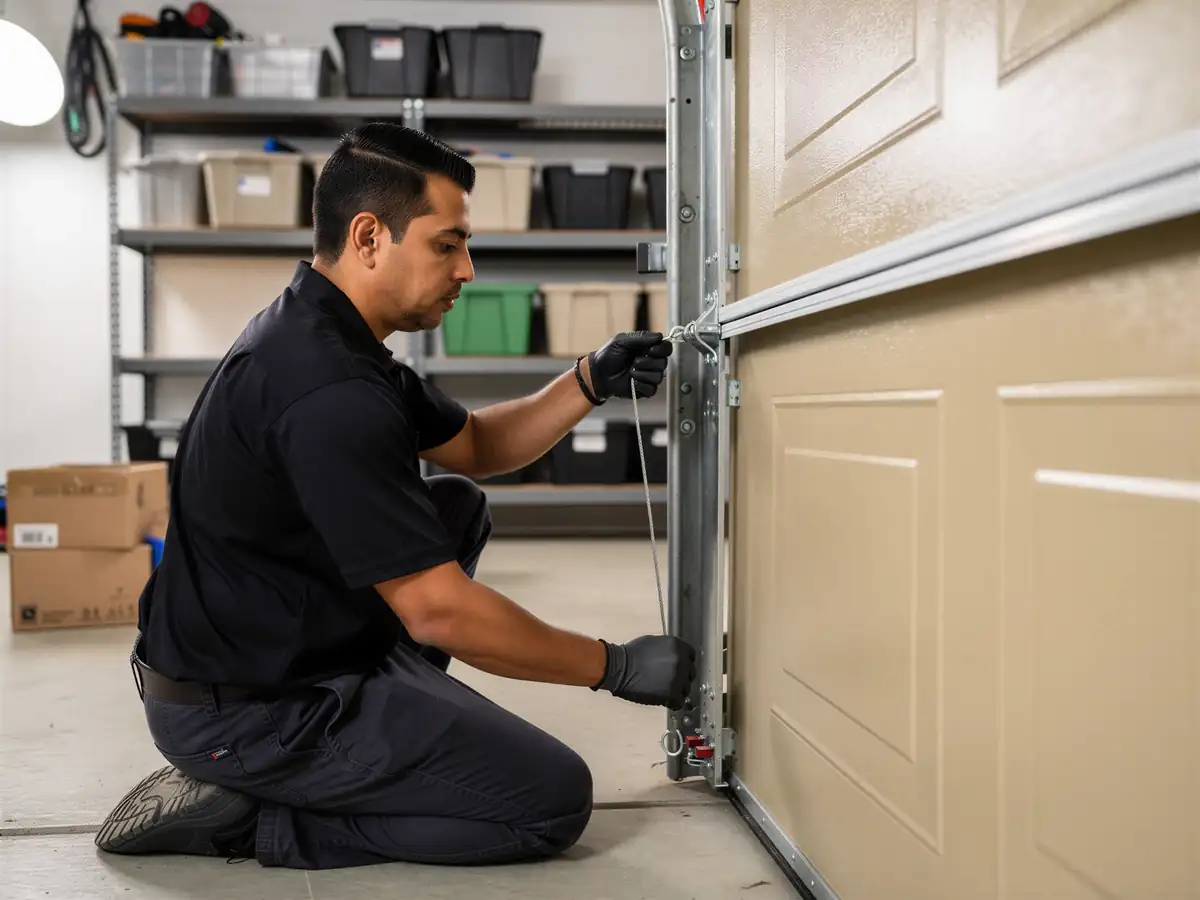
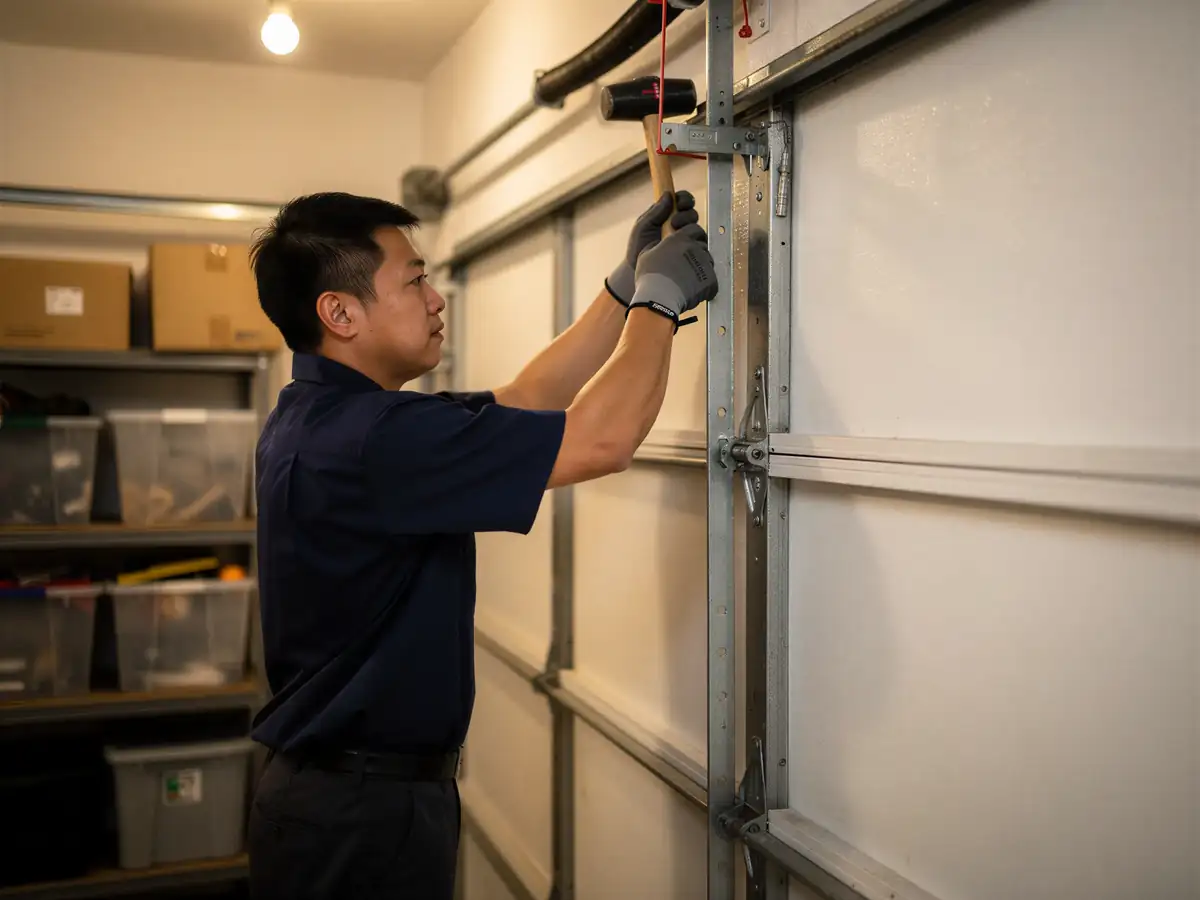
Once the panel's on hand, the job itself is mechanical: pull the damaged section's hinges, slide the new panel into the track run, re-hang the hinges, and check that the door still tracks true top to bottom. On doors this age, we also check the hinges and rollers while we're in there, because original hardware from 1991 is often worn enough that a fresh panel sitting on tired hinges will just dent again in a season or two. If the whole door has gone brittle or the track geometry has shifted, panel replacement stops being the right call and full door replacement takes over - that's a conversation we have on site, not a guess.
What Can Go Wrong
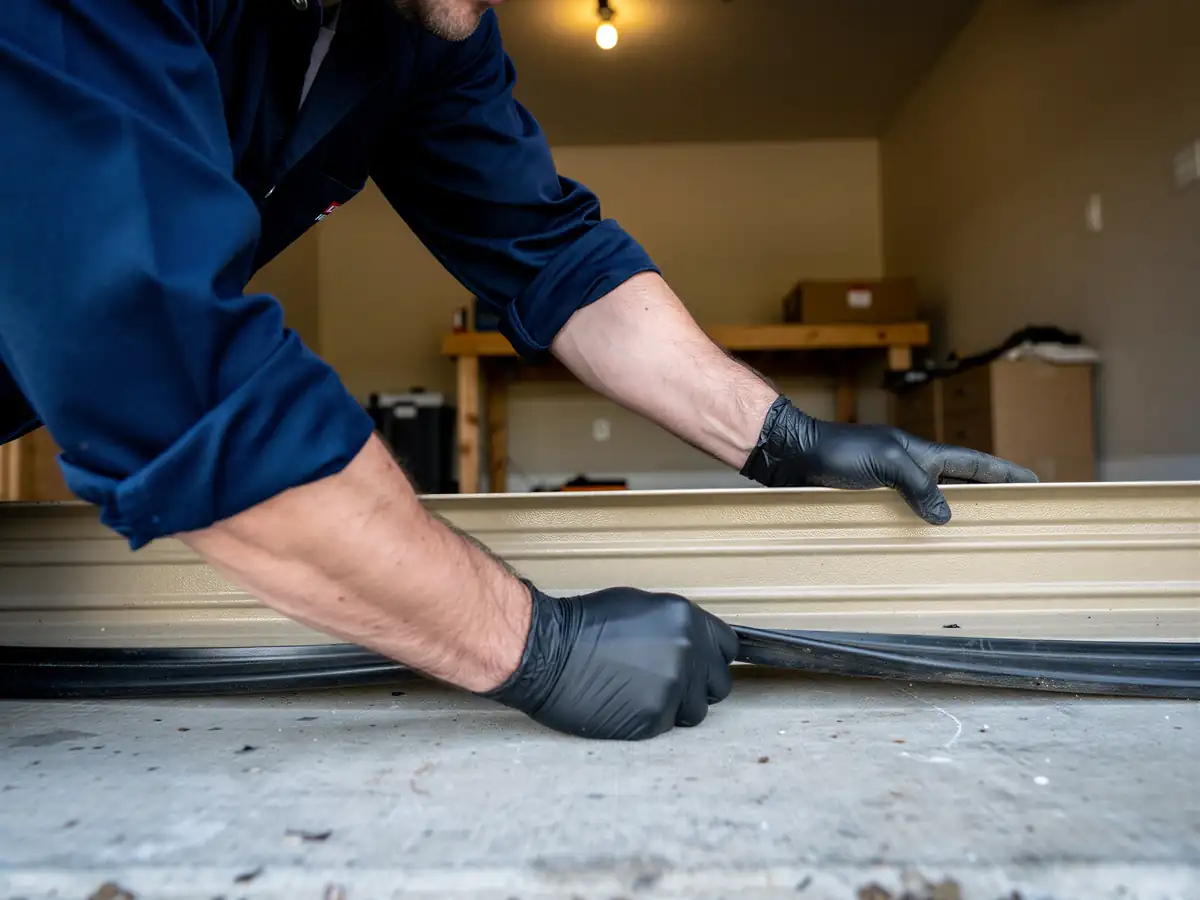
The most common failure on doors from this build era is a panel seam that's cracked rather than dented. Cold, moderate-humidity winters put doors here through repeated freeze-thaw cycles, and a steel panel that's flexed cold hundreds of times develops hairline seam cracks long before it shows an obvious dent. Those cracks let moisture behind the panel skin, and by the time it's visible as rust bleed, the panel underneath is usually softer than it looks.
The second issue is color and profile mismatch. A 1991-era panel section doesn't always have a current equivalent, and painting a new panel to match 30 years of UV fade on the rest of the door only gets you close, not exact. We tell homeowners that up front rather than let them find out on delivery day.
The honest limitation here: if the panel style is fully discontinued and we can't source a structural match, we'll say so and lay out full-door replacement as the real option instead of forcing a patch that won't hold.
The Cost of This Job
We're not going to quote a number here that isn't backed by a real estimate
Because panel cost swings hard depending on whether the section is a standard stock profile or something we have to special-order to match a 1991 install. What we can say is that households in this service area report a median income of $76,759, and across the roughly 36,448 owner-occupied houses we cover, the majority were built between 1964 and 2004 with 1987 as the midpoint - Slaughterville's own 1991 median sits right in that window, which is exactly why panel sourcing is a recurring issue rather than a one-off.
- $76,759 median household income
- 36,448 owner-occupied
The real cost driver isn't labor, it's whether the panel exists off a shelf or has to be matched by hand
A standard-width stock panel keeps the job simple. A custom color match or a discontinued rib pattern adds both time and material cost, and we'll tell you which situation you're in before we order anything.
Why This Fails Locally
Slaughterville isn't a dense subdivision - it's spread out, with around 1,548 households across a rural stretch of the county rather than packed into a single tract. That spacing means fewer doors get noticed and fixed early; a cracked panel on a property with some distance between neighbors doesn't get pointed out the way it would on a tight street, so damage sits longer before anyone calls it in.
Layer that onto the 1991 median build year and you get a specific pattern: original steel panels that have had three decades of cold-weather flex with no neighbor pressure to fix small damage early. By the time we're called out from Norman, 11 miles away, the dent or crack has usually been there for a season or two longer than it would have on a closer-set, newer street. That's the local fault this page is built around - not a generic garage door problem, but a build-year panel style aging out quietly on larger lots.